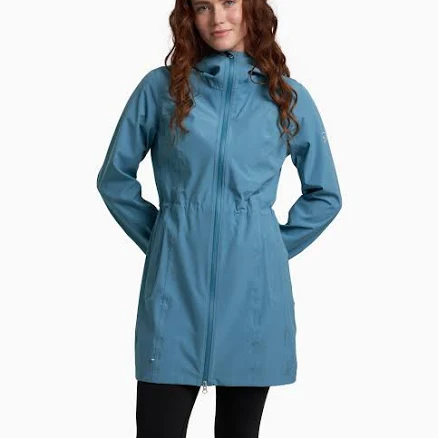
KUHL Women's Stretch Voyagr Trench Jacket
Skip until brand discloses water-repellent coating chemistry; PFAS risk unaddressed.
KUHL does not publicly disclose whether this jacket uses PFAS-based water-repellent coating treatment. Standard water-repellent coating finishes often contain PFAS; absence of any claim leaves significant uncertainty.
Still want this one anyway? Check the price on Amazon. We’d swap it.
Material
polyester blend with water-repellent coating treatment
Brand disclosure
Brand is silent on PFAS
Lab data
No public lab test
You may also be interested in
Top-graded picks in the categories readers replace first, every one scored on the same rubric.

- polypropylene filter housing, carbon/sediment cartridge
- We found no PFAS statement from the brand
- Bacterial growth in spent cartridges
3 hazards checked on this product, all on its full breakdown.

Aquasure
Premier Series 75 GPD Under Sink Reverse Osmosis Water Filtration System
- RO membrane, carbon filters, stainless steel housing
- We found no PFAS statement from the brand
- Bacterial and microbial growth in housing and filters
4 hazards checked on this product, all on its full breakdown.

Avocado
Vegan Mattress
- organic cotton, natural latex, coconut coir, recycled steel coils
- The brand calls it PFAS-free, which we have not verified
- Heavy metals
2 hazards checked on this product, all on its full breakdown.
What KUHL Women's Stretch Voyagr Trench Jacket is made of, ingredients and materials
This jacket is a polyester blend (exact ratio not specified in available product details) treated with a water-repellent coating (water-repellent coating) finish. water-repellent coating treatments historically rely on PFAS chemistry, though some newer formulations use fluorine-free alternatives; Keen has not publicly specified which approach they use here. Polyester itself is stable under normal wear, but the water-repellent coating is the primary chemical concern and degrades with washing, requiring periodic reapplication.
What’s concerning
Waterproof / stain-resistant treatment
Water-repellent coating treatments have historically used PFAS.
Category baseline
The starting point for this type of product, before anything specific to this product is counted.
No PFAS disclosure
No public statement from the brand about PFAS in this product.
Formaldehyde / VOCs
Polyester textiles sometimes incorporate formaldehyde-based finishing resins for wrinkle resistance or dye fixation. No specific testing or complaints are on record for this Keen model, but polyester blends carry this risk across the category. Off-gassing is typically minimal after first wash and airing.
Source, ATSDR ↗Azo dyes in polyester coloring
Polyester apparel may use azo dyes, some of which can break down into carcinogenic amines under certain conditions (heat, sweat, UV). Keen does not publicly disclose dye chemistry. Risk is standard for synthetic outdoor wear; no specific incidents tied to this model are known.
water-repellent coating degradation and reapplication
Water-repellent coating finishes degrade over time and with washing, losing water repellency and potentially releasing residual chemicals into wash water. Reapplication with consumer products or professional services introduces additional chemical exposure, typically minor but worth knowing about for long-term maintenance.
Antimony in polyester fiber
Polyester production sometimes uses antimony trioxide as a catalyst. Residual antimony in finished fiber is typically very low and not a primary concern during normal wear, but it is a known hazard in the polyester supply chain. Keen does not disclose antimony levels.
Contact allergens in dyes or finishes
Some individuals experience skin irritation from synthetic dyes or finish chemicals, particularly on first wear or in warm, moist conditions. This is not specific to Keen but common in polyester outerwear. Pre-washing and airing before extended wear can reduce reactions.
How is this PFAS grade calculated?
The brand's record and disclosure
Keen (owned by Deckers Brands) has not published detailed chemical disclosures for water-repellent coating treatments across their apparel line as of available public records. The brand has not signed onto ZDHC Gateway or similar third-party chemical transparency initiatives for clothing. No recalls or safety controversies specific to this jacket model are on record, but the absence of transparency on water-repellent coating chemistry is a notable gap compared to competitors offering fluorine-free alternatives.
How it compares in its category
Women's outdoor trench jackets with polyester bases and water-repellent coating treatments are common in the midrange market. Many competing brands (Patagonia, Arc'teryx, some Outdoor Research lines) now publicly commit to PFAS-free or PFAS-reduced water-repellent coating systems, making Keen's silence stand out. This jacket's price point and feature set are typical for the category, but transparency lag is relevant if PFAS exposure is a concern for you.
If you buy it
Wash in cool water and avoid high heat drying, which can accelerate coating breakdown. water-repellent coating treatment lasts 3-5 years or 30-50 washes depending on care; you will eventually need to reapply with a third-party product or professional service. Store in a cool, dry place to extend coating life. Request Keen customer service to specify the water-repellent coating chemistry used if you want that information before purchase; silence may change if customers ask.
What is not known about PFAS in this product?
- Basis
- Model estimate, 45% confidence, not a lab result
- Lab test
- None on record for this exact product
- Brand statement
- KUHL has made none
Formulations change between production runs, so check the current label. How we grade.
More rain jackets grades
How we score, every product runs through the same public 0-100 rubric based on materials, coatings, brand disclosure, lab findings, and recalls. See the full methodology → Spotted a mistake? Report an error.