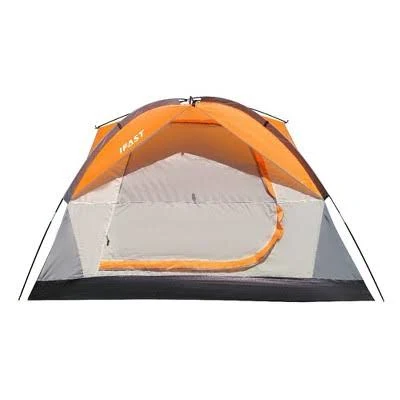
Family Camping Tent
Tent fabric likely water-repellent coating-coated; PFAS risk unclear without coating details.
Family tents typically use polyester with water-repellent coating finishes, often fluorinated. The brand provides no PFAS disclosure, making true composition a mystery.
Still want this one anyway? Check the price on Amazon. We’d swap it.
Material
Polyester fabric with unspecified waterproof coating
Brand disclosure
Brand is silent on PFAS
Lab data
No public lab test
You may also be interested in
Top-graded picks in the categories readers replace first, every one scored on the same rubric.

- polypropylene filter housing, carbon/sediment cartridge
- We found no PFAS statement from the brand
- Bacterial growth in spent cartridges
3 hazards checked on this product, all on its full breakdown.

Aquasure
Premier Series 75 GPD Under Sink Reverse Osmosis Water Filtration System
- RO membrane, carbon filters, stainless steel housing
- We found no PFAS statement from the brand
- Bacterial and microbial growth in housing and filters
4 hazards checked on this product, all on its full breakdown.

Avocado
Vegan Mattress
- organic cotton, natural latex, coconut coir, recycled steel coils
- The brand calls it PFAS-free, which we have not verified
- Heavy metals
2 hazards checked on this product, all on its full breakdown.
What Family Camping Tent is made of, ingredients and materials
This tent uses polyester fabric, a petroleum-derived synthetic that is stable under normal conditions but requires a waterproof coating to shed water. The coating formulation is not disclosed by the brand. Polyester itself does not off-gas significantly at room temperature, but the coating (likely a water-repellent coating, or water-repellent coating) is the primary concern, as water-repellent coating treatments historically relied on fluorinated compounds (PFAS) though some manufacturers have shifted to non-fluorinated alternatives. Without coating specification, the presence and type of PFAS cannot be ruled out.
What’s concerning
Category baseline
The starting point for this type of product, before anything specific to this product is counted.
No PFAS disclosure
No public statement from the brand about PFAS in this product.
Waterproof / stain-resistant treatment
Water-repellent coating treatments have historically used PFAS.
Waterproof coating volatiles and unknown water-repellent coating chemistry
Polyester water-repellent coating coatings often contain PFAS, but the brand does not disclose this. Inhalation of coating volatiles during setup and use is unlikely to be acute, but chronic low-level exposure during frequent use is theoretically possible if PFAS-based water-repellent coating is used. Off-gassing decreases with time and ventilation.
Formaldehyde / VOCs
Some polyester fabric treatments use formaldehyde-based resins for water resistance or durability. The brand does not specify resin type. New tent smell often reflects volatile organic compounds from finishing processes. Adequate airing before use mitigates this risk.
Source, ATSDR ↗Mold and bacterial growth from moisture retention
Polyester does not wick moisture; if stored damp or in humid conditions, the fabric and coating can harbor mold and mildew, creating respiratory and allergic hazards. This is a maintenance issue rather than an inherent chemical hazard.
Coating degradation and microfiber shedding
Over time and with UV exposure, polyester water-repellent coating coatings chip and peel. Shed coating particles are not documented as a health hazard, but microscopic flakes from degraded finish could theoretically be inhaled in dry conditions. Regular re-sealing extends coating life.
What’s reassuring
Flame retardants
Polyester is inherently flammable and not typically treated with brominated or chlorinated flame retardants in tent applications. No documented cases of hazardous flame retardant additives in tents. Standard camping safety (keep away from open flames) applies.
Source, EPA ↗How is this PFAS grade calculated?
The brand's record and disclosure
The brand is a UK heritage brand established in 1920, known for canvas and polyester family tents. The company does not publish detailed material safety data sheets or PFAS disclosure statements on its products. No major recalls or safety controversies have been publicly documented for tents. However, the lack of proactive transparency on coating chemistry is a gap compared to premium competitors who voluntarily disclose water-repellent coating formulations or commit to PFAS-free standards.
How it compares in its category
Polyester family tents are mainstream in the mid-range camping market. Competes in the traditional/practical segment rather than premium brands that often highlight fluorine-free water-repellent coating or provide third-party certifications. Canvas alternatives (cotton-poly blends) avoid synthetic coatings but are heavier and more expensive. Most polyester tents at this price point use unspecified waterproof finishes, making typical rather than notably lower concern or higher concern than peers.
If you buy it
Air out the tent in sunlight and ventilation for 24-48 hours before first use to allow any volatile off-gassing from the coating to dissipate. Avoid storing it wet or in sealed conditions for extended periods, as moisture can degrade the coating and create mold risk. Inspect seams and coating annually; re-treat worn areas with polyurethane or silicone-based re-proofing products (not fluorinated sprays) to extend life. Do not use near open flames or heat sources, as polyester degrades above 80-90°C.
What is not known about PFAS in this product?
- Basis
- Model estimate, 45% confidence, not a lab result
- Lab test
- None on record for this exact product
- Brand statement
- has made none
Formulations change between production runs, so check the current label. How we grade.
More camping tents & tarps grades
How we score, every product runs through the same public 0-100 rubric based on materials, coatings, brand disclosure, lab findings, and recalls. See the full methodology → Spotted a mistake? Report an error.