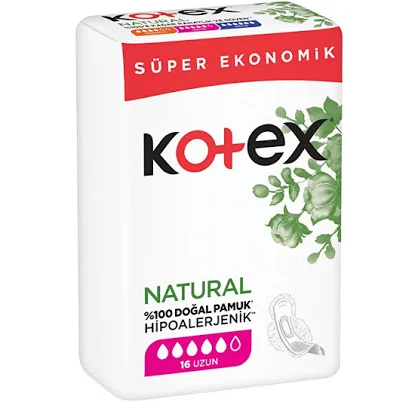
Kotex Natural Ultra Quadro Sanitary Pad Long 16 pcs
Lower concern. No PFAS evidence in standard sanitary pad materials.
Sanitary pads typically use cotton, cellulose, and absorbent polymers without fluorinated coatings. Kotex Natural does not disclose PFAS, but the product category carries minimal inherent risk.
We flunk more products than we pass. This one earned its grade. How we grade
Material
cotton, cellulose, absorbent core
Brand disclosure
Brand is silent on PFAS
Lab data
No public lab test
What Kotex Natural Ultra Quadro Sanitary Pad is made of, ingredients and materials
Kotex Natural Ultra Quadro uses cotton, cellulose, and an absorbent core designed to avoid synthetic polymers in the fluid-facing layers. Cotton and cellulose are natural fibers that do not off-gas volatile compounds or leach plasticizers when worn against skin at body temperature. The absorbent core typically contains superabsorbent polymer (SAP) to retain fluid, a standard industry material with no established dermal absorption risk during normal use.
What’s concerning
Category baseline
The starting point for this type of product, before anything specific to this product is counted.
No PFAS disclosure
No public statement from the brand about PFAS in this product.
Formaldehyde / VOCs
Cotton fibers may be treated with formaldehyde-based resins during manufacturing to improve crease resistance or fiber integrity. Kotex Natural does not specify whether cotton is untreated or post-treated; residual formaldehyde in finished pads is not disclosed. Standard pad manufacturing often uses low-formaldehyde processes, but absence of certification means this cannot be ruled out.
Source, ATSDR ↗Allergic contact dermatitis from adhesive, fragrance, or cotton residue
Isolated consumer reports of skin irritation exist in online reviews and medical literature for sanitary pad adhesives and fragrance additives across the category. Kotex Natural pads are not fragrance-free; any floral or botanical scent is a potential allergen for sensitive individuals. Incidence is low but documented.
What’s reassuring
Base material not linked to PFAS
The main material recorded for this product is not one associated with PFAS.
Azo dyes in printed graphics or adhesive dyes
No established record of hazardous azo dyes in Kotex Natural pads. Textile printing in this category is typically low-dye-use on wings or packaging. Brand does not disclose dye specifications, so field confirmation is limited.
Heavy metals
No recalls or test reports document lead, cadmium, or chromium in Kotex Natural pads. Adhesive (typically rubber or acrylic) and printed inks are standard consumer-grade formulations. Without third-party heavy metal testing on file, this remains unverified.
Source, FDA ↗Microplastic or SAP particle shedding during use
Superabsorbent polymer in the absorbent core is not designed to shed or leach during normal wear. No evidence of microplastic migration into vaginal or systemic tissues from sanitary pads has been established. Product integrity testing specific to Kotex Natural is not on public record.
The full breakdown
The brand's record and disclosure
Kotex Natural markets its products on a natural materials premise and has published ingredient lists on packaging and online. The brand has not widely disclosed third-party testing results or certifications (such as OEKO-TEX or similar) for heavy metals, dyes, or residual chemicals in finished pads. No recalls or safety controversies specific to this product line are on public record. Transparency on supply chain or pesticide residues in cotton is not prominently available.
How it compares in its category
Cotton-based pads occupy a middle ground in the category, they avoid some synthetic polymer hazards present in fully plastic-backed pads, but offer less detailed third-party certification than premium organic or medical-grade alternatives. Many competitors in the natural segment (e.g., organic cotton brands with GOTS certification) provide more rigorous testing documentation. Kotex Natural's positioning is mainstream consumer-grade natural, not clinical or certified organic.
If you buy it
Store in a cool, dry place away from moisture and direct heat to prevent degradation of the absorbent core. Change every 4-6 hours during normal flow to minimize bacterial growth and odor, and more frequently during heavy flow days. Discard pads in regular waste (not compost, due to SAP); do not flush. If skin irritation occurs, discontinue and patch-test with a different brand, as sensitivity to cotton, fragrance additives, or adhesive is possible but uncommon.
What we don’t know
- Basis
- Model estimate, 72% confidence, not a lab result
- Lab test
- None on record for this exact product
- Brand statement
- Kotex Natural has made none
Formulations change between production runs, so check the current label. How we grade.
Better-graded alternatives in Period Pads
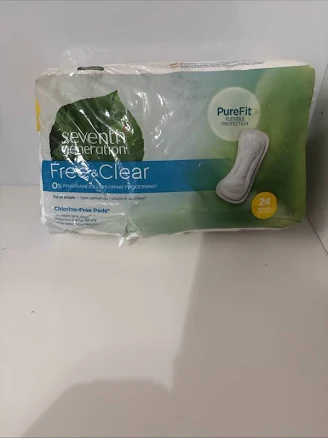
Seventh Generation
Chlorine Free Maxi Pads
- organic cotton, wood pulp
- The brand calls it PFAS-free, which we have not verified
- Fragrance allergen content
More period pads grades
How we score, every product runs through the same public 0-100 rubric based on materials, coatings, brand disclosure, lab findings, and recalls. See the full methodology → Spotted a mistake? Report an error.