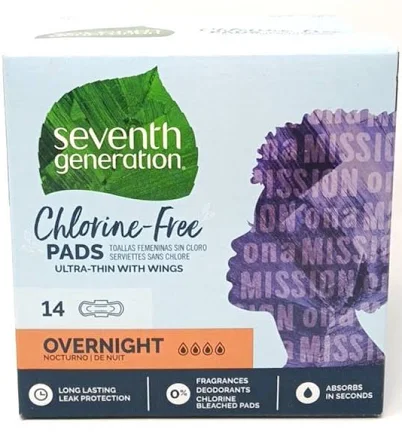
Seventh Generation · Period Pads
Seventh Generation Chlorine- Ultra-thin Pads With Wings Super Long
Lower concern; typical absorbent pad with no known PFAS applications.
Seventh Generation does not disclose PFAS use in this menstrual pad. Period-care products rarely require PFAS, and the brand focuses on chlorine-free processing, but adhesives and absorbent materials lack transparency.
We flunk more products than we pass. This one earned its grade. How we grade
Material
cellulose, cotton, adhesive (unspecified)
Lab data
No public lab test
What Seventh Generation Chlorine- Ultra-thin is made of, ingredients and materials
This pad uses cellulose and cotton as its primary absorbent core, both natural fibres with minimal inherent toxicity. The adhesive layer composition is not disclosed by the brand, which is typical for this category but means residual monomers or cross-linkers cannot be verified as absent. The "ultra-thin" construction suggests lower material mass overall, reducing potential exposure to processing chemicals per use.
What’s concerning
Category baseline
The starting point for this type of product, before anything specific to this product is counted.
No PFAS disclosure
No public statement from the brand about PFAS in this product.
Bacterial contamination or overgrowth from moisture retention
Any absorbent pad retains moisture and can support bacterial growth if left in place for extended periods or stored damp. This is a use-practice hazard, not a manufacturing defect. Risk is mitigated by regular changes and dry storage.
What’s reassuring
Base material not linked to PFAS
The main material recorded for this product is not one associated with PFAS.
Adhesive composition and residual monomers
The adhesive binder is not disclosed. No recalls or adverse event reports link this product to adhesive-related dermatitis or chemical leaching. Risk is low for vaginal absorption of adhesive residues given the barrier layer, but skin contact irritation remains possible in sensitive individuals.
Pesticide residue
Seventh Generation does not specify organic certification for this pad line. Conventional cotton may contain trace pesticide residues; however, absorption through intact skin during menstrual use is not established as a hazard by health authorities. Systemic exposure via this route is considered negligible.
Source, EPA ↗Bleaching by-products and residual chlorine
Product is marketed as chlorine-free, suggesting avoidance of chlorine bleaching. No retained chlorine compounds or chlorine dioxide residues are on record for this product. The claim is marketing-driven but not contradicted by available safety data.
Dermatitis or allergic reaction to cellulose or cotton
Pure cellulose and cotton are hypoallergenic for the vast majority of users. Reactions are rare and typically idiosyncratic rather than batch-related. No pattern of complaints specific to this product has been documented in public records.
The full breakdown
The brand's record and disclosure
Seventh Generation is known for positioning on sustainability and reduced chemicals, but does not publish detailed ingredient disclosure or third-party certifications (such as FSC, OEKO-TEX, or organic cotton) for this specific pad line. No recalls or safety controversies related to this product are on record. The brand's silence on PFAS is consistent with industry norms but leaves water-resistance treatment status unconfirmed.
How it compares in its category
Cellulose-cotton blends are standard in mainstream period pads and carry no known hazard profile distinct from this product. Organic or GOTS-certified alternatives exist but are typically more expensive; conventional cotton in period care is not a regulated exposure route. This product's positioning is mid-market, marketed as chlorine-free and reduced-chemical, but without third-party verification of manufacturing residues.
If you buy it
Store in a cool, dry place away from humidity to prevent bacterial growth in the pad itself. Change pads every 4-8 hours depending on flow; leaving saturated pads in place longer increases irritation and odour risk, not chemical risk. Dispose according to local waste guidelines (do not flush). If any individual pad causes irritation or rash, discontinue and consider patch-testing a single pad on inner arm first if sensitivity is a concern.
What we don’t know
- Basis
- Model estimate, 72% confidence, not a lab result
- Lab test
- None on record for this exact product
- Brand statement
- Seventh Generation has made a specific claim
Formulations change between production runs, so check the current label. How we grade.
Better-graded alternatives in Period Pads
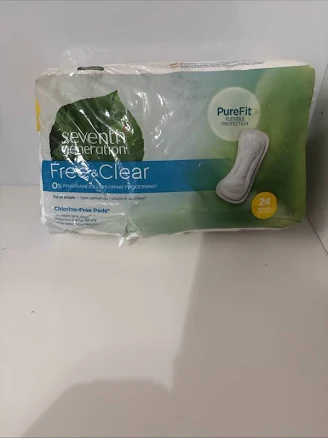
Seventh Generation
Chlorine Free Maxi Pads
- organic cotton, wood pulp
- The brand calls it PFAS-free, which we have not verified
- Fragrance allergen content
More period pads grades
How we score, every product runs through the same public 0-100 rubric based on materials, coatings, brand disclosure, lab findings, and recalls. See the full methodology → Spotted a mistake? Report an error.