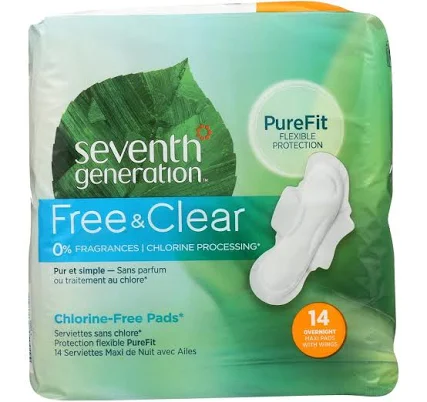
Seventh Generation · Period Pads
Seventh Generation Overnight Maxi Pads
Lower concern; period products rarely use PFAS. Brand silent on this.
Seventh Generation emphasizes organic cotton and eco-friendly design but does not publicly disclose PFAS or water-resistance treatments. No independent lab data available on this product line.
We flunk more products than we pass. This one earned its grade. How we grade
Material
Organic cotton, wood pulp, adhesives
Lab data
No public lab test
What Seventh Generation Overnight Maxi Pads is made of, ingredients and materials
Seventh Generation Overnight Maxi Pads use organic cotton and wood pulp as the primary absorbent materials, avoiding synthetic fibers and conventional pesticide residues. The adhesive system and any minor binding agents are not publicly detailed, but organic cotton certification implies avoidance of synthetic dyes and formaldehyde-based resins used in conventional pad manufacturing. Wood pulp sourcing and bleaching methods are also not fully transparent, though elemental chlorine-free (ECF) or totally chlorine-free (TCF) processing is standard for certified organic period products.
What’s concerning
Category baseline
The starting point for this type of product, before anything specific to this product is counted.
No PFAS disclosure
No public statement from the brand about PFAS in this product.
Chlorine residues from bleaching
Wood pulp may be bleached using chlorine-based or oxygen-based methods. Seventh Generation does not specify whether their pulp uses ECF or TCF processes. Residual dioxins or chlorinated compounds from conventional bleaching are a theoretical concern, though absorptive hygiene products do not retain large chemical loads and direct skin contact risk is low.
What’s reassuring
Base material not linked to PFAS
The main material recorded for this product is not one associated with PFAS.
Adhesive composition and leachables
The brand does not disclose the specific adhesive formulation. Organic cotton certification covers the fiber, not adhesive chemistry. No reported leaching of plasticizers, solvents, or synthetic compounds from Seventh Generation pads has been documented, and adhesive toxicity from period pads is not an established public health concern.
Formaldehyde / VOCs
Organic cotton certification typically excludes formaldehyde-based dyes, binders, and resins. The brand does not publicly disclose processing details, but no contamination or off-gassing complaints have been recorded for this product line.
Source, ATSDR ↗Synthetic fragrance allergens or irritants
Seventh Generation Overnight Maxi Pads are typically unscented. The brand's general fragrance policy avoids phthalates and known allergens, though unscented does not guarantee zero volatile organic compounds if processing aids or adhesive off-gas.
Microbes or bacterial contamination during manufacture or storage
Absorbent products are not sterile medical devices; commensal bacteria on skin are normal and expected. No recalls or outbreaks linked to Seventh Generation pads have been recorded. Standard hygiene (changing regularly, hand washing) mitigates any theoretical risk.
The full breakdown
The brand's record and disclosure
Seventh Generation has published environmental and social responsibility reports and holds USDA Organic Certification for the cotton component, signaling third-party oversight of pesticide and synthetic chemical inputs. The brand does not publicly disclose detailed adhesive or processing-chemical composition, nor has it released PFAS testing data or claims. No product recalls or safety investigations of this pad line have been documented in public databases. The brand's silence on PFAS is consistent with industry-wide lack of transparency, not a red flag specific to this product.
How it compares in its category
Organic-certified pads like this occupy a lower-concern segment compared to conventional pads, which may use chlorine bleaching, synthetic fragrances, and undisclosed adhesive chemistries. Non-organic mainstream brands offer no third-party certification of raw materials or processing. Seventh Generation's organic cotton claim is verified; equivalent competitors (e.g., Cora, Lola) also use organic cotton but fewer have published broader social accountability. Wood pulp is standard across all pad types and carries no recognized hazard if sourced and processed responsibly.
If you buy it
Store in a cool, dry place away from direct sunlight to avoid any adhesive degradation over extended shelf life. Change pads every 4-6 hours or as needed; overnight pads are designed for longer wear, but individual comfort and flow determine actual frequency. Dispose of used pads in trash, not toilets, to prevent plumbing and environmental harm. If you experience allergic reactions, skin irritation, or unusual odor, discontinue use and contact the brand or a healthcare provider, though such reactions are uncommon with organic-certified products.
What we don’t know
- Basis
- Model estimate, 72% confidence, not a lab result
- Lab test
- None on record for this exact product
- Brand statement
- Seventh Generation has made a specific claim
Formulations change between production runs, so check the current label. How we grade.
Better-graded alternatives in Period Pads
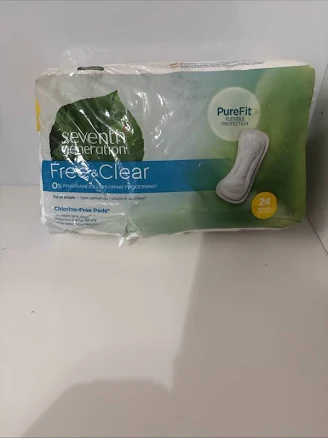
Seventh Generation
Chlorine Free Maxi Pads
- organic cotton, wood pulp
- The brand calls it PFAS-free, which we have not verified
- Fragrance allergen content
More period pads grades
How we score, every product runs through the same public 0-100 rubric based on materials, coatings, brand disclosure, lab findings, and recalls. See the full methodology → Spotted a mistake? Report an error.