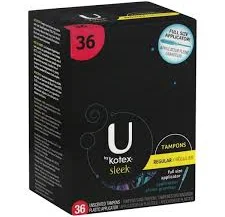
U by Kotex Sleek Tampons
Lower concern, but brand provides no transparency.
U by Kotex Sleek tampons use conventional rayon, cotton, and polypropylene with no obvious PFAS-risk design features. Kotex has not publicly claimed PFAS-free status or pursued verification.
We flunk more products than we pass. This one earned its grade. How we grade
Material
Rayon/viscose core, cotton exterior, polypropylene layers
Lab data
No public lab test
You may also be interested in
Top-graded picks in the categories readers replace first, every one scored on the same rubric.

- polypropylene filter housing, carbon/sediment cartridge
- We found no PFAS statement from the brand
- Bacterial growth in spent cartridges
3 hazards checked on this product, all on its full breakdown.

Aquasure
Premier Series 75 GPD Under Sink Reverse Osmosis Water Filtration System
- RO membrane, carbon filters, stainless steel housing
- We found no PFAS statement from the brand
- Bacterial and microbial growth in housing and filters
4 hazards checked on this product, all on its full breakdown.

Avocado
Vegan Mattress
- organic cotton, natural latex, coconut coir, recycled steel coils
- The brand calls it PFAS-free, which we have not verified
- Heavy metals
2 hazards checked on this product, all on its full breakdown.
What U by Kotex Sleek Tampons is made of, ingredients and materials
U by Kotex Sleek tampons use a rayon-viscose core (highly absorbent, plant-derived) wrapped in cotton, with a polypropylene plastic applicator and backing layers. Rayon is produced via chemical processing that dissolves wood pulp; residual sodium hydroxide or sulfuric acid can theoretically remain if purification is incomplete, though regulated manufacturers minimize these residues. Cotton provides a natural barrier but is not certified organic in this product, meaning pesticide residues are possible though typically minimal in finished goods. Polypropylene is a stable plastic with low leaching risk under normal body temperature and pH conditions.
What’s concerning
Category baseline
The starting point for this type of product, before anything specific to this product is counted.
No PFAS disclosure
No public statement from the brand about PFAS in this product.
Pesticide residue
U by Kotex Sleek does not specify organic cotton, so conventional cotton may contain trace pesticide residues (typically well below hazard thresholds). Vaginal mucosa absorption of such residues is theoretically possible but epidemiologically unproven as a clinical risk.
Source, EPA ↗Toxic shock syndrome (TSS) risk
TSS is associated with high-absorbency tampons and prolonged use, not brand-specific. All tampons carry this risk if left in too long. Kotex Sleek is not a super-plus variant, so TSS risk is standard and manageable with proper use (4-8 hour changes).
What’s reassuring
Base material not linked to PFAS
The main material recorded for this product is not one associated with PFAS.
Viscose processing residuals (sodium hydroxide, sulfuric acid)
Regulatory manufacturing standards in the US require thorough purification of rayon before consumer use. No documented cases of residual alkali or acid harm from Kotex tampons; industry-wide concern is low but not independently verified for this brand.
Polypropylene applicator degradation or particle shedding
Polypropylene is chemically stable at body temperature and vaginal pH. Microplastic shedding is not documented for standard applicators; risk is theoretical rather than established.
Bleaching agents or dioxins in rayon processing
Elemental chlorine-free (ECF) or totally chlorine-free (TCF) bleaching is now standard in US and EU rayon manufacture. Kotex does not specify method, but regulatory limits on dioxin residues in finished tampons are enforced; no recalls or contamination reports exist for this brand.
How is this PFAS grade calculated?
The brand's record and disclosure
Kotex (Kimberly-Clark subsidiary) does not publish ingredient transparency reports or third-party safety certifications for tampons, and has not publicly addressed PFAS presence or absence. The brand has faced no major product recalls related to tampons in recent years. Unlike some competitors (Seventh Generation, Cora, Rael), Kotex does not highlight organic certification or fluorochemical-free claims, suggesting either standard industry practice or strategic silence. No lawsuit or regulatory action specific to this product line is on public record.
How it compares in its category
Standard tampon design places U by Kotex Sleek in the mainstream tier, functional, widely available, and price-competitive, but less transparent than premium organic or PFAS-tested brands. It lacks third-party environmental or safety certifications that brands like Seventh Generation or Cora advertise. The rayon-cotton blend is typical across conventional tampons and poses lower risk than all-synthetic alternatives. For most users, safety profile is equivalent to other non-organic conventional tampons on US shelves.
If you buy it
Change every 4-8 hours to reduce toxic shock syndrome (TSS) risk, regardless of absorbency grade; this applies to all tampons. Do not leave in overnight or for extended periods. If you experience unusual odor, discharge, or irritation, discontinue and consult a provider, as symptoms may indicate suboptimal manufacturing or individual sensitivity. Store in a cool, dry place; exposure to heat or moisture can degrade applicator or core integrity over months.
What is not known about PFAS in this product?
- Basis
- Model estimate, 72% confidence, not a lab result
- Lab test
- None on record for this exact product
- Brand statement
- Kotex has made a specific claim
Formulations change between production runs, so check the current label. How we grade.
What are the PFAS-free alternatives to U by Kotex Sleek Tampons?
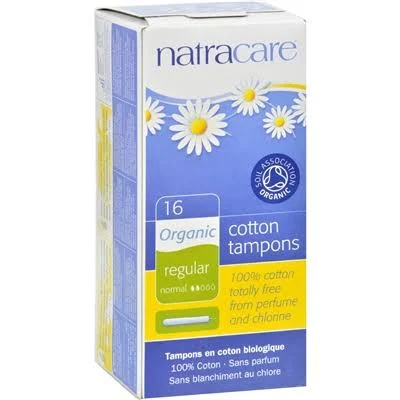
- 100% organic cotton
- A third party reports verifying it as PFAS-free
- Heavy metals
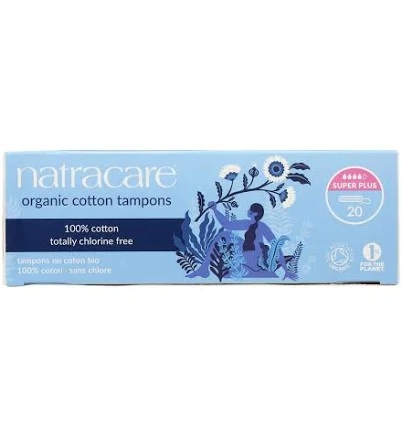
Natracare
Organic Super Plus Tampons, 3 x 20 ct
- organic cotton, cardboard applicator
- The brand calls it PFAS-free, which we have not verified
- Dioxins from bleaching
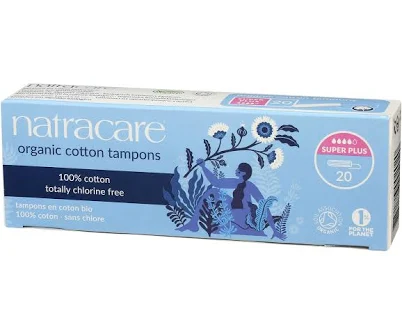
Natracare
Organic Cotton Super Plus Tampons
- organic cotton, no added fluorochemicals
- The brand calls it PFAS-free, which we have not verified
- Verified PFAS-free by a third party
More tampons grades
How we score, every product runs through the same public 0-100 rubric based on materials, coatings, brand disclosure, lab findings, and recalls. See the full methodology → Spotted a mistake? Report an error.