Berkley Jensen · Parchment Paper & Baking Liners
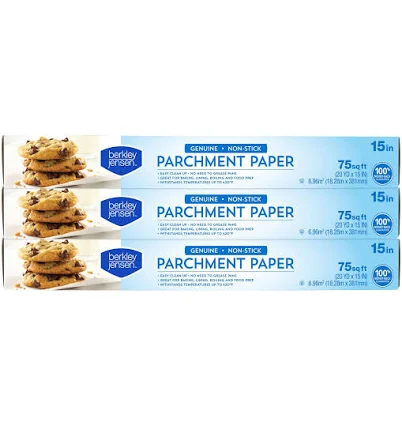
Berkley Jensen 15" Parchment Paper
Lower risk parchment, but water-resistant coating warrants caution.
Parchment typically uses silicone coating instead of PFAS-based treatments. Berkley Jensen makes no PFAS statement, but standard parchment poses lower risk than grease-resistant food wrap.
The better-graded swap
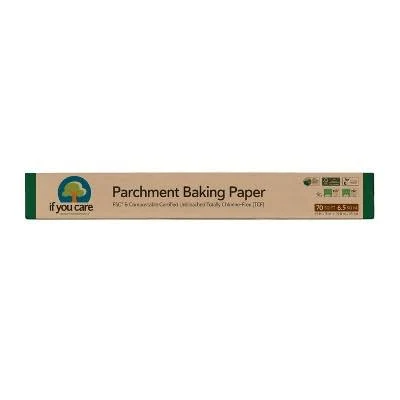
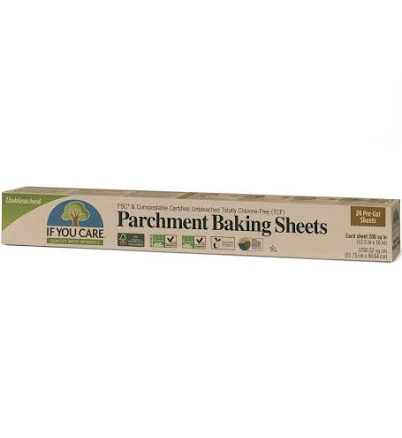
If You Care
If You Care Parchment Baking Paper
90/100 safety
Same rubric that flunked this product. The swap earned Excellent.
Still want this one anyway? Check the price on Amazon. We’d swap it.
Material
Silicone-coated parchment paper
Brand disclosure
Brand is silent on PFAS
Lab data
No public lab test
You may also be interested in
Top-graded picks in the categories readers replace first, every one scored on the same rubric.

- polypropylene filter housing, carbon/sediment cartridge
- We found no PFAS statement from the brand
- Bacterial growth in spent cartridges
3 hazards checked on this product, all on its full breakdown.

Aquasure
Premier Series 75 GPD Under Sink Reverse Osmosis Water Filtration System
- RO membrane, carbon filters, stainless steel housing
- We found no PFAS statement from the brand
- Bacterial and microbial growth in housing and filters
4 hazards checked on this product, all on its full breakdown.

Avocado
Vegan Mattress
- organic cotton, natural latex, coconut coir, recycled steel coils
- The brand calls it PFAS-free, which we have not verified
- Heavy metals
2 hazards checked on this product, all on its full breakdown.
What Berkley Jensen 15" Parchment Paper is made of, ingredients and materials
Berkley Jensen parchment paper is parchment cellulose coated with silicone rather than the older wax or oil finishes. Silicone provides heat tolerance (typically to 420-450°F) and non-stick performance without traditional fat-based coatings. The water-resistant properties that make it functional in baking may derive from fluorinated compounds or other durable finishes, which is why PFAS risk is flagged here despite silicone's general inertness at normal baking temperatures.
What’s concerning
Category baseline
The starting point for this type of product, before anything specific to this product is counted.
No PFAS disclosure
No public statement from the brand about PFAS in this product.
Waterproof / stain-resistant treatment
Water-repellent coating treatments have historically used PFAS.
Silicone coating degradation and particle transfer
Silicone coatings can degrade at high sustained heat (above 450°F) or with repeated creasing, potentially releasing microscopic silicone particles. Standard home baking temperatures (350-425°F) carry minimal risk, but broiler or direct flame exposure is not recommended.
PFAS
Many parchment papers use fluorinated coatings to achieve water and grease resistance; Berkley Jensen's specific coating chemistry is not publicly disclosed, leaving uncertainty about whether legacy fluorinated compounds beyond the PFAS profile are present.
Source, ATSDR ↗What’s reassuring
Bleaching residues and processing chemicals
No recalls or testing on this product for chlorine-based bleaching byproducts. Parchment paper is typically chlorine-free-processed, but brand-level transparency is absent for Berkley Jensen.
Adhesive or secondary coating contaminants
Silicone application sometimes requires adhesive layers; no specific safety data published for Berkley Jensen regarding these intermediate layers, but standard food-contact adhesives are generally inert at normal use temperatures.
How is this PFAS grade calculated?
The brand's record and disclosure
Berkley Jensen is Kroger's private label; Kroger has not publicly disclosed PFAS testing or elimination commitments for parchment products as of available records. No specific safety certifications (FSC, compostability claims, PFOA-free statements) are prominently marketed on this product. The brand maintains no published controversy related to this line, but silent stance on fluorinated coatings in food-contact papers reflects broader industry opacity around PFAS use.
How it compares in its category
Silicone-coated parchment is mid-tier in the category, superior heat tolerance and reusability compared to wax paper, but less transparent about composition than branded alternatives (Kirkland, If You Care) that sometimes highlight PFAS-free or specific coating materials. Parchment paper with lower PFAS concern exists but is less common at budget price points. This product is typical of mass-market options where durability is prioritized over ingredient disclosure.
If you buy it
Use at baking temperatures up to 420°F; avoid broiler direct contact or sustained high heat, which can degrade silicone coating and risk particle shedding into food. Inspect for tears, discoloration, or sticky residue before each use, these signal coating breakdown. Replace if coating becomes visibly worn or flakes. Store flat and dry; crumpling repeatedly may weaken the silicone layer. For stovetop use or direct flame (like toasting), choose alternatives; parchment is designed for oven only.
What is not known about PFAS in this product?
- Basis
- Model estimate, 72% confidence, not a lab result
- Lab test
- None on record for this exact product
- Brand statement
- Berkley Jensen has made none
Formulations change between production runs, so check the current label. How we grade.
What are the PFAS-free alternatives to Berkley Jensen 15" Parchment Paper?
- silicone-coated parchment paper
- The brand calls it PFAS-free, which we have not verified
- Paper degradation and particulate shedding
- unbleached paper with silicone coating
- The brand calls it PFAS-free, which we have not verified
- Silicone coating degradation at high heat
- bleached paper with silicone coating
- The brand calls it PFAS-free, which we have not verified
- Paper degradation and fragmentation
More parchment paper & baking liners grades
How we score, every product runs through the same public 0-100 rubric based on materials, coatings, brand disclosure, lab findings, and recalls. See the full methodology → Spotted a mistake? Report an error.