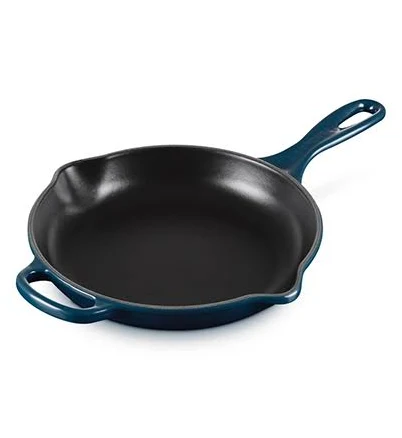
Le Creuset · Cast Iron Skillets
Le Creuset Signature Enameled Cast Iron Skillet, Is It Non-Toxic?
Low risk, enameled cast iron has no inherent reason to contain PFAS.
Le Creuset's Signature line features enameled cast iron with vitreous enamel, avoiding nonstick Teflon-family coating. The company has not independently verified PFAS presence.
The better-graded swap
Lodge
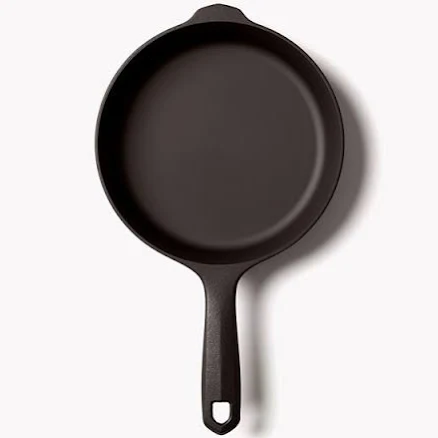
Lodge Cast Iron Skillet Pan 6"
75/100 safety
Same rubric that flunked this product. The swap earned Excellent.
Still want this one anyway? Check the price on Amazon. We’d swap it.
Material
cast iron with vitreous enamel coating
Lab data
No public lab test
You may also be interested in
Top-graded picks in the categories readers replace first, every one scored on the same rubric.

- polypropylene filter housing, carbon/sediment cartridge
- We found no PFAS statement from the brand
- Bacterial growth in spent cartridges
3 hazards checked on this product, all on its full breakdown.

Aquasure
Premier Series 75 GPD Under Sink Reverse Osmosis Water Filtration System
- RO membrane, carbon filters, stainless steel housing
- We found no PFAS statement from the brand
- Bacterial and microbial growth in housing and filters
4 hazards checked on this product, all on its full breakdown.

Avocado
Vegan Mattress
- organic cotton, natural latex, coconut coir, recycled steel coils
- The brand calls it PFAS-free, which we have not verified
- Heavy metals
2 hazards checked on this product, all on its full breakdown.
Is Le Creuset Signature Enameled Iron Skillet non-toxic? What it is made of
Le Creuset Signature skillets are cast iron cores with a vitreous enamel coating, a glass-like finish fused at high temperature. This coating is the critical safety feature, it seals the iron and prevents iron, lead, or cadmium from leaching into food. Vitreous enamel is chemically inert once cured and does not degrade at normal cooking temperatures (up to 500F for Le Creuset's stated tolerance). The enamel itself contains silica, feldspar, and colorant oxides, but no known problematic additives in standard formulations.
What’s concerning
Category baseline
The starting point for this type of product, before anything specific to this product is counted.
No PFAS disclosure
No public statement from the brand about PFAS in this product.
Enamel coating degradation and chipping
Iron leaching from exposed cast iron
If enamel is damaged and bare cast iron is exposed, iron can leach into acidic foods. For most people this poses no risk; those with hemochromatosis or iron overload conditions should avoid prolonged contact with bare cast iron.
Thermal shock cracking
Rapid temperature changes (e.g., hot pan into cold water) can cause the enamel to crack due to uneven contraction. Le Creuset recommends gradual cooling. This compromises the coating's protective function but is user error rather than a manufacturing defect.
What’s reassuring
Base material not linked to PFAS
The main material recorded for this product is not one associated with PFAS.
Lead
Vitreous enamel in Le Creuset products is not reported to contain lead or cadmium, and the sealed coating prevents any leaching even if trace amounts were present. No recall or test data indicates contamination in this product line.
Source, ATSDR ↗Fume risk from heating
Vitreous enamel does not emit toxic fumes at normal cooking temperatures. Unlike Teflon-type coating non-stick coatings, enamel is thermally stable and inert below 500F.
How is this PFAS grade calculated?
The brand's record and disclosure
Le Creuset is a heritage French cookware brand with decades of uncontroversial safety history in enameled cast iron. The company provides care instructions and product specifications but does not publish detailed chemical composition or third-party testing results. No significant recalls or safety controversies affecting this product line are on record. The brand does not publicly disclose PFAS testing, but enameled cast iron has no manufacturing reason to contain PFAS.
How it compares in its category
Enameled cast iron has lower concern than bare cast iron because the enamel coating can reduce leaching compared to uncoated cast iron. Le Creuset is premium-tier pricing; comparable alternatives include Staub (similar safety profile, owned by Zwilling) and Lodge (lower cost, equivalent safety). Non-enameled cast iron requires seasoning maintenance and can leach iron at low pH. Non-stick cookware introduces Teflon-type coating fume and coating degradation risks that enameled cast iron avoids.
If you buy it
Keep skillets below 500F to preserve enamel integrity; higher sustained heat can cause discoloration or crazing but does not release toxins. Avoid acidic foods (tomato, wine, vinegar) during long simmers, as acid can degrade enamel over years, though this is cosmetic rather than a safety hazard. Inspect the enamel annually for chips or cracks; if large chips expose bare cast iron, the pan may develop rust stains but poses no hazard of this kind on record. Hand wash and dry promptly to prevent enamel water spotting; dishwasher use is discouraged by the manufacturer.
What is not known about PFAS in this product?
- Basis
- Model estimate, 88% confidence, not a lab result
- Lab test
- None on record for this exact product
- Brand statement
- Le Creuset has made a specific claim
Formulations change between production runs, so check the current label. How we grade.
What are the PFAS-free alternatives to Le Creuset Signature Enameled Cast Iron Skillet?
- cast iron (bare or seasoned with oil)
- Iron leaching into food
3 hazards checked on this product, all on its full breakdown.
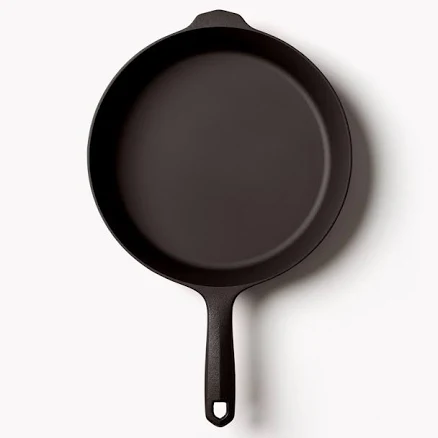
- cast iron, bare/seasoned surface
- We found no PFAS statement from the brand
- Iron leaching into acidic foods
2 hazards checked on this product, all on its full breakdown.
- cast iron, seasoned surface
- We found no PFAS statement from the brand
- Rust and iron transfer to food
2 hazards checked on this product, all on its full breakdown.
More cast iron skillets grades
How we score, every product runs through the same public 0-100 rubric based on materials, coatings, brand disclosure, lab findings, and recalls. See the full methodology → Spotted a mistake? Report an error.