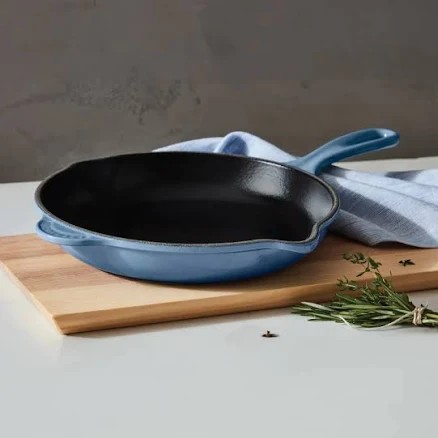
Le Creuset · Cast Iron Skillets
Le Creuset Traditional Skillet, Is It Non-Toxic?
Low risk, enameled cast iron doesn't require PFAS-based coatings.
Le Creuset's Traditional Skillet is enameled cast iron with a silicate-based glaze, not a Teflon-family coating. The material class does not typically employ PFAS.
The better-graded swap
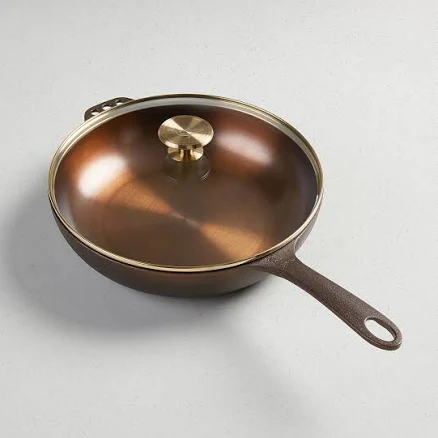
Smithey
Smithey No. 11 Deep Skillet with Glass Lid
75/100 safety
Same rubric that flunked this product. The swap earned Excellent.
Still want this one anyway? Check the price on Amazon. We’d swap it.
Material
Enameled cast iron
Lab data
No public lab test
You may also be interested in
Top-graded picks in the categories readers replace first, every one scored on the same rubric.

- polypropylene filter housing, carbon/sediment cartridge
- We found no PFAS statement from the brand
- Bacterial growth in spent cartridges
3 hazards checked on this product, all on its full breakdown.

Aquasure
Premier Series 75 GPD Under Sink Reverse Osmosis Water Filtration System
- RO membrane, carbon filters, stainless steel housing
- We found no PFAS statement from the brand
- Bacterial and microbial growth in housing and filters
4 hazards checked on this product, all on its full breakdown.

Avocado
Vegan Mattress
- organic cotton, natural latex, coconut coir, recycled steel coils
- The brand calls it PFAS-free, which we have not verified
- Heavy metals
2 hazards checked on this product, all on its full breakdown.
Is Le Creuset Traditional Skillet non-toxic? What it is made of
Le Creuset Traditional Skillets are cast iron cores with a vitreous enamel (glass-fused ceramic) coating. The enamel is baked onto the iron at high temperature, creating a fused barrier that does not require Teflon-type coating, silicones, or PFAS chemicals. Cast iron itself is inert; the safety profile depends entirely on the enamel quality and whether it chips or degrades over time, exposing bare iron or releasing particles.
What’s concerning
No PFAS disclosure
No public statement from the brand about PFAS in this product.
Category baseline
The starting point for this type of product, before anything specific to this product is counted.
Enamel coating degradation and particle release
Enameled cast iron can chip if struck hard or exposed to thermal shock. Small flakes of fused enamel are inert and non-toxic if ingested, but chipping compromises the nonstick surface and exposes bare iron to rust.
What’s reassuring
Base material not linked to PFAS
The main material recorded for this product is not one associated with PFAS.
Lead
Le Creuset has no recorded lead or cadmium violations in US or EU markets. French manufacturing standards limit heavy metals, but the brand does not publish independent test results for consumer verification.
Source, ATSDR ↗Teflon-type coating (Teflon) fume risk
Enameled cast iron does not use Teflon-type coating nonstick coatings, so overheating will not produce Teflon-type coating fumes. Enamel itself is stable well above normal cooking temperatures.
Aluminum leaching
Cast iron and glass enamel are not aluminum-based, so leaching is not a concern with this product.
Coating off-gassing or volatile organic compounds (VOC)
Vitreous enamel is a cured ceramic glaze with no residual solvents or off-gas risk. Odor on first use is normal from oils and manufacturing residue, not chemical emissions.
How is this PFAS grade calculated?
The brand's record and disclosure
Le Creuset does not publish detailed chemical composition or independent testing results for enamel coatings on its website. The brand has no recorded recalls for lead, cadmium, or coating degradation on cookware in the US market. Le Creuset is owned by Groupe SEB and manufactures in France under French and EU safety standards, which impose limits on heavy metals in food-contact glazes. No formal PFAS stance is published, but the enamel coating chemistry does not inherently require PFAS.
How it compares in its category
Enameled cast iron (Le Creuset, Staub, Lodge) avoids Teflon-type coating fume risk and aluminum leaching entirely, unlike nonstick skillets or bare aluminum. Le Creuset's enamel is thicker and more durable than budget brands; chipping risk is lower but still possible with impact or extreme thermal shock. Bare cast iron requires seasoning maintenance but eliminates enamel durability concerns altogether.
If you buy it
Avoid thermal shock, do not run a hot skillet under cold water. Hand wash and dry immediately to prevent rust on any chips. Use on medium to medium-high heat; prolonged high heat can cause discoloration but does not typically degrade the enamel. If enamel chips significantly, exposing bare iron, discontinue use as a nonstick surface and either re-season as bare cast iron or replace. These skillets last decades with proper care.
What is not known about PFAS in this product?
- Basis
- Model estimate, 92% confidence, not a lab result
- Lab test
- None on record for this exact product
- Brand statement
- Le Creuset has made a specific claim
Formulations change between production runs, so check the current label. How we grade.
What are the PFAS-free alternatives to Le Creuset Traditional Skillet?
- cast iron (bare or seasoned with oil)
- Iron leaching into food
3 hazards checked on this product, all on its full breakdown.
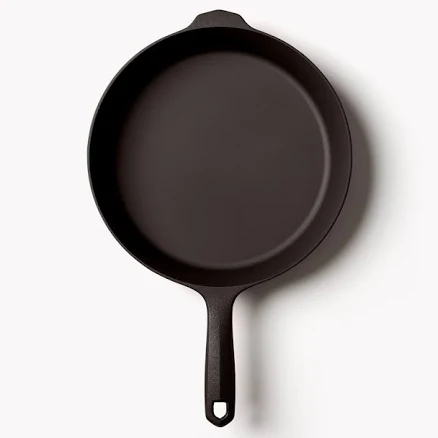
- cast iron, bare/seasoned surface
- We found no PFAS statement from the brand
- Iron leaching into acidic foods
2 hazards checked on this product, all on its full breakdown.
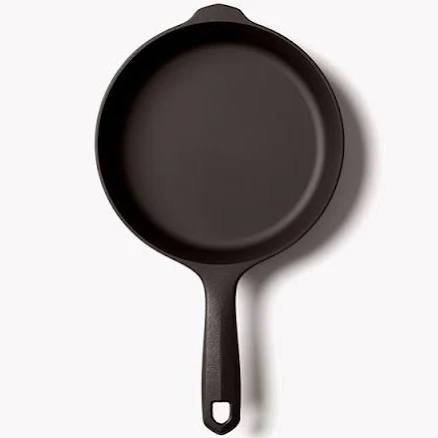
- cast iron, seasoned surface
- We found no PFAS statement from the brand
- Rust and iron transfer to food
2 hazards checked on this product, all on its full breakdown.
More cast iron skillets grades
How we score, every product runs through the same public 0-100 rubric based on materials, coatings, brand disclosure, lab findings, and recalls. See the full methodology → Spotted a mistake? Report an error.