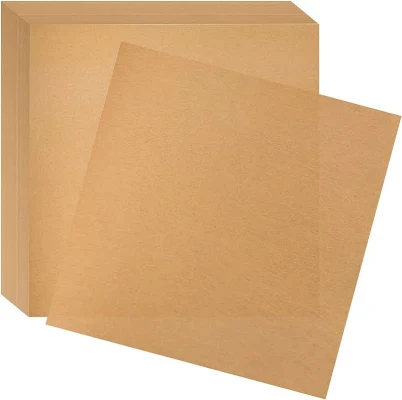
· Parchment Paper & Baking Liners
Natural Unbleached Parchment Paper Sheets
Likely lower risk parchment, but ask the manufacturer about coating details.
This parchment achieves water and grease resistance via silicone or mineral wax rather than Teflon-family coating. The unbleached and natural language hints at minimal processing, but the brand never confirms its coating chemistry or PFAS-free status.
The better-graded swap
If You Care
If You Care Baking Paper, Parchment, 70 Square Feet
90/100 safety
Same rubric that flunked this product. The swap earned Excellent.
Still want this one anyway? Check the price on Amazon. We’d swap it.
Material
cellulose paper with silicone or wax coating
Brand disclosure
Brand is silent on PFAS
Lab data
No public lab test
You may also be interested in
Top-graded picks in the categories readers replace first, every one scored on the same rubric.

- polypropylene filter housing, carbon/sediment cartridge
- We found no PFAS statement from the brand
- Bacterial growth in spent cartridges
3 hazards checked on this product, all on its full breakdown.

Aquasure
Premier Series 75 GPD Under Sink Reverse Osmosis Water Filtration System
- RO membrane, carbon filters, stainless steel housing
- We found no PFAS statement from the brand
- Bacterial and microbial growth in housing and filters
4 hazards checked on this product, all on its full breakdown.

Avocado
Vegan Mattress
- organic cotton, natural latex, coconut coir, recycled steel coils
- The brand calls it PFAS-free, which we have not verified
- Heavy metals
2 hazards checked on this product, all on its full breakdown.
What Natural Unbleached Parchment Paper Sheets is made of, ingredients and materials
Unbleached Parchment Paper is cellulose (plant fiber) coated with either silicone or wax to create a non-stick surface. Unbleached means it skips chlorine-based whitening, reducing exposure to bleaching byproducts and dioxins that can form during that process. The coating is the critical component, silicone is inert at typical baking temperatures (up to 420F), while wax coatings vary in composition and melt point depending on source (animal, vegetable, or synthetic blend).
What’s concerning
Category baseline
The starting point for this type of product, before anything specific to this product is counted.
No PFAS disclosure
No public statement from the brand about PFAS in this product.
Waterproof / stain-resistant treatment
Water-repellent coating treatments have historically used PFAS.
Coating degradation and particle migration
Silicone and wax coatings can crack, flake, or degrade with repeated folding, high heat, or contact with acidic foods. The brand does not publish data on coating durability or particle release limits under stress.
Wax or silicone composition unknowns
The brand does not disclose whether the coating is synthetic silicone, food-grade mineral oil wax, vegetable wax, or a blend. Wax source and purity affect safety; some lower-cost wax products may contain residual processing chemicals.
Temperature stability and smoke/fume risk
Wax coatings may smoke, discolor, or release fumes above 400F if not formulated for high-heat baking. The brand does not provide a maximum safe temperature; exceeding 420F risks coating breakdown and inhalation of volatilized wax.
What’s reassuring
Bleaching byproducts (avoided by unbleached claim)
Unbleached parchment sidesteps dioxin formation from chlorine bleaching, a known concern in standard white parchment. No bleach residue is expected in this product.
Heavy metals
Food-contact cellulose paper is regulated under FDA guidelines; no recalls or contamination reports exist for parchment. Unbleached pulp carries no higher contamination risk than bleached varieties if sourced from certified suppliers.
Source, FDA ↗How is this PFAS grade calculated?
The brand's record and disclosure
The brand has not made public commitments on PFAS avoidance or detailed coating composition, and no safety certifications (FDA, NSF, or third-party testing) are documented for this specific product line. The brand positions itself as 'natural,' but this is a marketing claim unsupported by independent verification on the product's website or published materials. No recalls or safety incidents are on record for this brand's parchment products.
How it compares in its category
Unbleached parchment is a solid mid-range choice, it avoids the chemical processing of bleached varieties and the PFAS risks more common in coated cookware, but it offers no advantage over other unbleached parchment papers in terms of third-party safety assurance. Some competitors (e.g., If You Care, Regency Wraps) have pursued FSC certification or explicit PFAS-free claims, making them more transparent. Wax paper (dyes, petroleum wax), silicone baking mats (similar coating unknowns), and aluminum foil (no coating concerns but potential leaching at high heat) are the main alternatives.
If you buy it
Use parchment only up to 420F; higher temperatures can degrade silicone or cause wax to smoke. Do not reuse sheets excessively if the coating shows wear, cracking, or discoloration, as degradation may increase particle release. Store in a cool, dry place away from direct sunlight to prevent wax softening. Parchment is single-use; discard after baking and do not wash and reuse.
What is not known about PFAS in this product?
- Basis
- Model estimate, 72% confidence, not a lab result
- Lab test
- None on record for this exact product
- Brand statement
- has made none
Formulations change between production runs, so check the current label. How we grade.
What are the PFAS-free alternatives to Natural Unbleached Parchment Paper Sheets?
- silicone-coated parchment paper
- The brand calls it PFAS-free, which we have not verified
- Paper degradation and particulate shedding
- unbleached paper with silicone coating
- The brand calls it PFAS-free, which we have not verified
- Silicone coating degradation at high heat
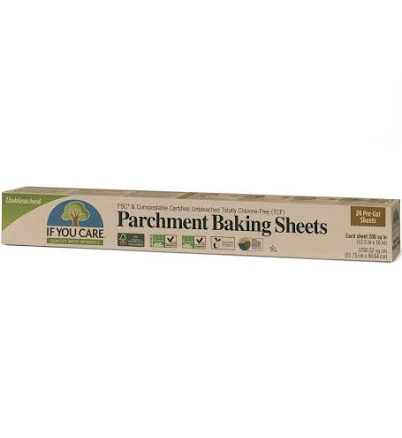
- bleached paper with silicone coating
- The brand calls it PFAS-free, which we have not verified
- Paper degradation and fragmentation
More parchment paper & baking liners grades
How we score, every product runs through the same public 0-100 rubric based on materials, coatings, brand disclosure, lab findings, and recalls. See the full methodology → Spotted a mistake? Report an error.