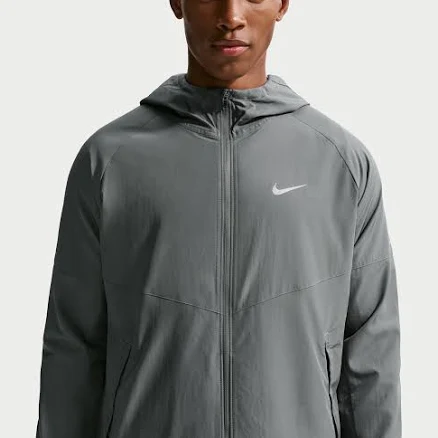
Nike Men's Repel Miler Jacket
water-repellent coating jacket without public PFAS disclosure. Moderate concern warranted.
Nike's Repel Miler uses water-repellent coating (water-repellent coating) coating typical of running jackets, likely fluorocarbon-based. Nike provides no public PFAS details for this product line.
Still want this one anyway? Check the price on Amazon. We’d swap it.
Material
Polyester with water-repellent coating water-repellent finish
Lab data
No public lab test
You may also be interested in
Top-graded picks in the categories readers replace first, every one scored on the same rubric.

- polypropylene filter housing, carbon/sediment cartridge
- We found no PFAS statement from the brand
- Bacterial growth in spent cartridges
3 hazards checked on this product, all on its full breakdown.

Aquasure
Premier Series 75 GPD Under Sink Reverse Osmosis Water Filtration System
- RO membrane, carbon filters, stainless steel housing
- We found no PFAS statement from the brand
- Bacterial and microbial growth in housing and filters
4 hazards checked on this product, all on its full breakdown.

Avocado
Vegan Mattress
- organic cotton, natural latex, coconut coir, recycled steel coils
- The brand calls it PFAS-free, which we have not verified
- Heavy metals
2 hazards checked on this product, all on its full breakdown.
What Nike Men's Repel Miler Jacket is made of, ingredients and materials
The Repel Miler is 100% polyester with a water-repellent coating (water-repellent coating) finish applied to the fabric surface. Polyester itself is a synthetic polymer that does not leach chemicals under normal wear or washing. The water-repellent coating finish is the material of concern, it creates the water-shedding property but its chemical composition is not publicly disclosed by Nike, which is standard industry silence on this topic.
What’s concerning
Waterproof / stain-resistant treatment
Water-repellent coating treatments have historically used PFAS.
Category baseline
The starting point for this type of product, before anything specific to this product is counted.
No PFAS disclosure
No public statement from the brand about PFAS in this product.
Antimony in polyester fiber
Antimony is used as a catalyst in some polyester fiber production and can remain as a trace residue. Exposure during normal wear is negligible, but levels in polyester textiles vary by supplier; Nike does not disclose antimony testing or limits.
water-repellent coating finish degradation and reapplication chemical exposure
The water-repellent coating degrades with washing and wear. Commercial water-repellent coating reapplication products (sprays, wash-in treatments) typically contain perfluorinated compounds; repeated application increases cumulative PFAS exposure over the garment's lifetime. Nike provides no guidance on reapplication or alternatives without fluorine-based water repellents.
What’s reassuring
Azo dyes in polyester
Polyester apparel can be dyed with azo dyes that release carcinogenic amines; no specific safety violations or independent test results are on record for Nike's Repel Miler line. Standard industry manufacturing assumes azo-dye restrictions under REACH and Oeko-Tex protocols, but Nike does not publish dye chemistry.
Formaldehyde / VOCs
Some water-resistant finishes and dyes can contain formaldehyde as a crosslinker or carrier. No public recalls or test reports exist for this product; formaldehyde emissions from apparel are typically very low under normal wear conditions and are regulated under Oeko-Tex standards that Nike does not claim to meet.
Source, ATSDR ↗Heavy metals
Darker dyes and some pigments can contain lead, cadmium, or chromium; regulatory limits exist in most markets. No test results or violations are on record for the Repel Miler. Risk is very low for casual wear and washing, but color fastness over many cycles depends on dye stability and rinse protocols that Nike does not detail.
Source, FDA ↗How is this PFAS grade calculated?
The brand's record and disclosure
Nike does not publicly disclose the fluorochemical content or PFAS-free status of its water-repellent coating-treated apparel. The company has faced pressure from environmental and health advocates over PFAS in performance textiles but has not published detailed reformulation timelines or ingredient transparency. No major recalls or safety violations are on record for this specific jacket model, but the lack of disclosure reflects broader industry opacity.
How it compares in its category
Most major athletic and outdoor brands (Arc'teryx, Patagonia, Columbia, The North Face) use similar water-repellent coating finishes with equivalent PFAS uncertainty or known PFAS content. A smaller subset (some Patagonia lines, Allbirds) explicitly market PFAS-free or fluorine-free water repellency. The Repel Miler offers no differentiation on chemical safety; it is a middle-of-the-road choice in an industry that has not yet fully transitioned away from legacy water-repellent coating chemistry.
If you buy it
Wash in cold water and avoid excessive dry cleaning, which may concentrate any residual chemical finishes. Do not machine dry on high heat; air dry to preserve the water-repellent coating and avoid unnecessary thermal stress on polyester. The water-repellent coating finish will degrade over time and through repeated washing; reapplication products are available but their PFAS content is also typically undisclosed. Consider whether the water-repellency feature is essential for your use case; a standard polyester jacket without water-repellent coating eliminates this chemical exposure pathway entirely.
What is not known about PFAS in this product?
- Basis
- Model estimate, 45% confidence, not a lab result
- Lab test
- None on record for this exact product
- Brand statement
- Nike has made a specific claim
Formulations change between production runs, so check the current label. How we grade.
More rain jackets grades
How we score, every product runs through the same public 0-100 rubric based on materials, coatings, brand disclosure, lab findings, and recalls. See the full methodology → Spotted a mistake? Report an error.