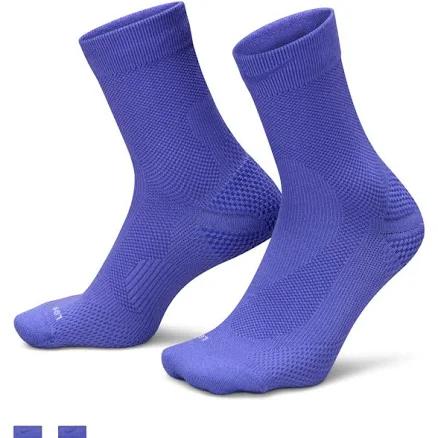
Nike Running Women Lightweight Socks
Lower PFAS concern for basic athletic socks; no evidence of water-repellent coating treatment or Teflon-type coating.
Nike's lightweight running socks are primarily polyester and nylon with elastic, common base materials without established PFAS risk. No water-repellent coating or water-resistant treatment is typical for standard athletic socks, reducing concern. Nike doesn't disclose PFAS use or avoidance for this product.
Still want this one anyway? Check the price on Amazon. We’d swap it.
Material
Polyester blend / nylon blend with elastic (typical athletic sock)
Lab data
No public lab test
You may also be interested in
Top-graded picks in the categories readers replace first, every one scored on the same rubric.

- polypropylene filter housing, carbon/sediment cartridge
- We found no PFAS statement from the brand
- Bacterial growth in spent cartridges
3 hazards checked on this product, all on its full breakdown.

Aquasure
Premier Series 75 GPD Under Sink Reverse Osmosis Water Filtration System
- RO membrane, carbon filters, stainless steel housing
- We found no PFAS statement from the brand
- Bacterial and microbial growth in housing and filters
4 hazards checked on this product, all on its full breakdown.

Avocado
Vegan Mattress
- organic cotton, natural latex, coconut coir, recycled steel coils
- The brand calls it PFAS-free, which we have not verified
- Heavy metals
2 hazards checked on this product, all on its full breakdown.
What Nike Running Women Lightweight Socks is made of, ingredients and materials
Nike Running Women Lightweight Socks use a polyester-nylon blend with elastane (spandex) and elastic cuffs, typical for performance athletic wear. Polyester and nylon are synthetic fibers that do not leach chemicals during normal wear or washing at household temperatures. The elastane provides stretch and recovery without releasing volatile compounds under typical athletic use conditions. This material combination is chemically stable and does not present leaching or off-gassing risks during wear.
What’s concerning
Category baseline
The starting point for this type of product, before anything specific to this product is counted.
No PFAS disclosure
No public statement from the brand about PFAS in this product.
Azo dyes and residual dye chemistry
Polyester athletic socks are typically dyed with reactive or disperse dyes; Nike does not publicly disclose azo-dye restrictions or residual dye limits for this line. Restricted azo dyes are regulated in EU/REACH but not formally mandated in US athletic wear, though mainstream brands typically avoid them.
Formaldehyde / VOCs
Lightweight athletic socks may receive wrinkle-resist or shape-retention finishes that contain trace formaldehyde; this is common in polyester blends but typically minimal and reduces with washing. No specific formaldehyde test results are publicly available for Nike running socks.
Source, ATSDR ↗Elastane (spandex) degradation under heat and UV
Elastane breaks down over time with repeated washing and UV exposure, but this is a durability issue, not a safety hazard. Degradation does not release hazardous chemicals; it simply reduces stretch.
What’s reassuring
Base material not linked to PFAS
The main material recorded for this product is not one associated with PFAS.
Antimony in polyester fiber
Antimony is used as a catalyst in polyester production but does not leach into skin or sweat during normal wear. Modern polyester manufacturing reduces antimony residuals; no contamination has been reported in mainstream athletic socks.
Fragrance or antimicrobial additives
Nike running socks do not carry marketed antimicrobial or fragrance treatments. Standard socks do not contain added fragrance compounds or silver-ion antimicrobials that would pose skin sensitization risk.
How is this PFAS grade calculated?
The brand's record and disclosure
Nike does not publicly disclose detailed chemical composition or third-party textile certifications for standard athletic socks. The brand has faced scrutiny over labor practices and sustainability claims but no established safety recalls or chemical contamination incidents for basic socks. Nike's apparel lines are generally manufactured to OEKO-TEX or similar standard compliance, though this is not explicitly marketed for the running sock line. Transparency on dye chemistry and residual formaldehyde levels is not publicly available for this specific product.
How it compares in its category
Performance running socks from Nike, Merrell, Smartwool, and other mainstream brands share similar polyester-synthetic blends and pose equivalent low chemical hazard profiles when new. Wool-blend alternatives (like Smartwool) eliminate synthetic fiber concerns but carry their own care requirements. Budget athletic socks from discount retailers show no higher hazard rates but offer less durability and fit consistency. Premium moisture-wicking socks in this category differ mainly in performance features, not baseline safety.
If you buy it
Wash new socks once before wearing to remove any residual dyes or finishes; use warm water (not hot) and standard detergent. Avoid bleach and fabric softeners, which can degrade elastane and are unnecessary for synthetic blends. Replace socks when elastic loses recovery or seams begin to fray, typically after 50-100 wash cycles depending on use intensity. Store in a dry place to prevent mildew; no special care beyond standard laundry is required.
What is not known about PFAS in this product?
- Basis
- Model estimate, 72% confidence, not a lab result
- Lab test
- None on record for this exact product
- Brand statement
- Nike has made a specific claim
Formulations change between production runs, so check the current label. How we grade.
More performance socks grades
How we score, every product runs through the same public 0-100 rubric based on materials, coatings, brand disclosure, lab findings, and recalls. See the full methodology → Spotted a mistake? Report an error.