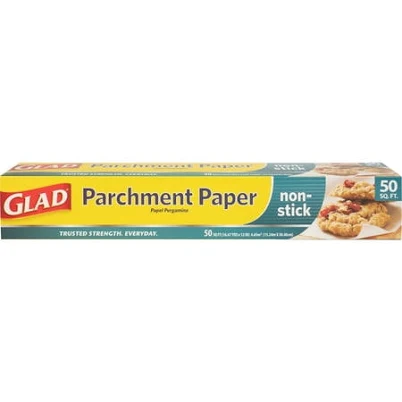
Glad · Parchment Paper & Baking Liners
Brand Buzz Glad Parchment Paper Pack of 4
Parchment paper may use grease-resistant coatings. Glad discloses PFAS status.
Brand Buzz Glad parchment paper uses water and grease-resistant surface treatment that may contain PFAS. Glad discloses no PFAS status or testing.
The better-graded swap
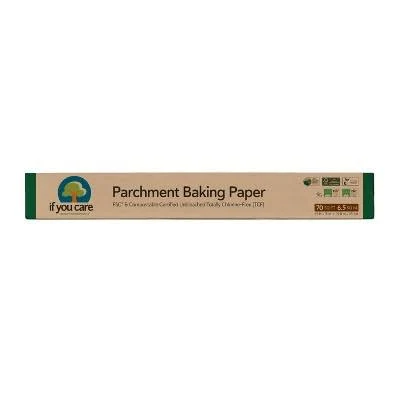
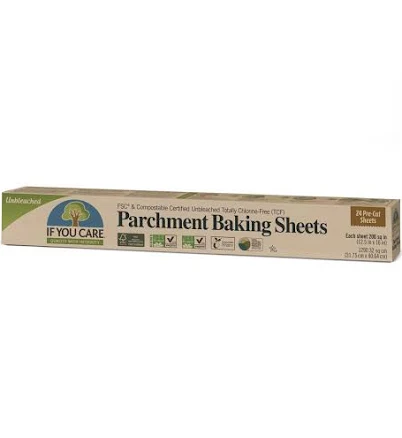
If You Care
If You Care Parchment Baking Paper
90/100 safety
Same rubric that flunked this product. The swap earned Excellent.
Still want this one anyway? Check the price on Amazon. We’d swap it.
Material
silicone-coated paper or heat-resistant coating
Brand disclosure
Brand is silent on PFAS
Lab data
No public lab test
You may also be interested in
Top-graded picks in the categories readers replace first, every one scored on the same rubric.

- polypropylene filter housing, carbon/sediment cartridge
- We found no PFAS statement from the brand
- Bacterial growth in spent cartridges
3 hazards checked on this product, all on its full breakdown.

Aquasure
Premier Series 75 GPD Under Sink Reverse Osmosis Water Filtration System
- RO membrane, carbon filters, stainless steel housing
- We found no PFAS statement from the brand
- Bacterial and microbial growth in housing and filters
4 hazards checked on this product, all on its full breakdown.

Avocado
Vegan Mattress
- organic cotton, natural latex, coconut coir, recycled steel coils
- The brand calls it PFAS-free, which we have not verified
- Heavy metals
2 hazards checked on this product, all on its full breakdown.
What Brand Buzz Glad Parchment Paper Pack of 4 is made of, ingredients and materials
Glad parchment paper is paper (cellulose base) coated with silicone or a heat-resistant polymer to prevent sticking and grease penetration. This coating is the functional layer and is generally food-safe at normal baking temperatures (up to 420-450°F). The paper itself poses no known chemical leaching risk under standard cooking use; the concern is whether the coating remains intact and does not degrade into food when heated.
What’s concerning
Category baseline
The starting point for this type of product, before anything specific to this product is counted.
No PFAS disclosure
No public statement from the brand about PFAS in this product.
Waterproof / stain-resistant treatment
Water-repellent coating treatments have historically used PFAS.
Coating degradation and particle shedding
Repeated heating or use above recommended temperatures can cause silicone or polymer coatings to peel or crack, potentially allowing small particles or degradation byproducts to contact food. Glad does not specify durability limits for repeated use.
Microplastics
If the polymer coating degrades at high heat (above 450°F), microscopic fragments may shed into food. No published testing of Glad parchment specifically addresses this risk; risk is low under normal baking but increases with temperature abuse.
Source, EPA ↗Thermal leaching of coating components
Some silicone-coated papers may release oligomers or low-molecular-weight components when exposed to prolonged heat or acidic/oily foods. Glad does not disclose coatings composition, so this cannot be ruled out; risk is typically low for short-term baking.
PFAS
Parchment paper's water and grease resistance historically relied on fluorinated compounds (PFOA, PFOS, or newer PFAS). Glad does not state whether its coating is PFAS-free; absence of disclosure is a yellow flag in an industry where many manufacturers have phased PFAS out.
Source, ATSDR ↗What’s reassuring
Bleach residues or paper-processing chemicals
Paper base may contain trace residues from pulping or bleaching, but these are typically present in food-grade parchment at negligible levels and are not a known safety issue with Glad or similar products.
How is this PFAS grade calculated?
The brand's record and disclosure
Glad (owned by Clorox) does not publicly disclose the specific chemistry of its parchment coating or confirm PFAS-free status on product packaging or website. No major recalls or health warnings specific to Glad parchment paper are on record with FDA or CPSC. The brand's silence on PFAS is consistent with many conventional parchment makers; competitors like If You Care and Katbite market PFAS-free alternatives more explicitly, suggesting Glad has not prioritized this transparency.
How it compares in its category
Standard parchment paper (silicone-coated or other polymer-coated) presents lower concern than alternatives like wax paper (which can degrade at high heat and release wax residue) or uncoated paper (which sticks and may absorb grease). Glad's product is typical midmarket parchment; it lacks third-party eco or PFAS certifications that distinguish premium brands. Price and availability are strong; safety profile is standard for the mass-market category, with the PFAS question unresolved.
If you buy it
Use within the stated temperature range (typically up to 420°F; check package). Do not reuse sheets excessively; discard if coating shows visible peeling, browning, or pitting, as degraded coating may shed particles. For high-heat applications above 450°F, use alternatives like silicone baking mats or cast iron. Store in a cool, dry place; do not fold or crease repeatedly, as cracks in the coating can spread.
What is not known about PFAS in this product?
- Basis
- Model estimate, 45% confidence, not a lab result
- Lab test
- None on record for this exact product
- Brand statement
- Glad has made none
Formulations change between production runs, so check the current label. How we grade.
What are the PFAS-free alternatives to Brand Buzz Glad Parchment Paper Pack of 4?
- silicone-coated parchment paper
- The brand calls it PFAS-free, which we have not verified
- Paper degradation and particulate shedding
- unbleached paper with silicone coating
- The brand calls it PFAS-free, which we have not verified
- Silicone coating degradation at high heat
- bleached paper with silicone coating
- The brand calls it PFAS-free, which we have not verified
- Paper degradation and fragmentation
More parchment paper & baking liners grades
How we score, every product runs through the same public 0-100 rubric based on materials, coatings, brand disclosure, lab findings, and recalls. See the full methodology → Spotted a mistake? Report an error.