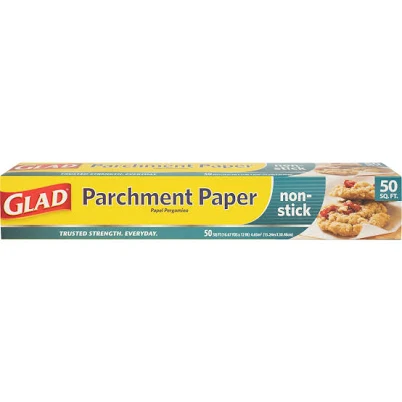
Glad · Parchment Paper & Baking Liners
GLAD Parchment Paper Baking Sheet
Parchment paper coatings often use PFAS. Glad discloses nothing.
Glad parchment paper requires grease-resistant treatment, often PFAS-based. Glad provides zero disclosure of coating chemistry or safety testing.
The better-graded swap
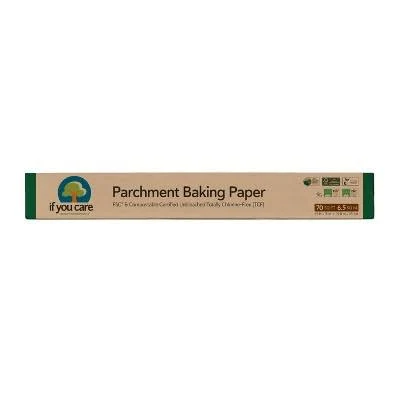
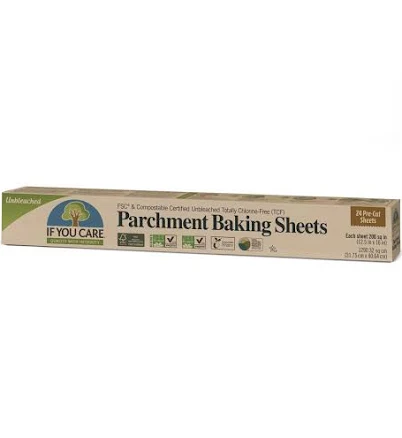
If You Care
If You Care Parchment Baking Paper
90/100 safety
Same rubric that flunked this product. The swap earned Excellent.
Still want this one anyway? Check the price on Amazon. We’d swap it.
Material
bleached paper with silicone and grease-resistant coating
Brand disclosure
Brand is silent on PFAS
Lab data
No public lab test
You may also be interested in
Top-graded picks in the categories readers replace first, every one scored on the same rubric.

- polypropylene filter housing, carbon/sediment cartridge
- We found no PFAS statement from the brand
- Bacterial growth in spent cartridges
3 hazards checked on this product, all on its full breakdown.

Aquasure
Premier Series 75 GPD Under Sink Reverse Osmosis Water Filtration System
- RO membrane, carbon filters, stainless steel housing
- We found no PFAS statement from the brand
- Bacterial and microbial growth in housing and filters
4 hazards checked on this product, all on its full breakdown.

Avocado
Vegan Mattress
- organic cotton, natural latex, coconut coir, recycled steel coils
- The brand calls it PFAS-free, which we have not verified
- Heavy metals
2 hazards checked on this product, all on its full breakdown.
What GLAD Parchment Paper Baking Sheet is made of, ingredients and materials
GLAD Parchment Paper is bleached kraft paper coated with silicone and a grease-resistant finish. The grease-resistant layer is the primary concern, most commercial parchment papers use fluorinated compounds (PFAS-family chemicals) to repel fats and oils, though Glad does not publicly specify its formulation. Silicone itself is inert at typical baking temperatures (up to 420F), but the underlying coating chemistry remains opaque.
What’s concerning
Category baseline
The starting point for this type of product, before anything specific to this product is counted.
No PFAS disclosure
No public statement from the brand about PFAS in this product.
Waterproof / stain-resistant treatment
Water-repellent coating treatments have historically used PFAS.
PFAS
Fluorinated compounds are standard in commercial parchment coatings for water/grease resistance. Glad does not disclose ingredients; migration risk increases above 350F and with fatty foods.
Source, ATSDR ↗Silicone migration
Silicone coatings can shed microparticles at high heat or mechanical stress. Migration risk is low at standard baking temperatures but not zero; reuse amplifies wear.
Thermal degradation of coating
If grease-resistant layer contains PFAS or other fluorinated compounds, heating above recommended limits (typically 400-420F) may break down coating, increasing migration of coating components into food.
Microplastics
Repeated use, creasing, and high heat can cause microscopic coating flakes to shed into direct-contact food. Risk scales with product age and usage intensity.
Source, EPA ↗What’s reassuring
Bleaching residues and ink/dyes
Food-contact paper is regulated by FDA; bleaching chemicals (chlorine, peroxide) are processed out during manufacturing to levels monitored for compliance in finished product. Glad paper is standard commercial grade with no known violations.
How is this PFAS grade calculated?
The brand's record and disclosure
Glad (SC Johnson subsidiary) does not disclose PFAS presence, alternatives used, or testing data for this product. No certifications (compostability, PFAS-free, fluorine-free) are marketed. The company has faced scrutiny on PFAS transparency across its product lines but has not issued category-specific commitments for parchment. This silence is consistent with industry norms but does not guarantee safety.
How it compares in its category
Most mainstream parchment brands (Reynolds, Kirkland, store generic) are similarly opaque about PFAS content; none widely advertise PFAS-free status. Certified alternatives exist (some marketed as PFAS-free or fluorine-free, primarily smaller/specialty brands) but are harder to find and more expensive. Silicone mats and unbleached parchment offer partial avoidance but have own trade-offs (durability, browning consistency).
If you buy it
Use at or below 420F; higher heat may degrade coatings and increase leaching risk. Do not reuse sheets extensively; replace when visibly worn, discolored, or sticky. Avoid direct food contact with the underside (non-coated face); use as a barrier layer. For frequent high-heat baking (cookies above 400F), rotate to silicone mats or cast iron to lower cumulative PFAS exposure.
What is not known about PFAS in this product?
- Basis
- Model estimate, 45% confidence, not a lab result
- Lab test
- None on record for this exact product
- Brand statement
- Glad has made none
Formulations change between production runs, so check the current label. How we grade.
What are the PFAS-free alternatives to GLAD Parchment Paper Baking Sheet?
- silicone-coated parchment paper
- The brand calls it PFAS-free, which we have not verified
- Paper degradation and particulate shedding
- unbleached paper with silicone coating
- The brand calls it PFAS-free, which we have not verified
- Silicone coating degradation at high heat
- bleached paper with silicone coating
- The brand calls it PFAS-free, which we have not verified
- Paper degradation and fragmentation
More parchment paper & baking liners grades
How we score, every product runs through the same public 0-100 rubric based on materials, coatings, brand disclosure, lab findings, and recalls. See the full methodology → Spotted a mistake? Report an error.