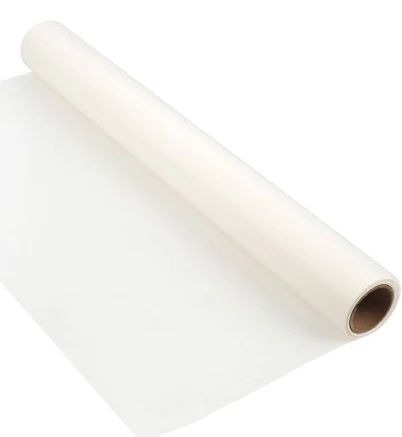
Celebrate It · Parchment Paper & Baking Liners
Parchment Paper Roll by Celebrate It in White
Skip until coating transparency improves. PFAS risk unclear.
Celebrate It parchment paper requires grease-resistant coating with unknown composition, a typical PFAS exposure route in food-contact products. No brand details provided.
The better-graded swap
If You Care
If You Care Baking Paper, Parchment, 70 Square Feet
90/100 safety
Same rubric that flunked this product. The swap earned Excellent.
Still want this one anyway? Check the price on Amazon. We’d swap it.
Material
cellulose paper with undisclosed non-stick coating
Brand disclosure
Brand is silent on PFAS
Lab data
No public lab test
You may also be interested in
Top-graded picks in the categories readers replace first, every one scored on the same rubric.

- polypropylene filter housing, carbon/sediment cartridge
- We found no PFAS statement from the brand
- Bacterial growth in spent cartridges
3 hazards checked on this product, all on its full breakdown.

Aquasure
Premier Series 75 GPD Under Sink Reverse Osmosis Water Filtration System
- RO membrane, carbon filters, stainless steel housing
- We found no PFAS statement from the brand
- Bacterial and microbial growth in housing and filters
4 hazards checked on this product, all on its full breakdown.

Avocado
Vegan Mattress
- organic cotton, natural latex, coconut coir, recycled steel coils
- The brand calls it PFAS-free, which we have not verified
- Heavy metals
2 hazards checked on this product, all on its full breakdown.
What Parchment Paper Roll by Celebrate It White is made of, ingredients and materials
This product is cellulose paper (plant fiber) coated with a proprietary non-stick surface to prevent food sticking during baking. The coating chemistry is not publicly disclosed by Glad, which is the core safety concern, most parchment coatings historically relied on silicone or fluorinated compounds, and Glad has not transparently stated which approach they use. At typical baking temperatures (up to 420F, within the oven-safe claim), uncompromised cellulose is stable, but coating integrity and composition remain the weak points.
What’s concerning
Category baseline
The starting point for this type of product, before anything specific to this product is counted.
No PFAS disclosure
No public statement from the brand about PFAS in this product.
Waterproof / stain-resistant treatment
Water-repellent coating treatments have historically used PFAS.
Non-stick coating composition (undisclosed)
Glad does not publicly specify whether the coating is silicone, fluorinated, or hybrid. Silicone alone poses minimal risk at baking temperatures; fluorinated coatings may contain PFAS or fluorine byproducts. This ambiguity is the primary safety gap for this specific product.
Coating degradation under heat and food contact
Cellulose parchment coatings can flake or separate if overheated (above 420F) or exposed to prolonged acidic or fatty food contact. Ingestion of coating fragments is possible but typically asymptomatic; repeated exposure to degraded coatings warrants replacement.
Microplastics
If the non-stick coating contains synthetic polymers (silicone, polyester, or Teflon-family coating), aging or mechanical stress (crumpling, reuse) can release microscopic particles onto food. No brand-specific data exists, but cellulose parchment with synthetic coatings carries this theoretical risk.
Source, EPA ↗Migration of coating compounds at elevated temperature
At sustained oven temperatures (350-420F), polymer coatings can migrate into fatty or oily foods at trace levels. The hazard depends entirely on coating identity (silicone vs. fluorinated), which Glad does not disclose.
What’s reassuring
Chlorine bleaching residues in cellulose base
Most food-grade parchment is made from bleached kraft paper; residual bleach is typically below regulatory thresholds and not documented as a hazard in this product category. No specific concerns have been reported for Glad parchment.
How is this PFAS grade calculated?
The brand's record and disclosure
Glad (SC Johnson subsidiary) produces a wide range of food-contact products but has not published detailed coating specifications or third-party certifications for this parchment line. The brand does not publicly commit to PFAS-free formulations across its cookware or food-contact portfolio, and silence on non-stick coating composition is standard in the industry but leaves consumers without assurance. No major recalls specific to this product line are on public record, but lack of disclosure does not equal safety confirmation.
How it compares in its category
Parchment paper has lower concern than plastic wrap or aluminum foil for oven use because cellulose itself is not a material linked to PFAS leaching. However, brand transparency varies widely, some competitors (e.g., If You Care, Regency) explicitly state silicone-only or PFAS-free coatings, while others (including major store brands) remain silent like Glad. This Michaels-branded roll appears to be a Glad product, placing it in the middle-to-lower tier of disclosure within its category.
If you buy it
Store rolls in a cool, dry place away from direct sunlight to prevent coating degradation. Do not exceed 420F (the stated oven-safe limit) and avoid prolonged direct contact with acidic, salty, or fatty foods that can degrade the coating over time. Replace the roll if the coating visibly peels, tears, or discolors. If PFAS exposure is a personal priority, consider switching to brands with explicit PFAS-free or silicone-only certifications once you finish this roll.
What is not known about PFAS in this product?
- Basis
- Model estimate, 42% confidence, not a lab result
- Lab test
- None on record for this exact product
- Brand statement
- Celebrate It has made none
Formulations change between production runs, so check the current label. How we grade.
What are the PFAS-free alternatives to Parchment Paper Roll by Celebrate It in White?
- silicone-coated parchment paper
- The brand calls it PFAS-free, which we have not verified
- Paper degradation and particulate shedding
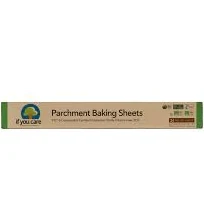
- unbleached paper with silicone coating
- The brand calls it PFAS-free, which we have not verified
- Silicone coating degradation at high heat
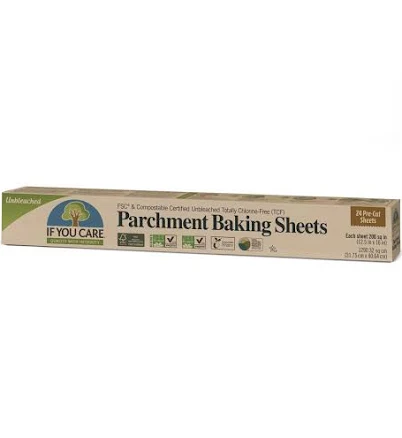
- bleached paper with silicone coating
- The brand calls it PFAS-free, which we have not verified
- Paper degradation and fragmentation
More parchment paper & baking liners grades
How we score, every product runs through the same public 0-100 rubric based on materials, coatings, brand disclosure, lab findings, and recalls. See the full methodology → Spotted a mistake? Report an error.