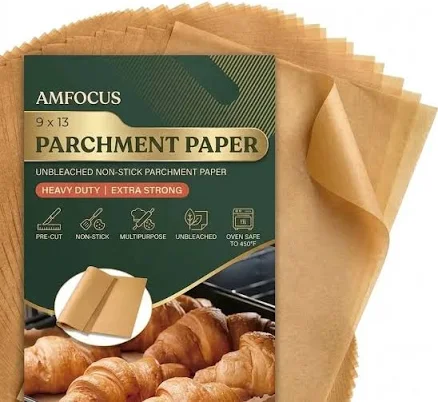
· Parchment Paper & Baking Liners
Parchment Paper Sheets
Parchment grease-resistant coating rarely disclosed. Source unclear.
Glad parchment paper needs water and grease barrier, but coating chemistry is undisclosed. Silicone and wax are common, though Teflon-family coating use occurs in some parchment.
The better-graded swap
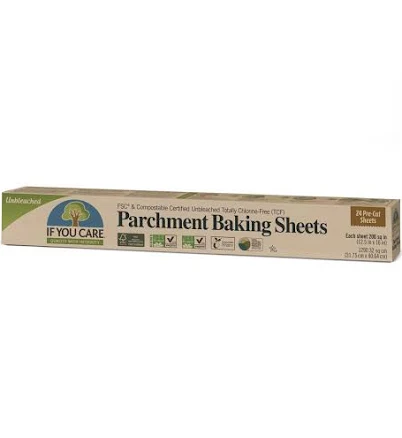
If You Care
If You Care Parchment Baking Sheets
90/100 safety
Same rubric that flunked this product. The swap earned Excellent.
Still want this one anyway? Check the price on Amazon. We’d swap it.
Material
Bleached paper with silicone or wax coating
Brand disclosure
Brand is silent on PFAS
Lab data
No public lab test
You may also be interested in
Top-graded picks in the categories readers replace first, every one scored on the same rubric.

- polypropylene filter housing, carbon/sediment cartridge
- We found no PFAS statement from the brand
- Bacterial growth in spent cartridges
3 hazards checked on this product, all on its full breakdown.

Aquasure
Premier Series 75 GPD Under Sink Reverse Osmosis Water Filtration System
- RO membrane, carbon filters, stainless steel housing
- We found no PFAS statement from the brand
- Bacterial and microbial growth in housing and filters
4 hazards checked on this product, all on its full breakdown.

Avocado
Vegan Mattress
- organic cotton, natural latex, coconut coir, recycled steel coils
- The brand calls it PFAS-free, which we have not verified
- Heavy metals
2 hazards checked on this product, all on its full breakdown.
What Parchment Paper Sheets is made of, ingredients and materials
Glad Parchment Paper Sheets consist of bleached paper (cellulose fiber) coated with either silicone or wax to achieve grease and moisture resistance. The bleaching process itself is standard food-grade practice and does not introduce known toxins at final residue levels. The critical unknown is the exact composition and source of the coating; silicone coatings are generally inert, but wax formulations can vary (plant-based, mineral, or synthetic), and neither Glad nor most manufacturers publicly specify which is used or whether processing aids or mold-release agents remain on the surface.
What’s concerning
Category baseline
The starting point for this type of product, before anything specific to this product is counted.
No PFAS disclosure
No public statement from the brand about PFAS in this product.
Waterproof / stain-resistant treatment
Water-repellent coating treatments have historically used PFAS.
Silicone or wax coating integrity and heat degradation
The stability of Glad's unspecified coating above 400°F is not publicly documented. Degradation or flaking of the coating into food is theoretically possible but rare in practice at normal baking temperatures.
Microplastics
If the coating is synthetic (non-plant-wax silicone), microscopic particles could theoretically shed into fatty foods during baking. No published data on Glad sheets specifically; risk is low under normal use.
Source, EPA ↗Mold or bacterial growth if stored improperly
Parchment boxes left unsealed in humid conditions can harbor mold under the coating or on cut edges. This is a storage-hygiene issue, not a manufacturing defect.
What’s reassuring
Bleaching residues or processing aids
Chlorine-based bleaching is standard in food-contact paper, and residues are not toxicologically significant at regulatory levels; no reports of illness from Glad parchment paper exist.
Heavy metals
FDA food-contact substance regulations restrict heavy metals in paper and coatings; no recalls or testing results for Glad parchment indicate contamination.
Source, FDA ↗How is this PFAS grade calculated?
The brand's record and disclosure
Glad does not publicly disclose the chemical composition of its parchment coating, the bleaching method, or whether it has tested for PFAS presence. No major recalls or safety complaints specific to Glad parchment paper exist in public health databases. The brand has not pursued third-party certifications (e.g., FDA food-contact substance listing, compostability seals, or heavy-metal testing) that would increase transparency. This silence is typical in the parchment category but reflects a broader industry reluctance to detail food-contact coatings.
How it compares in its category
Parchment paper as a category ranks lower-risk than plastic wrap (BPA/plasticizer concern) or aluminum foil (potential aluminum migration under acidic conditions). Unbleached parchment and plant-wax alternatives exist but are less convenient and may cost more. Silicone-coated parchment is chemically more stable than wax-coated; Glad does not specify its type, placing it in the middle of the transparency spectrum for its category.
If you buy it
Use Glad parchment paper below 420°F (per standard parchment guidance); exceeding this risks coating breakdown and potential off-gassing. Replace sheets if you see browning, brittleness, or coating separation. Do not use for prolonged contact with very acidic foods (vinegar, citrus, tomato sauces) for more than a few hours, as acidic environments can accelerate coating degradation. Store in a cool, dry place; moisture can promote mold growth under the coating if the box is left open.
What is not known about PFAS in this product?
- Basis
- Model estimate, 50% confidence, not a lab result
- Lab test
- None on record for this exact product
- Brand statement
- has made none
Formulations change between production runs, so check the current label. How we grade.
What are the PFAS-free alternatives to Parchment Paper Sheets?
- silicone-coated parchment paper
- The brand calls it PFAS-free, which we have not verified
- Paper degradation and particulate shedding
- unbleached paper with silicone coating
- The brand calls it PFAS-free, which we have not verified
- Silicone coating degradation at high heat
- bleached paper with silicone coating
- The brand calls it PFAS-free, which we have not verified
- Paper degradation and fragmentation
More parchment paper & baking liners grades
How we score, every product runs through the same public 0-100 rubric based on materials, coatings, brand disclosure, lab findings, and recalls. See the full methodology → Spotted a mistake? Report an error.