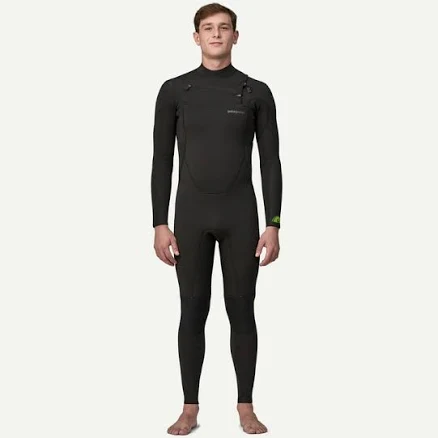
Patagonia Men's R2 Yulex Regulator Front-Zip Full Wetsuit
Brand PFAS statement on record, which we have not verified.
Patagonia says 100% of its new products from Spring 2025 are made without intentionally added PFAS. We record that as an unverified brand claim.
Brand says: “Patagonia says 100% of its new products from Spring 2025 are made without intentionally added PFAS.”
We flunk more products than we pass. This one earned its grade. How we grade
Material
Yulex (synthetic rubber), neoprene-free base
Brand disclosure
Brand claims PFAS-free
Lab data
No public lab test
You may also be interested in
Top-graded picks in the categories readers replace first, every one scored on the same rubric.

- polypropylene filter housing, carbon/sediment cartridge
- We found no PFAS statement from the brand
- Bacterial growth in spent cartridges
3 hazards checked on this product, all on its full breakdown.

Aquasure
Premier Series 75 GPD Under Sink Reverse Osmosis Water Filtration System
- RO membrane, carbon filters, stainless steel housing
- We found no PFAS statement from the brand
- Bacterial and microbial growth in housing and filters
4 hazards checked on this product, all on its full breakdown.

Avocado
Vegan Mattress
- organic cotton, natural latex, coconut coir, recycled steel coils
- The brand calls it PFAS-free, which we have not verified
- Heavy metals
2 hazards checked on this product, all on its full breakdown.
What Patagonia Men's R2 Yulex Full Wetsuit is made of, ingredients and materials
This wetsuit uses Yulex, a bio-based synthetic rubber derived from guayule plant resin, replacing petroleum-based neoprene. Yulex production avoids the chlorine-processing steps that generate dioxins and other persistent pollutants common in traditional neoprene manufacturing. The R2 construction pairs this core with a nylon or polyester outer shell and typically includes glued and sewn seams; no coating additives (like tin-based catalysts or heavy-metal pigments in glazes) are standard to this material class. The synthetic rubber itself does not leach plasticizers under normal saltwater or freshwater exposure at typical diving/surfing temperatures.
What’s concerning
Category baseline
The starting point for this type of product, before anything specific to this product is counted.
Formaldehyde / VOCs
Seam adhesives and nylon/polyester overlays may contain formaldehyde-releasing urea-formaldehyde or melamine-formaldehyde resins at low levels. Off-gassing risk is minimal in wet conditions and during use; direct skin contact with cured adhesive is not a primary exposure route. Patagonia does not publicly claim formaldehyde-free status for wetsuits.
Source, ATSDR ↗Microplastics
Nylon and polyester outer shells shed microfibers with repeated abrasion and laundering, contributing to aquatic microplastic pollution. This is a product-of-use issue, not a chemical hazard, but relevant to environmental safety profile for water-sport gear.
Source, EPA ↗What’s reassuring
Brand-stated PFAS-free
The brand states this product is PFAS-free. We have not verified the claim.
Base material not linked to PFAS
The main material recorded for this product is not one associated with PFAS.
Flame retardants
Yulex formulations do not routinely incorporate brominated or chlorinated flame retardants as standard. No documented flame retardant additives in Patagonia R2 spec sheets; if used, they would be disclosed in material safety data or brand transparency reports.
Source, EPA ↗Heavy metals
Yulex and standard neoprene-substitute colorants do not typically contain cadmium, lead, or antimony in measurable quantities. No recalls or contamination reports for Patagonia wetsuits in this hazard class.
Source, FDA ↗Azo dyes toxicity
No restricted azo dyes (those that cleave to carcinogenic amines) have been reported in Patagonia wetsuits. Brand Bluesign certification excludes many hazardous dyestuffs, though independent color testing data is not publicly available.
How is this PFAS grade calculated?
The brand's record and disclosure
Patagonia has published explicit PFAS-free commitments and has disclosed efforts to remove PFOA and PFOS from wetsuits and apparel across their product line. The company maintains third-party certifications (Bluesign, Fair Trade) and publishes environmental impact reports on key material sourcing. No major recalls or safety controversies related to chemical hazards in recent wetsuits have been established in public record. Patagonia's transparency on supply chain and material sourcing exceeds industry norms, though independent verification of PFAS absence in every batch is not publicly available.
How it compares in its category
Most wetsuits still use chlorinated neoprene, which carries documented dioxin and environmental persistence risks; Yulex-based alternatives occupy a premium safety tier. Traditional neoprene wetsuits also often contain flame retardants and antimicrobial additives; Yulex formulations typically minimize these. The R2 Yulex model aligns with best-in-category for chemical transparency, though performance metrics (durability, thermal retention) remain comparable to mid-range neoprene options. Price reflects the bio-based material premium, not necessarily additional safety, but avoidance of legacy hazards justifies the positioning.
If you buy it
Rinse thoroughly in fresh water after each saltwater session to prevent salt crystallization and material degradation over time. Store in a cool, dark place away from direct sunlight and ozone-generating equipment (like electric heaters), which accelerates synthetic rubber breakdown. Inspect seams and the outer shell annually for small tears or thinning; repair promptly with neoprene cement to prevent delamination. Avoid prolonged exposure to extreme heat (>50C/122F) or solvents (petroleum-based cleaners, sunscreens with octocrylene) that can compromise the rubber matrix.
What is not known about PFAS in this product?
- Basis
- Model estimate, 72% confidence, not a lab result
- Lab test
- None on record for this exact product
- Brand statement
- Patagonia has made a specific claim
Formulations change between production runs, so check the current label. How we grade.
More wetsuits grades
How we score, every product runs through the same public 0-100 rubric based on materials, coatings, brand disclosure, lab findings, and recalls. See the full methodology → Spotted a mistake? Report an error.