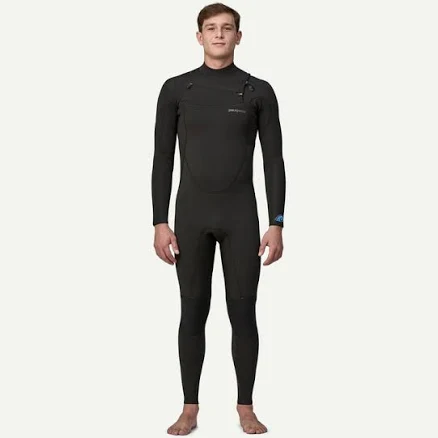
Patagonia Men's Yulex Regulator Lite Front-Zip Full Wetsuit
Brand PFAS statement on record, which we have not verified.
Patagonia says 100% of its new products from Spring 2025 are made without intentionally added PFAS. We record that as an unverified brand claim.
Brand says: “Patagonia says 100% of its new products from Spring 2025 are made without intentionally added PFAS.”
We flunk more products than we pass. This one earned its grade. How we grade
Material
Yulex (synthetic rubber, PTMEG-based), neoprene-free
Brand disclosure
Brand claims PFAS-free
Lab data
No public lab test
You may also be interested in
Top-graded picks in the categories readers replace first, every one scored on the same rubric.

- polypropylene filter housing, carbon/sediment cartridge
- We found no PFAS statement from the brand
- Bacterial growth in spent cartridges
3 hazards checked on this product, all on its full breakdown.

Aquasure
Premier Series 75 GPD Under Sink Reverse Osmosis Water Filtration System
- RO membrane, carbon filters, stainless steel housing
- We found no PFAS statement from the brand
- Bacterial and microbial growth in housing and filters
4 hazards checked on this product, all on its full breakdown.

Avocado
Vegan Mattress
- organic cotton, natural latex, coconut coir, recycled steel coils
- The brand calls it PFAS-free, which we have not verified
- Heavy metals
2 hazards checked on this product, all on its full breakdown.
What Patagonia Men's Yulex Full Wetsuit is made of, ingredients and materials
This wetsuit uses Yulex, a petroleum-derived synthetic rubber based on polyether polyol (PTMEG), formulated as a neoprene alternative. Yulex eliminates the chlorine-based chemical processing and chloroprene exposure associated with conventional neoprene manufacturing, reducing occupational and environmental hazard. The material itself does not require fluorocarbon water repellents or halogenated flame retardants to meet performance specs, which simplifies the chemical profile relative to textiles treated with these additives.
What’s concerning
Category baseline
The starting point for this type of product, before anything specific to this product is counted.
Synthetic rubber degradation and material failure
Yulex, like all synthetic rubbers, undergoes gradual chain breakdown under UV, ozone, and temperature cycling. Degraded seams or cracks can allow water infiltration and loss of thermal protection, though this does not release acute chemical hazards.
What’s reassuring
Brand-stated PFAS-free
The brand states this product is PFAS-free. We have not verified the claim.
Base material not linked to PFAS
The main material recorded for this product is not one associated with PFAS.
Formaldehyde / VOCs
No formaldehyde-releasing dye or adhesive treatments have been documented in Yulex wetsuits or disclosed in Patagonia's product information. Standard synthetic rubber adhesives (polyurethane or rubber-cement) do not inherently release formaldehyde, but full adhesive composition is not publicly detailed.
Source, ATSDR ↗Azo dye safety
Patagonia has committed to restricted-substance lists for apparel; no carcinogenic azo dyes have been reported in Yulex wetsuits. However, the specific dye suppliers and screening standards for this product line are not independently verified in public records.
Flame retardants
Yulex's intrinsic rubber properties do not require brominated or chlorinated flame retardants to meet buoyancy and thermal standards. No flame-retardant treatments are documented in product specifications, but full additive disclosure from Patagonia would confirm absence definitively.
Source, EPA ↗Heavy metals
Patagonia has implemented heavy-metal screening in supply chains for apparel; no lead, cadmium, or chromium contamination has been reported in Yulex wetsuits. Full pigment sourcing verification is not publicly available for this specific product.
Source, FDA ↗How is this PFAS grade calculated?
The brand's record and disclosure
Patagonia has published a documented PFAS-free claim and maintains transparent supply chain communication; the company is one of the few outdoor brands with explicit chemical restrictions on wetsuits. However, this assessment notes Patagonia's statement on record without independent lab verification. The brand has a history of third-party certifications and environmental accountability, though disclosure of all manufacturing additives (curing agents, adhesives, dyes) remains incomplete in public materials.
How it compares in its category
Standard neoprene wetsuits carry occupational chlorine exposure risks and use chloroprene monomer; many wetsuits incorporate flame retardants and PFAS-based water repellents. Yulex represents a cleaner synthetic option that avoids the worst processing byproducts. Other premium brands offer similar Yulex or limestone-based neoprene alternatives, but Patagonia's explicit PFAS disclosure sets it apart in the casual-to-mid-tier segment.
If you buy it
Rinse the suit in fresh water after each saltwater use to remove salt deposits and prevent material brittleness. Avoid prolonged direct sunlight storage; UV exposure degrades synthetic rubber over years. Wash with mild detergent if needed, but do not machine wash or dry-clean. If seams degrade or material cracks, the wetsuit's thermal and water-barrier function is compromised and replacement is warranted.
What is not known about PFAS in this product?
- Basis
- Model estimate, 72% confidence, not a lab result
- Lab test
- None on record for this exact product
- Brand statement
- Patagonia has made a specific claim
Formulations change between production runs, so check the current label. How we grade.
More wetsuits grades
How we score, every product runs through the same public 0-100 rubric based on materials, coatings, brand disclosure, lab findings, and recalls. See the full methodology → Spotted a mistake? Report an error.