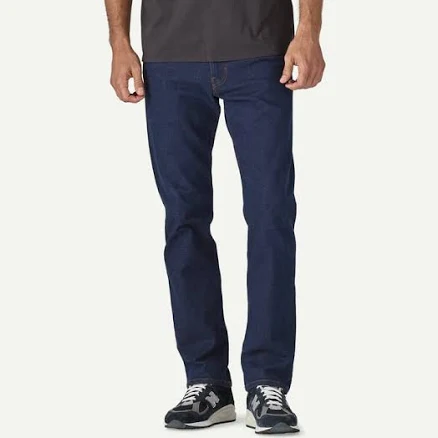
Patagonia · Stain-Resistant Jeans
Patagonia Men's Straight Fit Jeans
Brand PFAS statement on record, which we have not verified.
Patagonia says 100% of its new products from Spring 2025 are made without intentionally added PFAS. We record that as an unverified brand claim.
Brand says: “Patagonia says 100% of its new products from Spring 2025 are made without intentionally added PFAS.”
We flunk more products than we pass. This one earned its grade. How we grade
Material
cotton denim, no water-repellent coating (water-repellent coating) coating
Brand disclosure
Brand claims PFAS-free
Lab data
No public lab test
You may also be interested in
Top-graded picks in the categories readers replace first, every one scored on the same rubric.

- polypropylene filter housing, carbon/sediment cartridge
- We found no PFAS statement from the brand
- Bacterial growth in spent cartridges
3 hazards checked on this product, all on its full breakdown.

Aquasure
Premier Series 75 GPD Under Sink Reverse Osmosis Water Filtration System
- RO membrane, carbon filters, stainless steel housing
- We found no PFAS statement from the brand
- Bacterial and microbial growth in housing and filters
4 hazards checked on this product, all on its full breakdown.

Avocado
Vegan Mattress
- organic cotton, natural latex, coconut coir, recycled steel coils
- The brand calls it PFAS-free, which we have not verified
- Heavy metals
2 hazards checked on this product, all on its full breakdown.
What Patagonia Men's Straight Fit Jeans is made of, ingredients and materials
These are 100% cotton denim with no applied water-repellent finish. Cotton fiber itself poses minimal chemical hazard; the main exposure points are dyes (especially indigo for blue denim) and finishing agents applied during manufacture. Since Patagonia explicitly avoids PFAS-based water repellency, the hazard profile is narrower than treated alternatives. The straight-fit construction and weight suggest a standard weave with no specialized coatings.
What’s concerning
Category baseline
The starting point for this type of product, before anything specific to this product is counted.
Formaldehyde / VOCs
Cotton denim is typically treated with formaldehyde-releasing resins for wrinkle resistance and sizing. Patagonia does not explicitly exclude these on this product line. Residual formaldehyde can off-gas with heat and cause irritation; this is common to the category, not unique to Patagonia.
Source, ATSDR ↗Dye bleed and skin contact allergens
Indigo-dyed cotton naturally bleeds in early wears, especially if not preshrunk or rinsed. For users with sensitive skin or dye allergies, prolonged contact (seams against inner thigh) can cause localized irritation. This is inherent to dark denim, not a manufacturing defect.
What’s reassuring
Brand-stated PFAS-free
The brand states this product is PFAS-free. We have not verified the claim.
Base material not linked to PFAS
The main material recorded for this product is not one associated with PFAS.
Azo dyes and indigo contamination
Patagonia sources indigo from certified mills and does not market this product as organic-dyed, but no specific batches or testing results showing heavy-metal contamination in indigo are on record. Standard indigo denim poses minimal skin-absorption risk post-manufacture.
Heavy metals
No recalls or reported lead, cadmium, or chromium in Patagonia denim dyes are documented. The brand's mill auditing practices suggest oversight, but independent third-party testing results are not publicly disclosed for this SKU.
Source, FDA ↗Microfiber shedding during wear
No specific fiber-shedding data for Patagonia denim is available. Standard cotton denim sheds minimally compared to synthetic blends; environmental impact of fiber loss is negligible for wearer health, though relevant to water systems.
How is this PFAS grade calculated?
The brand's record and disclosure
Patagonia has a documented commitment to PFAS-free production and publishes supply-chain transparency reports. The brand does not claim PFAS-free status on this specific SKU in publicly available marketing, but their corporate stance and manufacturing standards favor low-chemical inputs. No major recalls or dye-related controversies are on record for Patagonia denim. Their vertical integration and third-party auditing of mills support accountability, though independent verification of PFAS claims is not publicly available.
How it compares in its category
Most mainstream jeans carry water-repellent coating finishes (typically PFAS or fluorocarbon-based) that add durability but chemical burden. Patagonia's uncoated approach is less water-resistant but eliminates that exposure class entirely. Premium denim brands vary widely; some use organic cotton and natural dyes (higher cost, similar safety), while fast-fashion alternatives often use cheaper synthetic indigo and mixed finishing chemicals. This product sits in the upper-middle safety tier for conventional denim.
If you buy it
Wash in cold water with mild detergent to preserve indigo color and reduce dye bleeding in early wears. Turn inside-out during the first 3-5 washes. Do not bleach or use optical brighteners, which can degrade cotton and concentrate dyes. Dry flat or hang; heat-drying accelerates wear. Replace when seams fray or crotch fabric thins, typically after 2-3 years of regular wear. No special storage needed beyond dry conditions.
What is not known about PFAS in this product?
- Basis
- Model estimate, 82% confidence, not a lab result
- Lab test
- None on record for this exact product
- Brand statement
- Patagonia has made a specific claim
Formulations change between production runs, so check the current label. How we grade.
More stain-resistant jeans grades
How we score, every product runs through the same public 0-100 rubric based on materials, coatings, brand disclosure, lab findings, and recalls. See the full methodology → Spotted a mistake? Report an error.