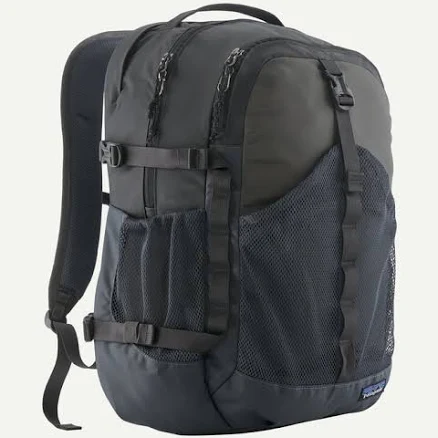
Patagonia Refugio Day Pack 30L
A water-repellent or grease-resistant treatment of unstated chemistry, with a brand PFAS statement we have not verified.
Patagonia says 100% of its new products from Spring 2025 are made without intentionally added PFAS. We record that as an unverified brand claim. Its record describes a water-repellent or grease-resistant treatment of unstated chemistry, which is still counted.
Brand says: “Patagonia says 100% of its new products from Spring 2025 are made without intentionally added PFAS.”
Still want this one anyway? Check the price on Amazon. We’d swap it.
Material
Nylon/polyester blend with water-repellent coating (water-repellent coating) treatment
Brand disclosure
Brand claims PFAS-free
Lab data
No public lab test
You may also be interested in
Top-graded picks in the categories readers replace first, every one scored on the same rubric.

- polypropylene filter housing, carbon/sediment cartridge
- We found no PFAS statement from the brand
- Bacterial growth in spent cartridges
3 hazards checked on this product, all on its full breakdown.

Aquasure
Premier Series 75 GPD Under Sink Reverse Osmosis Water Filtration System
- RO membrane, carbon filters, stainless steel housing
- We found no PFAS statement from the brand
- Bacterial and microbial growth in housing and filters
4 hazards checked on this product, all on its full breakdown.

Avocado
Vegan Mattress
- organic cotton, natural latex, coconut coir, recycled steel coils
- The brand calls it PFAS-free, which we have not verified
- Heavy metals
2 hazards checked on this product, all on its full breakdown.
What Patagonia Refugio Day Pack 30L is made of, ingredients and materials
The Refugio 30L uses a nylon and polyester blend as its primary fabric, topped with a water-repellent coating (water-repellent coating) finish of undisclosed chemical composition. water-repellent coating treatments historically relied on PFAS (PFAS "forever chemicals"), which are persistent and bioaccumulative; Patagonia claims PFAS-free status but has not publicly disclosed the replacement chemistry. Nylon and polyester themselves are stable, non-toxic base materials, but the coating applied to them is the main safety variable.
What’s concerning
Category baseline
The starting point for this type of product, before anything specific to this product is counted.
Waterproof / stain-resistant treatment
Water-repellent coating treatments have historically used PFAS.
PFAS
Patagonia claims PFAS-free water-repellent coating but has not publicly disclosed the replacement chemistry or provided third-party verification. Unspecified fluorocarbon or hydrocarbon alternatives may carry their own stability and leaching profiles that are not yet well-characterized in public literature.
Source, ATSDR ↗Nylon and polyester fiber shedding / microfiber release
Synthetic textile backpacks shed microfibers during normal wear, especially in high-friction areas (straps, base). This is a documented issue across the synthetic apparel industry; Patagonia packs are not uniquely prone but do release microfibers into washing water and the environment.
Coating degradation over time
Water-repellent coating coatings on nylon degrade with UV exposure, washing, and thermal stress. As the coating breaks down, any residual monomers or degradation products could potentially leach into water used in the field or during cleaning, though risk is generally low for outdoor gear.
What’s reassuring
Brand-stated PFAS-free
The brand states this product is PFAS-free. We have not verified the claim.
Formaldehyde / VOCs
Polyester-nylon blends often receive formaldehyde-based anti-shrink or wrinkle-resistance finishes at manufacture. Patagonia has not disclosed presence or absence of such resins in this pack; direct skin contact is minimal (pack is not worn on skin), so inhalation or dermal exposure risk is very low.
Source, ATSDR ↗Azo dyes in colored fabric
No specific information on dye chemistry for the Refugio pack is publicly available. Patagonia has broader commitments to reduce restricted azo dyes, but dye-class safety for this particular product is not independently verified or disclosed.
How is this PFAS grade calculated?
The brand's record and disclosure
Patagonia has made public commitments to reduce and eliminate PFAS in its product line and supply chain, and markets the Refugio pack as PFAS-free. However, the brand has not disclosed the specific water-repellent coating chemistry used as a replacement or provided independent third-party verification of that claim in widely accessible documentation. Patagonia's overall sustainability messaging is strong, but transparency on water-repellent coating alternatives has lagged industry disclosure standards. No recalls or safety incidents specific to this pack are on record.
How it compares in its category
Most comparable daypacks in this price and performance tier still use PFAS-based or unspecified water-repellent coating coatings; Patagonia's stated commitment to avoid PFAS puts it ahead of average in environmental intent. However, without verified third-party confirmation of the replacement water-repellent coating chemistry, it has lower concern than alternatives that are transparent about their treatments. Brands like Osprey and Gregory also offer similar packs; few in the category have independently certified water-repellent coating chemistry.
If you buy it
Avoid storing the pack in direct sunlight or near heat sources for extended periods, as water-repellent coating coatings can degrade faster with UV and thermal stress, potentially releasing degradation byproducts. Wash only with mild soap and cool water; do not use harsh detergents or machine wash, which can strip and fray the coating and increase leaching risk. Reapply a manufacturer-approved water-repellent coating treatment every 12-18 months if water beading diminishes, using products from Patagonia or certified low-PFAS alternatives. Store in a cool, dry place away from direct light.
What is not known about PFAS in this product?
- Basis
- Model estimate, 62% confidence, not a lab result
- Lab test
- None on record for this exact product
- Brand statement
- Patagonia has made a specific claim
Formulations change between production runs, so check the current label. How we grade.
More backpacks grades
How we score, every product runs through the same public 0-100 rubric based on materials, coatings, brand disclosure, lab findings, and recalls. See the full methodology → Spotted a mistake? Report an error.