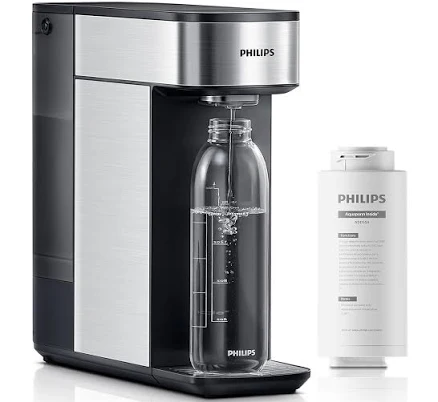
Philips Reverse Osmosis Water Filter
Lower-concern water filter, but Philips provides no PFAS transparency or testing.
RO filters use standard membrane and activated carbon media not inherently associated with intentional PFAS chemistry. Philips does not publicly disclose PFAS testing, third-party certification, or composition details.
We flunk more products than we pass. This one earned its grade. How we grade
Material
Reverse osmosis membrane, carbon/resin filtration media
Brand disclosure
Brand is silent on PFAS
Lab data
No public lab test
You may also be interested in
Top-graded picks in the categories readers replace first, every one scored on the same rubric.

- polypropylene filter housing, carbon/sediment cartridge
- We found no PFAS statement from the brand
- Bacterial growth in spent cartridges
3 hazards checked on this product, all on its full breakdown.

Aquasure
Premier Series 75 GPD Under Sink Reverse Osmosis Water Filtration System
- RO membrane, carbon filters, stainless steel housing
- We found no PFAS statement from the brand
- Bacterial and microbial growth in housing and filters
4 hazards checked on this product, all on its full breakdown.

Avocado
Vegan Mattress
- organic cotton, natural latex, coconut coir, recycled steel coils
- The brand calls it PFAS-free, which we have not verified
- Heavy metals
2 hazards checked on this product, all on its full breakdown.
What Philips Reverse Osmosis Water Filter is made of, ingredients and materials
Philips RO filters use a semipermeable membrane (typically thin-film composite polyamide) paired with activated carbon and ion-exchange resin pre-filters. The membrane itself is inert under normal household water pressures and temperatures. Carbon and resin media are food-contact approved materials when manufactured to NSF or equivalent standards, though they can release small amounts of carbon fines or resin particles early in use if not pre-rinsed. The plastic housing and tubing are standard food-grade polymers (typically polysulfone or polypropylene) not exposed to heat or chemicals that would trigger leaching.
What’s concerning
No PFAS disclosure
No public statement from the brand about PFAS in this product.
Bacterial growth in storage tank or tubing if maintenance neglected
RO systems store treated water in a tank; if the system is not used regularly or cartridges are not replaced on schedule, bacteria (particularly Legionella precursors in stagnant water) can colonize the tank and tubing. This is a use-compliance issue, not an inherent product defect, but regular flushing and cartridge replacement are critical.
Resin and carbon fines in filtered water during initial use
New carbon and ion-exchange resin cartridges may shed fine particles into the first several liters of water. Pre-rinsing the cartridges before installation or discarding the first batch of filtered water reduces this. Philips product instructions typically advise this, but not all users follow the guidance.
Lead
RO membranes can develop microscopic cracks or tears with age, particularly under high water pressure or poor pre-filtration. A degraded membrane may allow bacteria or contaminants to pass through undetected. Annual inspection of output water quality (using a TDS meter) is recommended; Philips does not highlight this requirement prominently in user materials.
Source, ATSDR ↗Housing or connector leaks causing water damage or stagnation
Plastic quick-connect fittings can loosen or degrade over time, leading to slow leaks that foster mold or mildew in the installation space. This is a maintenance and installation issue; poor sealing practices or defective connectors can compound the risk. No widespread connector defect recall is on record for Philips RO filters.
What’s reassuring
Base material not linked to PFAS
The main material recorded for this product is not one associated with PFAS.
Leaching from plastic tubing or housing under prolonged contact
Food-grade polypropylene and polysulfone tubing used in RO systems are stable at room temperature and neutral pH. No documented leaching of BPA, phthalates, or other endocrine disruptors has been reported for standard RO tubing under normal conditions. Risk increases if tubing is exposed to hot water or sunlight for extended periods.
How is this PFAS grade calculated?
The brand's record and disclosure
Philips does not publicly disclose PFAS testing data for its RO filter line, and the brand has not published statements on PFAS in drinking water filters. Philips is not known for major product recalls or safety controversies specific to water filtration hardware. The company does meet NSF/ANSI 42 and 53 certifications in most markets, which cover chlorine, sediment, and some contaminant removal but do not mandate PFAS testing or disclosure.
How it compares in its category
Reverse osmosis is one of the most effective mechanical water treatment methods and is more robust than pitcher filters or simple carbon cartridges. Compared to other RO brands (Aqua-Pure, 3M, GE), Philips does not distinguish itself in transparency or third-party testing documentation. Like all RO systems, it requires regular cartridge replacement and membrane maintenance; failure to do so can result in microbial regrowth or reduced efficiency, which is a user-side risk, not a product design flaw.
If you buy it
Replace pre-filters (carbon and sediment) every 6-12 months and the RO membrane every 2-3 years, depending on water quality and usage. Flush the system weekly if not in use for more than a few days to prevent bacterial biofilm in storage tanks. Do not expose tubing or housing to temperatures above 120 F (49 C). Store filters in a cool, dry place; cartridges sitting at room temperature can develop microbial colonies if left unused for months.
What is not known about PFAS in this product?
- Basis
- Model estimate, 72% confidence, not a lab result
- Lab test
- None on record for this exact product
- Brand statement
- Philips has made none
Formulations change between production runs, so check the current label. How we grade.
What are the PFAS-free alternatives to Philips Reverse Osmosis Water Filter?
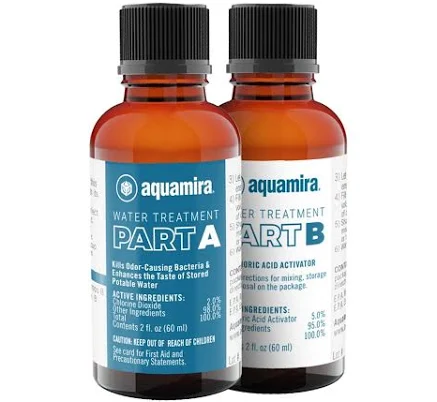
- glass bottles, sodium dichloroisocyanurate treatment chemical
- We found no PFAS statement from the brand
- Chemical overdose or misuse
5 hazards checked on this product, all on its full breakdown.

- Stainless steel housing and spigot
- We found no PFAS statement from the brand
- Bacterial growth and biofilm if filters not replaced
5 hazards checked on this product, all on its full breakdown.
- Borosilicate glass pitcher, replaceable activated-carbon filter cartridge
- Bacterial growth in filter cartridge if unmaintained
5 hazards checked on this product, all on its full breakdown.
More water filters grades
How we score, every product runs through the same public 0-100 rubric based on materials, coatings, brand disclosure, lab findings, and recalls. See the full methodology → Spotted a mistake? Report an error.