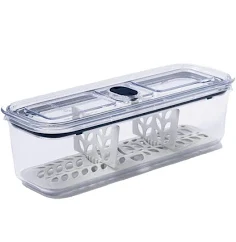
Prepara Latchlok Click Food Storage Container with Divider – 6.2 Cups
Rigid plastic food container; PFAS risk low but unconfirmed by brand.
Prepara makes food storage containers from plastic. No PFAS disclosure available; rigid plastic containers typically lower concern than coated cookware or treated textiles, but composition details remain absent.
We flunk more products than we pass. This one earned its grade. How we grade
Material
plastic (BPA-free claimed by brand; composition unspecified)
Brand disclosure
Brand is silent on PFAS
Lab data
No public lab test
What Prepara Latchlok Click Food Storage is made of, ingredients and materials
Prepara Latchlok is a rigid plastic food-storage container; the brand claims BPA-free formulation but does not disclose the full polymer type or alternative plasticizer chemistry. Without specification of whether the base is polypropylene (PP), polyethylene terephthalate (PET), or another copolymer, the identity of any replacement for BPA remains opaque. Rigid, opaque food-grade plastics of this class are generally formulated to resist leaching under normal cold storage, but chemical composition transparency is absent from public product information.
What’s concerning
Category baseline
The starting point for this type of product, before anything specific to this product is counted.
No PFAS disclosure
No public statement from the brand about PFAS in this product.
BPA & bisphenols
Brand claims BPA-free but does not name the replacement compound. Cold-storage leaching risk is lower for rigid PP or PET, but without disclosure of the actual polymer and plasticizer, residual leaching cannot be ruled out, especially if the container is old, scratched, or exposed to heat.
Source, FDA ↗Microplastics
Rigid plastic containers can shed microparticles if the surface degrades from scratches, thermal stress, or UV exposure. No specific degradation data for Prepara containers exists in the public domain, but all food-contact plastics pose this risk over their lifetime.
Source, EPA ↗Leaching from polymer or coatings under thermal stress
If the container is placed in warm storage, dishwasher, or microwave contrary to intended use, leaching of residual monomers or additives increases. Prepara does not specify heat-stability limits, so misuse risk is present.
Polymer degradation and discoloration over time
Consumer reports note that some rigid plastic food containers yellow, cloud, or crack after 1-2 years of normal use. This suggests additive migration, UV sensitivity, or material fatigue. No specific degradation timeline for Prepara containers is documented, but the class risk is established.
Mold and bacterial growth in seals and dividers
The Latchlok divider and seal design create crevices where moisture and food residue can accumulate if not thoroughly dried. Incomplete cleaning between uses can harbor pathogens or mold, independent of the plastic composition itself.
What’s reassuring
Base material not linked to PFAS
The main material recorded for this product is not one associated with PFAS.
The full breakdown
The brand's record and disclosure
Prepara does not publish detailed material safety data, third-party certifications (such as FDA letter-of-no-objection for specific polymers), or substantiation of BPA-free claims beyond the assertion itself. No established safety controversies or recalls specific to Prepara food containers are on record. The brand's silence on PFAS, full polymer identity, and plasticizer alternatives reflects a common industry stance of minimal chemical transparency in the consumer segment.
How it compares in its category
Rigid plastic food-storage containers occupy a large market segment; Prepara's position is mainstream without distinction for chemical transparency. Competitors such as OXO and Rubbermaid offer similar BPA-free claims but likewise do not routinely disclose polymer composition or alternative plasticizer data. Glass, stainless steel, or ceramic alternatives eliminate polymer leaching risk entirely but add cost and breakage liability. Prepara sits in the standard-assurance tier, BPA-free labeling without deeper chemical documentation.
If you buy it
Store only cold or room-temperature foods; do not use in microwave, dishwasher, or direct sunlight for extended periods, as heat and UV can degrade polymer coatings and increase leaching risk. Hand-wash and dry promptly after use; inspect regularly for cracks, discoloration, or clouding, which signal polymer degradation and warrant replacement. Do not store oils, alcohol-based liquids, or acidic foods long-term, as these can soften plastics over time. Replace every 2-3 years or sooner if visible wear develops.
What we don’t know
- Basis
- Model estimate, 45% confidence, not a lab result
- Lab test
- None on record for this exact product
- Brand statement
- Prepara has made none
Formulations change between production runs, so check the current label. How we grade.
Better-graded alternatives in Lunch Boxes
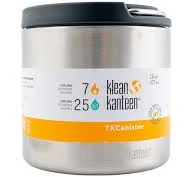
Klean Kanteen
Double Wall Vacuum Insulated Stainless Steel Food Canister Container with Leak Proof Lid
- Stainless steel body, silicone gasket lid seal
- The brand calls it PFAS-free, which we have not verified
- Silicone gasket degradation
3 hazards checked on this product. See all of them.
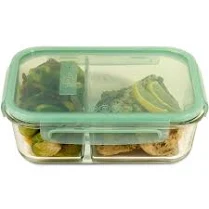
Snapware
Meal Box Glass
- borosilicate glass
- We found no PFAS statement from the brand
- Leaching from glass matrix or lid seals
2 hazards checked on this product. See all of them.
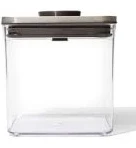
OXO
Steel Pop Big Square Short - 2.8 Qt/2.6 l
- Stainless steel container, no surface treatment
- Lid/gasket polymer leaching
3 hazards checked on this product. See all of them.
More lunch boxes grades
How we score, every product runs through the same public 0-100 rubric based on materials, coatings, brand disclosure, lab findings, and recalls. See the full methodology → Spotted a mistake? Report an error.