Pyrex · Parchment Paper & Baking Liners
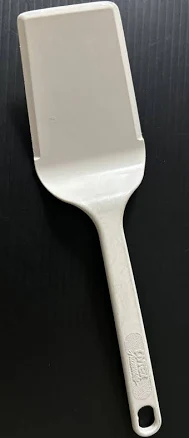
Vintage Pyrex Accessories White Mini Spatula Flipper Turner 8.25”
Lower concern. Vintage nylon spatula, no known PFAS-prone coatings.
This vintage Pyrex spatula appears to be a basic nylon or phenolic kitchen tool without non-stick or water-resistant treatment. No public PFAS risk disclosure exists for this product line.
The better-graded swap
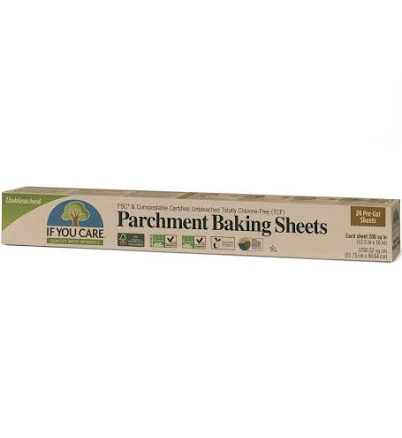
If You Care
If You Care Parchment Baking Sheets
90/100 safety
Same rubric that flunked this product. The swap earned Excellent.
Still want this one anyway? Check the price on Amazon. We’d swap it.
Material
Nylon handle with thermoplastic or phenolic head
Lab data
No public lab test
You may also be interested in
Top-graded picks in the categories readers replace first, every one scored on the same rubric.

- polypropylene filter housing, carbon/sediment cartridge
- We found no PFAS statement from the brand
- Bacterial growth in spent cartridges
3 hazards checked on this product, all on its full breakdown.

Aquasure
Premier Series 75 GPD Under Sink Reverse Osmosis Water Filtration System
- RO membrane, carbon filters, stainless steel housing
- We found no PFAS statement from the brand
- Bacterial and microbial growth in housing and filters
4 hazards checked on this product, all on its full breakdown.

Avocado
Vegan Mattress
- organic cotton, natural latex, coconut coir, recycled steel coils
- The brand calls it PFAS-free, which we have not verified
- Heavy metals
2 hazards checked on this product, all on its full breakdown.
What Vintage Pyrex Accessories Flipper Turner is made of, ingredients and materials
This spatula has a nylon handle and a thermoplastic or phenolic resin head, both common polymer materials in mid-to-late 20th century kitchen tools. Nylon is a stable, heat-resistant plastic that does not leach BPA or phthalates by design; phenolic resins (older thermosetting plastics) are chemically inert once cured. Neither material is prone to degradation under normal cooking use below 200°C, though nylon can soften at very high temperatures. Vintage Pyrex spatulas predate widespread use of problematic additives now flagged in modern plasticware.
What’s concerning
No PFAS disclosure
No public statement from the brand about PFAS in this product.
Category baseline
The starting point for this type of product, before anything specific to this product is counted.
Nylon degradation and microplastic shedding
Aged nylon can become brittle and may shed small particles during vigorous stirring or if cracks form, especially if the spatula is over 20 years old. The risk is low in normal use but increases with time and mechanical stress.
Heat-related handle softening or warping
Nylon handles can soften or warp if exposed to sustained temperatures above 180-200°C or left near open flames. This limits function but does not pose a direct chemical hazard if the material does not degrade.
What’s reassuring
Base material not linked to PFAS
The main material recorded for this product is not one associated with PFAS.
Phenolic resin off-gassing or odor release
Vintage phenolic resin heads are fully cured and do not typically release formaldehyde or volatile compounds under normal cooking conditions. No documented cases of off-gassing from Pyrex phenolic spatulas are on record.
Lead
Vintage nylon and phenolic plastics do not typically contain lead-based colorants or cadmium. No evidence of heavy metal contamination in Pyrex vintage spatulas is on record in safety databases.
Source, ATSDR ↗Polymer leaching into food at normal use temperatures
Nylon and phenolic resins are non-leaching polymers under standard cooking conditions (below 100°C in direct contact with food). No BPA, BPS, or phthalate migration has been documented for these material classes in this product type.
How is this PFAS grade calculated?
The brand's record and disclosure
Pyrex is primarily known for borosilicate glass cookware, not plastic accessories; the spatula is a minor product line. The brand has not made explicit public commitments to polymer safety testing or third-party certification for utensil accessories. No recalls or safety warnings specific to Pyrex nylon spatulas are on record in FDA or consumer safety databases. Pyrex's parent company (Instant Brands) has faced cookware-related litigation over non-stick coating performance, but this does not apply to nylon utensils.
How it compares in its category
Nylon and phenolic spatulas have lower concern regarding fume and leaching risks because they are not materials linked to Teflon-type coating non-stick coatings and ceramic glazes. Modern silicone and wood spatulas offer comparable or better heat resistance and durability; nylon ages more visibly (discoloration, slight brittleness) after decades of use. Vintage examples are functionally equivalent to current budget-tier plastic spatulas, with the advantage of simpler formulations that predate many modern additives of concern.
If you buy it
Use this spatula up to 200°C (392°F); keep it away from direct flame and very high-heat surfaces. Inspect the handle and head annually for cracks, discoloration, or brittleness; replace if the plastic becomes cloudy, brittle, or emits unusual odors when warmed. Hand wash only; dishwasher heat cycles will accelerate aging. This is a durable, low-risk tool suitable for routine cooking; no special precautions beyond normal use are necessary.
What is not known about PFAS in this product?
- Basis
- Model estimate, 72% confidence, not a lab result
- Lab test
- None on record for this exact product
- Brand statement
- Pyrex has made a specific claim
Formulations change between production runs, so check the current label. How we grade.
What are the PFAS-free alternatives to Vintage Pyrex Accessories White Mini Spatula Flipper Turner 8.25”?
- silicone-coated parchment paper
- The brand calls it PFAS-free, which we have not verified
- Paper degradation and particulate shedding
- unbleached paper with silicone coating
- The brand calls it PFAS-free, which we have not verified
- Silicone coating degradation at high heat
- bleached paper with silicone coating
- The brand calls it PFAS-free, which we have not verified
- Paper degradation and fragmentation
More parchment paper & baking liners grades
How we score, every product runs through the same public 0-100 rubric based on materials, coatings, brand disclosure, lab findings, and recalls. See the full methodology → Spotted a mistake? Report an error.