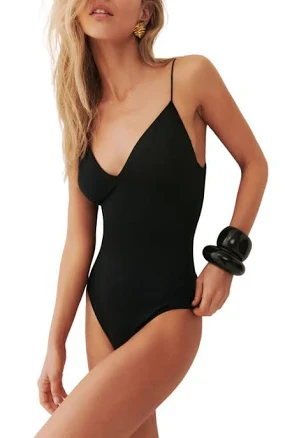
Reformation Women's Rio One-Piece Swimsuit
Skip unless Reformation discloses water-resistant chemistry and PFAS status.
Reformation does not publicly disclose whether this swimsuit uses PFAS-based water-resistant treatment, which is standard in performance swimwear. The brand has made no third-party PFAS commitments or certifications.
The better-graded swap
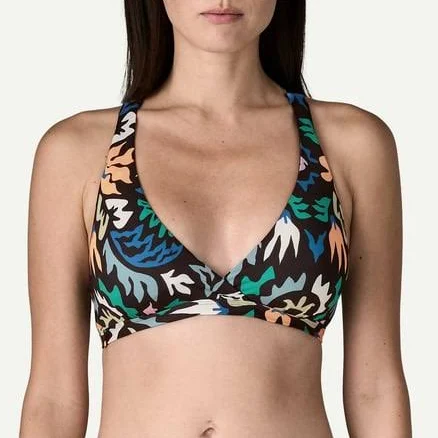
Patagonia
Patagonia Women's Bottom Turn Racerback Bikini Top
90/100 safety
Same rubric that flunked this product. The swap earned Excellent.
Still want this one anyway? Check the price on Amazon. We’d swap it.
Material
Nylon/spandex blend with likely water-repellent coating finish
Brand disclosure
Brand is silent on PFAS
Lab data
No public lab test
What Reformation Women's Rio One-Piece Swimsuit is made of, ingredients and materials
This swimsuit is a nylon-spandex blend, a standard high-performance swimwear construction. Nylon provides durability and stretch; spandex adds recovery. The water-resistant (water-repellent coating) finish applied to the fabric is where the PFAS concern originates, most legacy water-repellent coating treatments rely on fluorinated compounds to repel water. Nylon itself poses no established toxicity at body temperatures, but the finish chemistry is opaque.
What’s concerning
Category baseline
The starting point for this type of product, before anything specific to this product is counted.
No PFAS disclosure
No public statement from the brand about PFAS in this product.
Waterproof / stain-resistant treatment
Water-repellent coating treatments have historically used PFAS.
Azo dyes or restricted colorants
Reformation does not publish dye chemistry or colorant sourcing for this product. Standard nylon dyeing uses azo compounds; without OEKO-TEX or similar certification, restricted azo dyes cannot be ruled out, though direct skin contact risk is low.
Microplastic shedding from synthetic fibers
Nylon-spandex blends shed microfibers during washing and wear. This is an environmental hazard rather than direct health risk, but cumulative laundering over the swimsuit's life contributes to waterborne microplastic pollution.
Spandex degradation and elasticity loss under heat or UV
Spandex loses elasticity over time, especially with heat exposure and chlorine. Worn-out elastic in swimwear can lead to fit failure and potential entanglement or inadequate support; replacement is the remedy, not a direct toxicity hazard.
What’s reassuring
Formaldehyde / VOCs
Nylon-spandex swimwear rarely incorporates formaldehyde-releasing resins in standard water-repellent coating or elastic treatments. No established evidence or recalls link Reformation swimwear to formaldehyde off-gassing.
Source, ATSDR ↗Heavy metals
No recalls or documented contamination of Reformation swimwear with lead, cadmium, or other heavy metals in pigments have been reported. Standard nylon dyeing does not inherently concentrate heavy metals at levels expected to leach into skin.
Source, FDA ↗The full breakdown
The brand's record and disclosure
Reformation markets itself as a sustainability-focused brand but has not publicly committed to PFAS-free water-repellent coating chemistry or disclosed which water-repellent coating formulation is used on this product. The brand has faced scrutiny for greenwashing claims and lacks third-party certification (e.g., OEKO-TEX) for this specific swimsuit line. No recalls or contamination incidents have been documented for this model, but the silence on PFAS is the defining issue.
How it compares in its category
Nylon-spandex swimwear dominates the market; most brands use water-repellent coating finishes that contain PFAS. Competitors like Patagonia have begun transitioning to alternatives with lower PFAS concern, though availability is still limited. Reformation's silence puts this product in the middle of an industry-wide problem rather than ahead of it. If PFAS-free is your priority, swimsuits labeled explicitly PFAS-free or untreated are rare but available from niche brands.
If you buy it
Wash in cool water with mild detergent to preserve the water-repellent coating and minimize microfiber shedding into waterways. Avoid tumble drying; air dry flat to reduce thermal degradation of spandex and extend garment life. Replace when elastic fails (typically 2-3 years of regular use) rather than continuing wear of a deteriorated fit. Do not dry-clean, as solvents may degrade both spandex and the finish.
What we don’t know
- Basis
- Model estimate, 45% confidence, not a lab result
- Lab test
- None on record for this exact product
- Brand statement
- Reformation has made none
Formulations change between production runs, so check the current label. How we grade.
Better-graded alternatives in Swimwear
Patagonia
Women's Bottom Turn Racerback Bikini Top
- Nylon/polyester blend with elastane (standard swimwear)
- The brand calls it PFAS-free, which we have not verified
- Elastane (spandex) degradation under heat or chlorine

Solid & Striped
Taylor One Piece Seersucker Plaid
- Cotton/cotton-blend seersucker plaid
- We found no PFAS statement from the brand
- Azo dyes and colorfast stability
2 hazards checked on this product. See all of them.
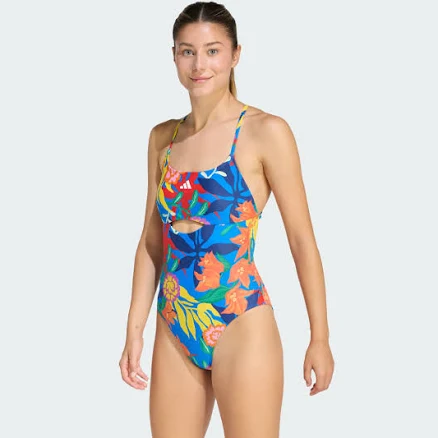
Adidas
Women's Mexicana Florals Tie-Back Swimsuit
- Polyester/nylon swimsuit fabric, likely uncoated or standard finish
- Azo dyes and synthetic colorants
4 hazards checked on this product. See all of them.
More swimwear grades
How we score, every product runs through the same public 0-100 rubric based on materials, coatings, brand disclosure, lab findings, and recalls. See the full methodology → Spotted a mistake? Report an error.