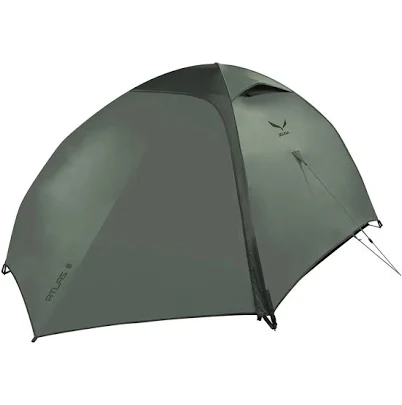
Salewa · Camping Tents & Tarps
Salewa Atlas Iii Tent
Tent with unknown water-repellent coating treatment; PFAS risk unconfirmed, contact brand for details.
Salewa does not publicly disclose PFAS content or water-repellent coating chemistry for the Atlas III. Outdoor tents commonly use fluorinated water repellents; request materials transparency from Salewa before purchase.
Still want this one anyway? Check the price on Amazon. We’d swap it.
Material
Polyester/nylon fabric with water-repellent coating (water-repellent coating) coating
Brand disclosure
Brand is silent on PFAS
Lab data
No public lab test
You may also be interested in
Top-graded picks in the categories readers replace first, every one scored on the same rubric.

- polypropylene filter housing, carbon/sediment cartridge
- We found no PFAS statement from the brand
- Bacterial growth in spent cartridges
3 hazards checked on this product, all on its full breakdown.

Aquasure
Premier Series 75 GPD Under Sink Reverse Osmosis Water Filtration System
- RO membrane, carbon filters, stainless steel housing
- We found no PFAS statement from the brand
- Bacterial and microbial growth in housing and filters
4 hazards checked on this product, all on its full breakdown.

Avocado
Vegan Mattress
- organic cotton, natural latex, coconut coir, recycled steel coils
- The brand calls it PFAS-free, which we have not verified
- Heavy metals
2 hazards checked on this product, all on its full breakdown.
What Salewa Atlas Iii Tent is made of, ingredients and materials
The Atlas III uses polyester and nylon fabrics treated with a water-repellent coating (water-repellent coating) coating to shed water. water-repellent coating coatings historically rely on fluorochemicals (PFAS), though some manufacturers have shifted to non-fluorinated alternatives; Salewa has not publicly disclosed which chemistry is in this model. Polyester itself is chemically stable when intact, but the coating's composition and degradation behavior over years of UV exposure and cleaning remain the key concern.
What’s concerning
Waterproof / stain-resistant treatment
Water-repellent coating treatments have historically used PFAS.
Category baseline
The starting point for this type of product, before anything specific to this product is counted.
No PFAS disclosure
No public statement from the brand about PFAS in this product.
water-repellent coating degradation and leachables
Salewa does not disclose whether the water-repellent coating is fluorinated (PFAS) or fluorine-free; degraded coatings over 3-5 years of use and cleaning may shed particles or chemical residues. Without ingredient transparency, leaching risk cannot be quantified.
Volatile organic compounds (VOCs) off-gassing
New polyester tents often emit odors from adhesives, dyes, and coating solvents during the first few uses. The Atlas III has not been independently tested for VOC emissions; airing it outdoors for 24-48 hours before first use is a common precaution.
What’s reassuring
Formaldehyde / VOCs
Polyester and nylon textiles sometimes use formaldehyde-based dyes or wrinkle-resistant resins; no recalls or public testing of the Atlas III for formaldehyde content have been reported. Standard industry assumption is low-formaldehyde, but independent verification is absent.
Source, ATSDR ↗Antimony in polyester fiber
Antimony is a common catalyst in polyester production and can be detected in finished fabrics at trace levels. No evidence of elevated antimony in Salewa tents; exposure during normal camping use (non-ingestion) is considered negligible by public health standards.
Azo dyes in colored fabrics
The Atlas III uses standard polyester dyes; restricted azo dyes (linked to aromatic amines) are not permitted in EU textiles under REACH/OEKO-TEX standards, but Salewa's certification status for this product is not publicly confirmed.
How is this PFAS grade calculated?
The brand's record and disclosure
Salewa (owned by Dorset Outdoor Group/Schwinn parent) does not maintain a public PFAS commitment or material transparency database comparable to peers like Patagonia or Arc'teryx. No product-level water-repellent coating ingredient disclosures are readily available for the Atlas III. The brand has not faced major chemical-related recalls or public controversies on record, but the silence on water-repellent coating sourcing limits buyer confidence.
How it compares in its category
Most three-season tents at this price point use fluorinated or unknown water-repellent coating treatments; the Atlas III is not an outlier. Premium competitors (Nemo, Big Agnes) increasingly disclose non-fluorinated water-repellent coating alternatives or offer full chemical transparency. Budget-tier tents often accept higher PFAS exposure. The Atlas III sits in the middle, functional, but without the transparency consumers can now demand.
If you buy it
Wash sparingly and avoid hot water, which can degrade water-repellent coating coatings and potentially mobilize residues. Air-dry completely before storage to prevent mold and off-gassing. Inspect seams and zippers annually; replace if coating flakes noticeably. Consider contacting Salewa directly to request water-repellent coating chemistry details before purchase, or reach out post-sale for clarification on batch composition.
What is not known about PFAS in this product?
- Basis
- Model estimate, 35% confidence, not a lab result
- Lab test
- None on record for this exact product
- Brand statement
- Salewa has made none
Formulations change between production runs, so check the current label. How we grade.
More camping tents & tarps grades
How we score, every product runs through the same public 0-100 rubric based on materials, coatings, brand disclosure, lab findings, and recalls. See the full methodology → Spotted a mistake? Report an error.