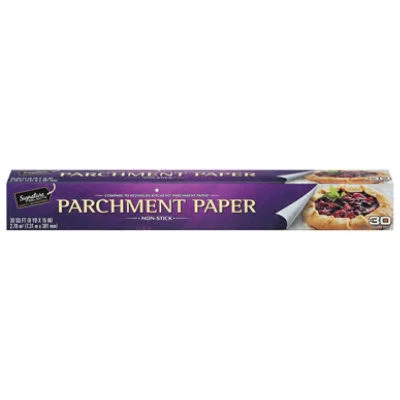
Signature Select · Parchment Paper & Baking Liners
Signature Select Non Stick 30 sq ft Parchment Paper
Lower concern. Parchment paper typically uses silicone, not PFAS.
Parchment paper is conventionally coated with silicone for non-stick release, not Teflon-family coating. Brand discloses no PFAS stance, but material class carries lower PFAS risk than greaseproof or water-resistant paper.
The better-graded swap
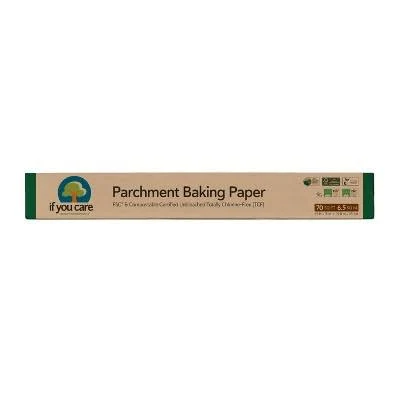
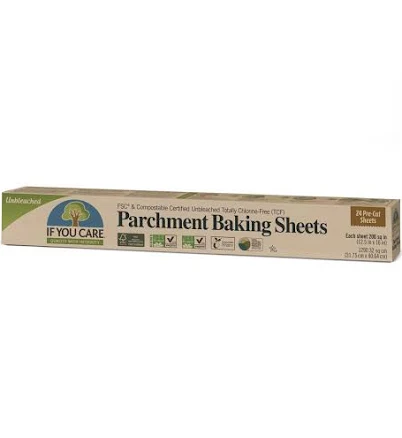
If You Care
If You Care Parchment Baking Paper
90/100 safety
Same rubric that flunked this product. The swap earned Excellent.
Still want this one anyway? Check the price on Amazon. We’d swap it.
Material
silicone-coated parchment paper
Brand disclosure
Brand is silent on PFAS
Lab data
No public lab test
You may also be interested in
Top-graded picks in the categories readers replace first, every one scored on the same rubric.

- polypropylene filter housing, carbon/sediment cartridge
- We found no PFAS statement from the brand
- Bacterial growth in spent cartridges
3 hazards checked on this product, all on its full breakdown.

Aquasure
Premier Series 75 GPD Under Sink Reverse Osmosis Water Filtration System
- RO membrane, carbon filters, stainless steel housing
- We found no PFAS statement from the brand
- Bacterial and microbial growth in housing and filters
4 hazards checked on this product, all on its full breakdown.

Avocado
Vegan Mattress
- organic cotton, natural latex, coconut coir, recycled steel coils
- The brand calls it PFAS-free, which we have not verified
- Heavy metals
2 hazards checked on this product, all on its full breakdown.
What Signature Select Non Stick Parchment Paper is made of, ingredients and materials
This product is parchment paper (cellulose fiber) coated with silicone, a non-reactive synthetic polymer widely used in food-contact applications. Silicone does not leach into food under normal baking and cooking temperatures because it is chemically inert and does not break down easily. Unlike older Teflon-type coating (Teflon) non-stick coatings on cookware, silicone-coated parchment does not emit harmful fumes when heated to typical kitchen temperatures (up to 420-450°F depending on brand specification).
What’s concerning
Waterproof / stain-resistant treatment
Water-repellent coating treatments have historically used PFAS.
Category baseline
The starting point for this type of product, before anything specific to this product is counted.
No PFAS disclosure
No public statement from the brand about PFAS in this product.
Bleaching residue or chemical processing byproducts
Parchment paper is treated with sulfuric acid and bleached during manufacture; trace residues are not typically a concern at food-contact levels, but Signature Select does not disclose whether chlorine-free or TCF (totally chlorine-free) processing is used. This is a category-wide transparency gap, not a brand-specific issue.
Compostability and environmental persistence
While parchment itself is biodegradable, silicone coating may slow decomposition in compost systems. Signature Select does not market this product as compostable; disposal as regular trash or check local composting guidelines is prudent.
What’s reassuring
Silicone leaching under extreme heat
Silicone-coated parchment is recognized as food-safe by the FDA at standard baking temperatures. No documented cases of silicone leaching into food at normal use (below 450°F) are on public record for this product class.
Microplastics
Silicone coating on parchment paper is mechanically stable and does not shed particles into food under normal baking use. No reported cases of silicone particle migration from parchment paper exist in established literature.
Source, EPA ↗BPA & bisphenols
Silicone does not contain BPA or BPS; these endocrine disruptors are associated with polycarbonate and epoxy liners, not silicone coatings. Parchment paper adhesives are typically water-based and not a known source of estrogenic compounds.
Source, FDA ↗How is this PFAS grade calculated?
The brand's record and disclosure
Schwartz Bros (a Signature Select house brand under Albertsons companies) does not publicly disclose detailed material sourcing or chemical composition statements for this parchment product on available consumer-facing documentation. No safety certifications (FDA food-contact status, BPA-free declarations, or compostability claims) are widely promoted for this specific SKU. The brand maintains standard retail food-packaging compliance but has not established a public stance on per- and polyfluoroalkyl substance (PFAS) use in paper products.
How it compares in its category
Silicone-coated parchment is the industry standard for non-stick baking paper and is functionally equivalent to premium brands (Reynolds, If You Care). Some competitors emphasize compostability or chlorine-free bleaching; Signature Select does not highlight these attributes. Price-wise, this product is competitively positioned as a value option, which typically reflects lower marketing spend rather than material downgrade in this commodity category.
If you buy it
Store the roll in a cool, dry place away from direct heat and humidity, as parchment can absorb moisture over time. Do not use above 420-450°F (check package guidance); above this range, even silicone may degrade or the underlying cellulose may char. Replace the sheet if it becomes torn, heavily discolored, or if you notice any visible flaking or debris. Use it as intended for baking, food wrapping, and line-cooking; do not reuse sheets if they have absorbed grease or food residue, as this can affect non-stick performance and food safety on subsequent use.
What is not known about PFAS in this product?
- Basis
- Model estimate, 72% confidence, not a lab result
- Lab test
- None on record for this exact product
- Brand statement
- Signature Select has made none
Formulations change between production runs, so check the current label. How we grade.
What are the PFAS-free alternatives to Signature Select Non Stick 30 sq ft Parchment Paper?
- silicone-coated parchment paper
- The brand calls it PFAS-free, which we have not verified
- Paper degradation and particulate shedding
- unbleached paper with silicone coating
- The brand calls it PFAS-free, which we have not verified
- Silicone coating degradation at high heat
- bleached paper with silicone coating
- The brand calls it PFAS-free, which we have not verified
- Paper degradation and fragmentation
More parchment paper & baking liners grades
How we score, every product runs through the same public 0-100 rubric based on materials, coatings, brand disclosure, lab findings, and recalls. See the full methodology → Spotted a mistake? Report an error.