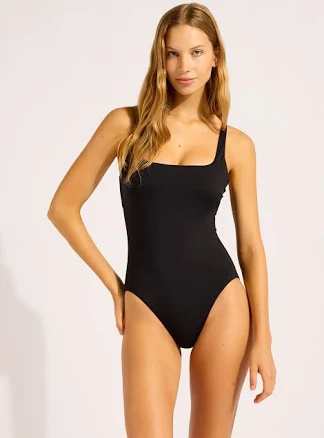
Seafolly Women's Collective Multi Fit Square Neck One Piece Swimsuit
Avoid until Seafolly discloses water-repellent coating composition; synthetic swimwear often uses PFAS.
Seafolly does not disclose PFAS information for this nylon/polyester swimsuit. Synthetic swimwear typically uses water-repellent coating finishes historically based on PFAS compounds.
The better-graded swap
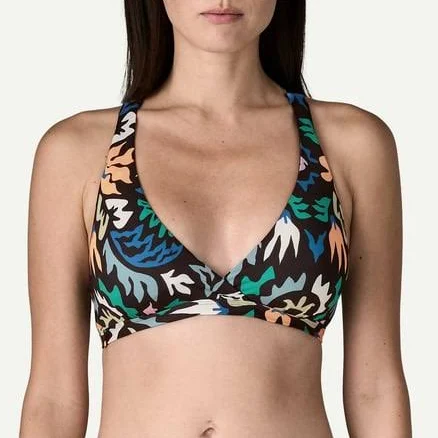
Patagonia
Patagonia Women's Bottom Turn Racerback Bikini Top
90/100 safety
Same rubric that flunked this product. The swap earned Excellent.
Still want this one anyway? Check the price on Amazon. We’d swap it.
Material
Nylon/polyester blend with likely water-repellent coating finish
Brand disclosure
Brand is silent on PFAS
Lab data
No public lab test
What Seafolly Women's Collective Multi Fit is made of, ingredients and materials
This swimsuit is a nylon and polyester blend, common in one-piece designs for durability and stretch recovery. The 'Multi Fit' cut and square neck suggest moderate structure requiring shape retention, likely dependent on a water-repellent coating (water-repellent coating) finish applied to the fabric. water-repellent coating coatings on synthetic swimwear are historically a primary source of PFAS exposure in textiles, though the specific chemistry Seafolly uses is not publicly disclosed. Nylon and polyester themselves are not inherently hazardous, but the finishing layer is the concern.
What’s concerning
Category baseline
The starting point for this type of product, before anything specific to this product is counted.
No PFAS disclosure
No public statement from the brand about PFAS in this product.
Waterproof / stain-resistant treatment
Water-repellent coating treatments have historically used PFAS.
Antimony in polyester fiber
Polyester fiber is often catalyzed using antimony trioxide during production; residual antimony traces can remain in finished fabric. Seafolly does not disclose antimony levels. Skin contact with residual antimony is a theoretical exposure route, though dietary and occupational exposures typically dominate public health risk. No recall or adverse event is documented for this product.
water-repellent coating degradation and microfiber release
Over time and with repeated washing, water-repellent coating finishes and underlying polyester degrade, potentially releasing microfibers into waterways. This is a physical hazard (environmental) rather than chemical toxicity, but relevant to long-term product lifecycle. Seafolly provides no guidance on product lifespan or disposal.
PFAS
Industry practice links synthetic swimwear water-repellent coating finishes to PFAS; Seafolly's silence on chemistry leaves exposure unknown. This is the primary chemical safety concern for this product and rationale for the 'care' verdict pending disclosure.
Source, ATSDR ↗What’s reassuring
Azo dyes in polyester
No specific azo dye content reported for Seafolly swimwear; standard polyester can contain azo dyes (which may degrade into aromatic amines), but no testing or restriction is publicly documented for this brand. Use of azo dyes in swimwear is not banned in most jurisdictions, though some retailers screen for carcinogenic/allergenic azo dyes.
Formaldehyde / VOCs
Nylon fabric finishing can use formaldehyde-based resins for shape retention and elasticity recovery; Seafolly does not declare formaldehyde use or limits. No formaldehyde-related recalls or test results exist on record for this brand. Industry standard is typically <75 ppm, though certification (Oeko-Tex) screens more stringently.
Source, ATSDR ↗The full breakdown
The brand's record and disclosure
Seafolly is an Australian swimwear brand owned by Pentland Brands and does not publicly disclose water-repellent coating chemistry, PFAS testing, or commitments to PFAS phase-out on its website or product documentation. No Seafolly-specific safety recalls or controversies related to chemical coatings are on record. The brand has not pursued certifications such as Oeko-Tex Standard 100 or GOTS, which would indicate third-party screening for restricted chemicals. Silence on water-repellent coating composition is standard for the mid-market swimwear industry but leaves consumers unable to assess PFAS risk.
How it compares in its category
Most one-piece swimsuits in Seafolly's price and positioning range (AU$100-150 equivalent) use nylon or polyester with water-repellent coating finishes; this product is representative, not differentiated for safety. Competitors like Speedo also typically do not disclose water-repellent coating chemistry. Premium or eco-certified alternatives (e.g., Patagonia, Fourth Element) either use non-fluorinated repellents or provide full transparency; budget brands often provide less. Seafolly sits in the middle without transparency, making it harder to justify over brands with clearer environmental or chemical stance.
If you buy it
Rinse thoroughly in cool freshwater after each use to reduce salt and chlorine buildup, which can degrade coating durability. Air dry flat away from direct heat or sunlight to extend water-repellent coating lifespan and prevent polyester discoloration. Do not dry clean or use bleach. Replace the swimsuit when the elastic loses recovery or fabric shows pilling or color fading, typically after 50-80 wears; this signals coating degradation and reduces any residual water-repellent chemical exposure. Washing in cold water with mild detergent extends life and reduces microfiber shedding into waterways.
What we don’t know
- Basis
- Model estimate, 45% confidence, not a lab result
- Lab test
- None on record for this exact product
- Brand statement
- Seafolly has made none
Formulations change between production runs, so check the current label. How we grade.
Better-graded alternatives in Swimwear
Patagonia
Women's Bottom Turn Racerback Bikini Top
- Nylon/polyester blend with elastane (standard swimwear)
- The brand calls it PFAS-free, which we have not verified
- Elastane (spandex) degradation under heat or chlorine
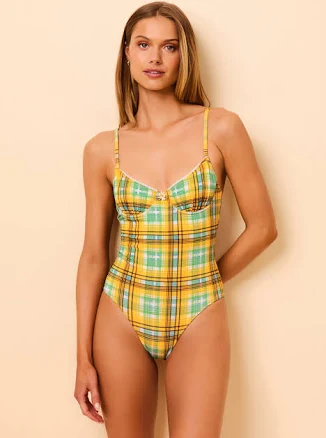
Solid & Striped
Taylor One Piece Seersucker Plaid
- Cotton/cotton-blend seersucker plaid
- We found no PFAS statement from the brand
- Azo dyes and colorfast stability
2 hazards checked on this product. See all of them.
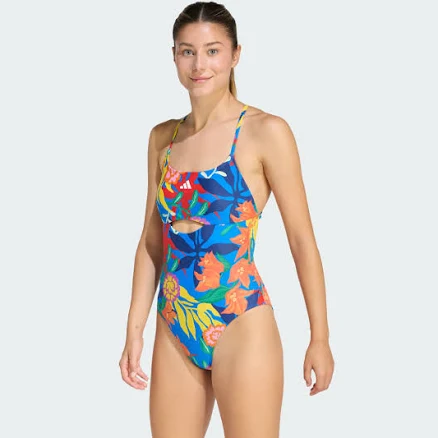
Adidas
Women's Mexicana Florals Tie-Back Swimsuit
- Polyester/nylon swimsuit fabric, likely uncoated or standard finish
- Azo dyes and synthetic colorants
4 hazards checked on this product. See all of them.
More swimwear grades
How we score, every product runs through the same public 0-100 rubric based on materials, coatings, brand disclosure, lab findings, and recalls. See the full methodology → Spotted a mistake? Report an error.