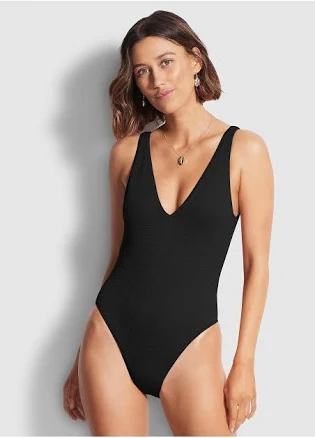
Seafolly Women's Sea Dive Deep V-Neck One-Piece Swimsuit
Avoid unless Seafolly discloses water-repellent coating composition; PFAS risk unconfirmed.
Seafolly provides no PFAS disclosure for this nylon/polyester swimsuit. Swimwear commonly receives water-repellent finishes historically based on PFAS, though some brands now use alternatives.
The better-graded swap
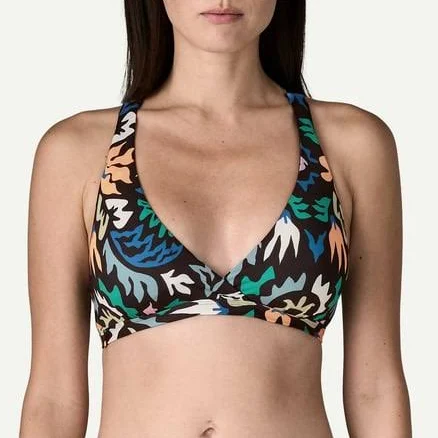
Patagonia
Patagonia Women's Bottom Turn Racerback Bikini Top
90/100 safety
Same rubric that flunked this product. The swap earned Excellent.
Still want this one anyway? Check the price on Amazon. We’d swap it.
Material
Nylon/polyester blend with water-repellent coating (water-repellent coating) finish
Brand disclosure
Brand is silent on PFAS
Lab data
No public lab test
What Seafolly Women's Sea Dive Deep V-Neck is made of, ingredients and materials
This swimsuit is a nylon and polyester blend, both synthetic polymers chosen for stretch, durability, and quick-dry properties. The water-repellent coating (water-repellent coating) finish is a factory-applied coating designed to shed water and chlorine. The hazard hinges entirely on that water-repellent coating chemistry, if it uses legacy PFOA/PFOS or modern PFAS alternatives, you're absorbing a persistent chemical through prolonged skin contact in wet conditions. Without ingredient disclosure, the risk profile is opaque.
What’s concerning
Category baseline
The starting point for this type of product, before anything specific to this product is counted.
No PFAS disclosure
No public statement from the brand about PFAS in this product.
Waterproof / stain-resistant treatment
Water-repellent coating treatments have historically used PFAS.
PFAS
Seafolly does not disclose whether the water-repellent finish uses fluorinated PFAS (legacy PFOA/PFOS or newer GenX-type alternatives) or fluorine-free chemistry. Prolonged skin contact in wet environments may increase dermal absorption compared to casual wear.
Source, ATSDR ↗Microplastic shedding from polyester
Polyester degrades over time with UV exposure, chlorine, and friction; nylon/polyester blends in swimwear can shed microfibers during washing and wear. This is a general polymer hazard not specific to Seafolly but relevant to all synthetic swimwear.
What’s reassuring
Dye or finish leaching
No specific recalls or test reports of dye migration or chemical leaching from Seafolly swimwear are on public record. Nylon and polyester are generally considered stable when properly dyed and finished.
Elastane/spandex degradation
Swimwear blends typically include 15-20% elastane for stretch. Elastane itself is stable, but chlorine and salt water accelerate breakdown over 2-3 years; no brand-specific issue reported for Seafolly.
Formaldehyde / VOCs
Most modern swimwear avoids formaldehyde-based finishes; no evidence suggests Seafolly uses them, but finish chemistry is undisclosed, so residual formaldehyde cannot be ruled out without testing.
Source, ATSDR ↗The full breakdown
The brand's record and disclosure
Seafolly has not publicly disclosed the specific water-repellent coating chemistry used in this or other products, nor has the brand published PFAS reduction commitments or third-party certifications (e.g., OEKO-TEX, bluesign). No major recalls or safety controversies are on record for this product specifically. The silence on water-repellent finish composition is the critical gap; brands leading on this issue (e.g., Patagonia, Decathlon) routinely name their water-repellent coating suppliers and chemistry.
How it compares in its category
Most mainstream swimwear brands (Seafolly, Speedo, Roxy) use water-repellent coating-coated nylon/polyester without transparent disclosure; this is industry standard. Premium or eco-conscious alternatives (Finisterre, Girlfriend Collective) often specify PFOA-free or use fluorine-free water-repellent coating or skip water-repellent coating entirely. Seafolly sits in the middle, quality construction but no transparency edge, placing it below brands that have committed to PFAS phase-out.
If you buy it
Rinse thoroughly in fresh water after each salt-water or chlorinated use to minimize chemical absorption and extend the water-repellent coating finish. Do not machine-wash in hot water or tumble-dry; hand-wash in cool water with mild detergent to preserve the coating. Replace every 2-3 years or when elasticity visibly degrades, as fabric breakdown can increase microfiber release. If you have skin sensitivity or live in a PFAS-contaminated water region, request water-repellent coating chemistry from Seafolly customer service before purchasing, or choose a brand with transparent fluorine-free certification.
What we don’t know
- Basis
- Model estimate, 35% confidence, not a lab result
- Lab test
- None on record for this exact product
- Brand statement
- Seafolly has made none
Formulations change between production runs, so check the current label. How we grade.
Better-graded alternatives in Swimwear
Patagonia
Women's Bottom Turn Racerback Bikini Top
- Nylon/polyester blend with elastane (standard swimwear)
- The brand calls it PFAS-free, which we have not verified
- Elastane (spandex) degradation under heat or chlorine
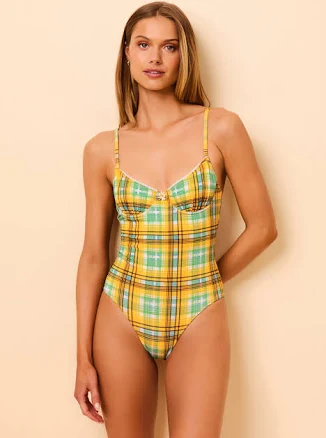
Solid & Striped
Taylor One Piece Seersucker Plaid
- Cotton/cotton-blend seersucker plaid
- We found no PFAS statement from the brand
- Azo dyes and colorfast stability
2 hazards checked on this product. See all of them.
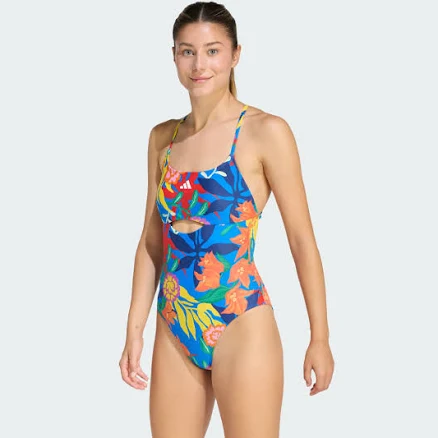
Adidas
Women's Mexicana Florals Tie-Back Swimsuit
- Polyester/nylon swimsuit fabric, likely uncoated or standard finish
- Azo dyes and synthetic colorants
4 hazards checked on this product. See all of them.
More swimwear grades
How we score, every product runs through the same public 0-100 rubric based on materials, coatings, brand disclosure, lab findings, and recalls. See the full methodology → Spotted a mistake? Report an error.