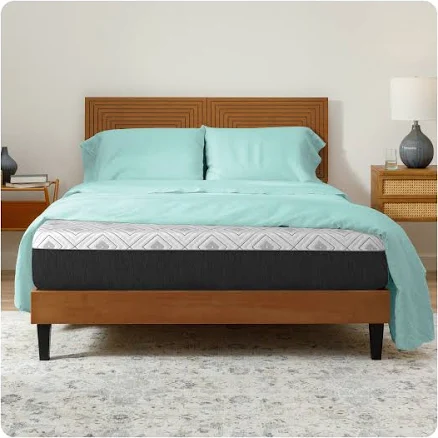
Sealy Essentials Cool-Touch 11 Hybrid Medium-Feel Mattress-in-a-Box, Is It Non-Toxic?
Lower PFAS risk, though Sealy stays quiet on treatment chemicals.
The Sealy Essentials uses foam, coils, and fabrics that don't inherently need PFAS, yet Sealy won't say if stain or water treatments were used on the cover or layers. You get no PFAS statement or third-party testing.
We flunk more products than we pass. This one earned its grade. How we grade
Material
polyurethane foam, synthetic fiber blends, steel coils
Brand disclosure
Brand is silent on PFAS
Lab data
No public lab test
You may also be interested in
Top-graded picks in the categories readers replace first, every one scored on the same rubric.

- polypropylene filter housing, carbon/sediment cartridge
- We found no PFAS statement from the brand
- Bacterial growth in spent cartridges
3 hazards checked on this product, all on its full breakdown.

Aquasure
Premier Series 75 GPD Under Sink Reverse Osmosis Water Filtration System
- RO membrane, carbon filters, stainless steel housing
- We found no PFAS statement from the brand
- Bacterial and microbial growth in housing and filters
4 hazards checked on this product, all on its full breakdown.
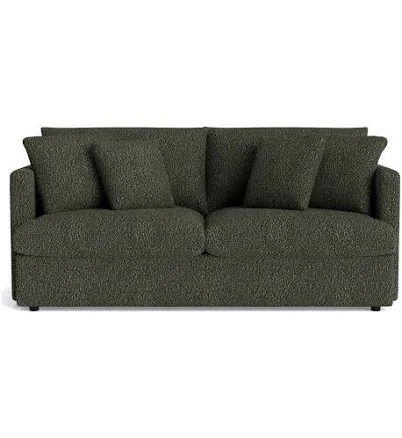
- polyurethane foam
- We found no PFAS statement from the brand
- Volatile Organic Compound (VOC) Off-Gassing
4 hazards checked on this product, all on its full breakdown.
Is Sealy Essentials Mattress-in-a-Box non-toxic? What it is made of
This mattress combines polyurethane foam layers with steel coil support and synthetic fiber (likely polyester or polyester-blend) cover and batting. Polyurethane foam is a standard base in modern mattresses and degasses volatile organic compounds (VOCs) initially, particularly formaldehyde and toluene; synthetic fibers add some off-gassing risk depending on processing and dyes. The steel coils themselves are inert; the real chemistry sits in the foam and fabrics. Cool-touch claims typically involve gel-infused particles or phase-change materials added to the surface foam or cover, which do not introduce additional hazard classes beyond the base foam risk profile.
What’s concerning
Category baseline
The starting point for this type of product, before anything specific to this product is counted.
No PFAS disclosure
No public statement from the brand about PFAS in this product.
Formaldehyde / VOCs
Polyurethane foam inherently releases VOCs during manufacturing and initial use; Sealy does not certify this mattress to CertiPUR-US or similar standards that cap formaldehyde and other aldehydes, so baseline off-gassing profiles are not independently verified. Off-gassing typically diminishes over weeks but can persist in poorly ventilated bedrooms.
Source, ATSDR ↗Formaldehyde / VOCs
The polyester-blend cover and synthetic batting may contain azo dyes or formaldehyde-based resin finishes used in textile manufacturing; Sealy does not provide material safety data or dye certifications (e.g., Oeko-Tex) for this mattress. Risk is low if ventilation is good, but potential allergen or irritant source in sensitive individuals.
Source, ATSDR ↗Foam degradation and particle shedding over time
Standard polyurethane foam is subject to breakdown from heat, humidity, and normal use; degradation can release foam particles and off-gassing compounds. The Cool-Touch formulation may use gel or additives that could accelerate this, but no specific data on this SKU is published.
Flame retardants
Mattresses sold in the United States must meet flammability standards (16 CFR 1633); Sealy likely uses brominated or phosphate-based flame retardants in the cover or mid-layers, but the brand does not disclose which chemicals or whether they are halogenated. Some competitors use wool or mineral-based fire barriers instead; Sealy does not highlight this choice.
Source, EPA ↗What’s reassuring
Base material not linked to PFAS
The main material recorded for this product is not one associated with PFAS.
Steel coil oxidation and rust (if exposed to moisture)
Steel coils in Sealy mattresses are typically galvanized or coated to resist rust; no recalls or widespread corrosion reports on record. Risk only materializes if mattress is exposed to prolonged moisture or flooding, which would void warranty anyway.
How is this PFAS grade calculated?
The brand's record and disclosure
Sealy does not publicly disclose detailed foam treatment chemical lists or third-party certifications (such as CertiPUR-US, Oeko-Tex, or Global Organic Textile Standard) on this specific SKU based on available product documentation. The brand has no widely reported recalls or toxicity controversies tied to mattress foam composition in recent years. Sealy's parent company (Tempur Sealy International) maintains basic regulatory compliance but does not market itself on chemical transparency or low-emission credentials the way some niche competitors do.
How it compares in its category
Hybrid foam-coil mattresses are the dominant mid-market segment; this construction is neither premium nor budget-tier. Competitors (Leesa, Casper, Purple, Helix) often highlight CertiPUR-US certification on foam, whereas Sealy does not advertise this on product pages; CertiPUR-US testing covers formaldehyde, heavy metals, and ozone depletion but is voluntary. The 11-inch medium-feel profile and retail-focused distribution (vs. DTC-only brands) position it as a conventional option with lower transparency but established manufacturing scale.
If you buy it
Unbox and air out the mattress in a well-ventilated room for 24-48 hours to allow initial off-gassing of foam volatiles to dissipate; this is standard practice for polyurethane mattresses. Avoid exposing it to sustained heat (e.g., direct sunlight through a window) or temperatures above 120F, as synthetic foam can accelerate degradation and release more VOCs. Spot-clean the cover only; do not machine wash or submerge. Plan on replacing the mattress every 7-10 years, as foam loses support and off-gassing can persist longer than premium, lower-density alternatives.
What is not known about PFAS in this product?
- Basis
- Model estimate, 65% confidence, not a lab result
- Lab test
- None on record for this exact product
- Brand statement
- Sealy has made none
Formulations change between production runs, so check the current label. How we grade.
What are the PFAS-free alternatives to Sealy Essentials Cool-Touch 11 Hybrid Medium-Feel Mattress-in-a-Box?

Avocado
Vegan Mattress
- organic cotton, natural latex, coconut coir, recycled steel coils
- The brand calls it PFAS-free, which we have not verified
- Heavy metals
2 hazards checked on this product, all on its full breakdown.
- natural latex, organic cotton cover
- A third party reports verifying it as PFAS-free
- Natural latex allergy (contact/respiratory)
3 hazards checked on this product, all on its full breakdown.
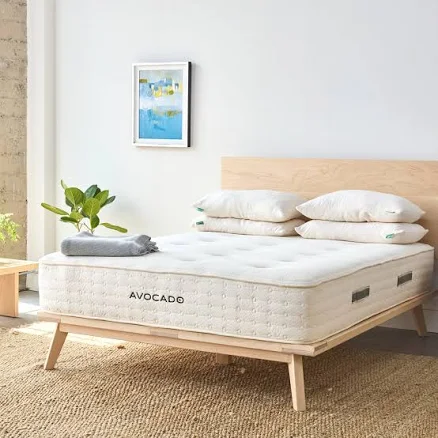
Avocado
Organic Hybrid Mattress
- organic cotton, natural latex, wool, innerspring coils
- We found no PFAS statement from the brand
- Volatile Organic Compound (VOC) off-gassing
3 hazards checked on this product, all on its full breakdown.
More mattresses grades
How we score, every product runs through the same public 0-100 rubric based on materials, coatings, brand disclosure, lab findings, and recalls. See the full methodology → Spotted a mistake? Report an error.