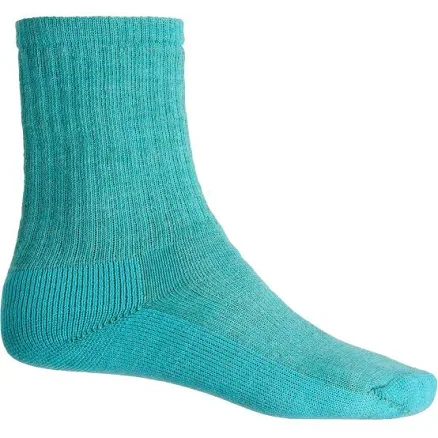
Smartwool Men's Hike Medium Crew Socks
Merino wool blend socks with lower concern, though brand lacks PFAS transparency.
The primary material is merino wool blend, not linked to PFAS. The brand has no PFAS statement on record. Elastic and synthetic dyes are included, but their chemistry is not disclosed.
Still want this one anyway? Check the price on Amazon. We’d swap it.
Material
Merino wool blend (primary), elastic, synthetic dyes
Brand disclosure
Brand is silent on PFAS
Lab data
No public lab test
You may also be interested in
Top-graded picks in the categories readers replace first, every one scored on the same rubric.

- polypropylene filter housing, carbon/sediment cartridge
- We found no PFAS statement from the brand
- Bacterial growth in spent cartridges
3 hazards checked on this product, all on its full breakdown.

Aquasure
Premier Series 75 GPD Under Sink Reverse Osmosis Water Filtration System
- RO membrane, carbon filters, stainless steel housing
- We found no PFAS statement from the brand
- Bacterial and microbial growth in housing and filters
4 hazards checked on this product, all on its full breakdown.

Avocado
Vegan Mattress
- organic cotton, natural latex, coconut coir, recycled steel coils
- The brand calls it PFAS-free, which we have not verified
- Heavy metals
2 hazards checked on this product, all on its full breakdown.
What Smartwool Men's Hike Medium Crew Socks is made of, ingredients and materials
Smartwool Hike Medium Crew socks are primarily merino wool blended with synthetic fibers (typically nylon and elastane for stretch and durability). Merino wool itself is a protein fiber with low chemical toxicity risk compared to synthetic-only textiles. The synthetic blend introduces dyes and elastic components that require scrutiny, though merino's natural antimicrobial properties reduce pressure for chemical antimicrobial finishes that plague some performance fabrics.
What’s concerning
Category baseline
The starting point for this type of product, before anything specific to this product is counted.
No PFAS disclosure
No public statement from the brand about PFAS in this product.
Azo dyes in synthetic fiber components
Smartwool does not publish azo dye test results or restricted substance lists for sock colorants. Merino wool itself is traditionally dyed with azo compounds; reputable manufacturers restrict carcinogenic aromatic amines, but no public certification from Smartwool confirms this practice for this specific product.
Microplastics
Elastane (spandex) in sock cuffs and arch support degrades with repeated washing and UV exposure, potentially shedding microplastic fibers. No Smartwool-specific study exists, but this is a category-wide issue for all performance hosiery; proper care (cool wash, low heat) delays this process.
Source, EPA ↗What’s reassuring
Base material not linked to PFAS
The main material recorded for this product is not one associated with PFAS.
Formaldehyde / VOCs
No formaldehyde finish hazard alerts or recalls exist for Smartwool hosiery. Modern elastic (spandex/elastane) rarely receives formaldehyde cross-linking, but nylon fibers can be treated with formaldehyde-based resins; Smartwool's lack of disclosure means this risk cannot be ruled out, though industry norms suggest low likelihood.
Source, ATSDR ↗Antimony in polyester or synthetic elastane
Smartwool socks are wool-dominant, reducing polyester load typical of fully synthetic performance socks. Antimony is used as a catalyst in polyester synthesis; traces may persist. No testing data or recalls address antimony in Smartwool products, and the small synthetic component suggests residual levels well below safety thresholds.
Lead
Smartwool does not publish heavy metal testing for sock dyes. Modern textile dye regulations (EU REACH, OEKO-TEX) restrict these metals, but Smartwool's voluntary certification status for dyeing processes is not clearly stated. Risk is low for a major brand but unconfirmed by public disclosure.
Source, ATSDR ↗How is this PFAS grade calculated?
The brand's record and disclosure
Smartwool, owned by Timberland/VF Corporation, does not publicly disclose detailed chemical processing or restricted substance testing for individual sock lines. The company holds some sustainability certifications (Responsible Wool Standard for sourcing) but remains largely silent on azo dye compliance, formaldehyde finishes, or heavy metals in colorants. No major safety recalls or documented chemical safety controversies are on record for the brand's sock products.
How it compares in its category
Performance wool-blend socks occupy a mid-tier safety profile. Pure merino wool alternatives (e.g., Darn Tough, Icebreaker) offer slightly lower synthetic content but higher cost. Synthetic-only performance socks (polyester, nylon) typically carry higher flame-retardant and antimicrobial chemical loads. Smartwool's wool-forward composition positions it favorably within mass-market performance hosiery, though transparency lags behind smaller specialty brands.
If you buy it
Wash in cool water with mild detergent to avoid degradation of elastic fibers and synthetic dye bleeding. Avoid high heat (tumble dry on low or air dry) to prevent shrinkage and elastic breakdown. Replace socks after visible pilling or loss of elastic tension (typically 1-2 years of regular use). Inspect seams and heel reinforcement annually; Smartwool socks are machine washable but benefit from gentle handling to extend lifespan and maintain compression properties.
What is not known about PFAS in this product?
- Basis
- Model estimate, 72% confidence, not a lab result
- Lab test
- None on record for this exact product
- Brand statement
- Smartwool has made none
Formulations change between production runs, so check the current label. How we grade.
More performance socks grades
How we score, every product runs through the same public 0-100 rubric based on materials, coatings, brand disclosure, lab findings, and recalls. See the full methodology → Spotted a mistake? Report an error.