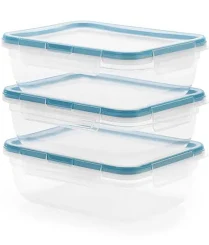
Snapware Total Solution 3-Pack Plastic Food Storage Containers Set
Lower concern. Food storage containers, not known PFAS application.
Snapware's polypropylene storage containers are not a typical PFAS-risk product category. No coating, nonstick, or water-repellent treatment is mentioned; the brand makes no PFAS claims.
We flunk more products than we pass. This one earned its grade. How we grade
Material
Polypropylene plastic containers
Brand disclosure
Brand is silent on PFAS
Lab data
No public lab test
What Snapware Total Solution 3-Pack Plastic is made of, ingredients and materials
Snapware Total Solution containers are polypropylene (PP, #5 plastic), a thermoplastic polymer chosen for food storage because it is more heat-resistant than polyethylene and does not contain BPA or phthalates by design. PP is non-reactive under normal refrigeration and room-temperature storage, though it can soften if exposed to temperatures above ~160°F (71°C). The lids and seals on these containers are also typically polypropylene or elastomer-based, designed to create an airtight seal without relying on hazardous chemical coatings.
What’s concerning
Category baseline
The starting point for this type of product, before anything specific to this product is counted.
No PFAS disclosure
No public statement from the brand about PFAS in this product.
Microplastics
Repeated heating, mechanical stress, or UV exposure can cause polypropylene to microcrack and shed particles. Risk is low under recommended cold-storage use but increases if containers are misused with hot contents or abrasive cleaning.
Source, EPA ↗Mold and bacterial growth in seals
Polypropylene seals can trap moisture and food residue if not cleaned thoroughly or allowed to dry completely. Poorly maintained seals are a hygiene issue rather than a chemical hazard but can promote bacterial survival.
Leaching of oligomers or catalytic residues
Trace polypropylene oligomers and manufacturing residues may migrate into fatty or acidic foods, especially over years of use or after visible wear. Risk is low but increases with age and degradation of the container surface.
What’s reassuring
Base material not linked to PFAS
The main material recorded for this product is not one associated with PFAS.
BPA & bisphenols
Polypropylene does not contain BPA or phthalates by formulation. No documented leaching of these chemicals from Snapware PP containers under normal use.
Source, FDA ↗Off-gassing of volatile organic compounds (VOCs)
Polypropylene has low odor and minimal off-gassing at room temperature. No established VOC emissions from Snapware PP containers are on record in consumer testing or regulatory filings.
The full breakdown
The brand's record and disclosure
Snapware (owned by Newell Brands) does not publicly disclose detailed chemical composition or third-party safety certification testing for this specific product line. The brand has no major recalls or documented chemical safety controversies tied to these containers in public databases. No formal BPA-free or phthalate-free claims are prominently advertised on packaging, though polypropylene inherently excludes both; this reflects industry-wide silence rather than intentional concealment.
How it compares in its category
Polypropylene containers are mainstream in food storage and sit in the middle of the safety spectrum, they avoid BPA and phthalate risks of older polycarbonate or vinyl alternatives, but lack the transparency of glass or stainless-steel options. Snapware's price point and market position (mass retail) indicate standard injection-molded manufacturing without specialty coatings or reinforcements. Comparable PP brands (Rubbermaid, Sistema, OXO) have similar material profiles and no elevated hazard records.
If you buy it
Do not use these containers in the microwave or dishwasher at high heat, as polypropylene can warp or leach trace monomers above ~160°F. Inspect seals and lids regularly for cracks, staining, or odor; replace if discolored or if seals no longer lock firmly, as degraded plastic can harbor bacteria. Hand-wash with mild soap and cool to warm water. Store food in the refrigerator or cool, dry conditions; do not use for hot foods or hot liquids.
What we don’t know
- Basis
- Model estimate, 72% confidence, not a lab result
- Lab test
- None on record for this exact product
- Brand statement
- Snapware has made none
Formulations change between production runs, so check the current label. How we grade.
Better-graded alternatives in Lunch Boxes
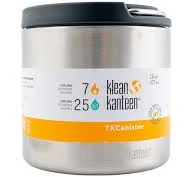
Klean Kanteen
Double Wall Vacuum Insulated Stainless Steel Food Canister Container with Leak Proof Lid
- Stainless steel body, silicone gasket lid seal
- The brand calls it PFAS-free, which we have not verified
- Silicone gasket degradation
3 hazards checked on this product. See all of them.
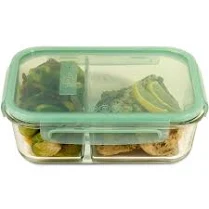
Snapware
Meal Box Glass
- borosilicate glass
- We found no PFAS statement from the brand
- Leaching from glass matrix or lid seals
2 hazards checked on this product. See all of them.
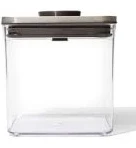
OXO
Steel Pop Big Square Short - 2.8 Qt/2.6 l
- Stainless steel container, no surface treatment
- Lid/gasket polymer leaching
3 hazards checked on this product. See all of them.
More lunch boxes grades
How we score, every product runs through the same public 0-100 rubric based on materials, coatings, brand disclosure, lab findings, and recalls. See the full methodology → Spotted a mistake? Report an error.