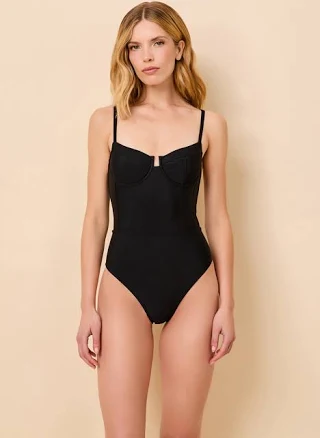
Solid Striped Women's Veronica One-Piece Swimsuit
Skip until brand discloses water-repellent coating chemistry, swimwear water-repellency often uses PFAS.
Solid & Striped doesn't publicly disclose the chemical composition of this swimsuit's water-repellent finish. Swimwear durability treatments commonly rely on PFAS-based water-repellent coating coatings.
The better-graded swap
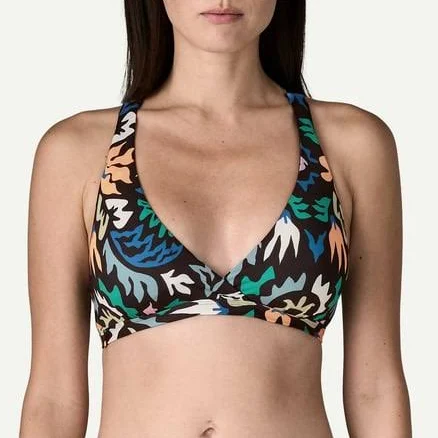
Patagonia
Patagonia Women's Bottom Turn Racerback Bikini Top
90/100 safety
Same rubric that flunked this product. The swap earned Excellent.
Still want this one anyway? Check the price on Amazon. We’d swap it.
Material
Nylon/polyamide blend with water-repellent coating (water-repellent coating) finish
Brand disclosure
Brand is silent on PFAS
Lab data
No public lab test
What Solid Striped Women's Veronica One-Piece is made of, ingredients and materials
This swimsuit is nylon (polyamide) with a water-repellent coating (water-repellent coating) finish, the water-repellent coating is where PFAS risk concentrates. Nylon itself is stable and does not leach appreciably into skin or water during normal wear. The water-repellent coating treatment is applied to maintain water beading and quick-dry properties; most mass-market swimwear uses this finish, and many brands rely on PFAS-based chemistries (notably fluorocarbon compounds) rather than disclosed alternatives like wax or silicone blends.
What’s concerning
Category baseline
The starting point for this type of product, before anything specific to this product is counted.
No PFAS disclosure
No public statement from the brand about PFAS in this product.
Waterproof / stain-resistant treatment
Water-repellent coating treatments have historically used PFAS.
PFAS
Solid & Striped has not disclosed water-repellent coating chemistry; nylon swimwear water-repellency commonly relies on PFAS-based fluorocarbon coatings. Dermal absorption during wear is low, but manufacturing and disposal pathways present environmental and bioaccumulation concern.
Source, ATSDR ↗Formaldehyde / VOCs
Nylon textile finishing may include formaldehyde-based resins for shape retention and dye-setting. Residual formaldehyde is uncommon in finished consumer swimwear but possible if quality control is lax; rinsing before first wear mitigates this.
Source, ATSDR ↗Microplastics
Synthetic nylon swimwear can release microfibers during washing and wear, particularly if the water-repellent coating degrades. Extent depends on fabric weave density and durability; washing in a mesh bag and replacing after 1-2 years reduces cumulative shedding.
Source, EPA ↗What’s reassuring
Heavy metals
No specific recalls or reports tie Solid & Striped prints or dyes to restricted azo compounds or metal contamination. Nylon takes dyes well and brand positioning suggests standard commercial dyeing; risk is generic to the category, not elevated here.
Source, FDA ↗Antimony in polyester blends
This product is described as nylon/polyamide; antimony (a polyester catalyst residue) does not apply. If the actual fiber content differs, review the label.
The full breakdown
The brand's record and disclosure
Solid & Striped has not publicly disclosed the specific water-repellent coating chemistry used in this product or issued a PFAS elimination commitment. The brand markets premium-positioned swim and resort wear but remains silent on chemical inputs in manufacturing, which is typical for mid-tier fashion labels. No major recalls or toxicology controversies are on record for this brand.
How it compares in its category
Most mainstream swimwear carries similar water-repellent coating-related uncertainty; premium brands (e.g., Patagonia) often disclose or avoid PFAS explicitly, while fast-fashion competitors rarely do. Solid & Striped sits in the mid-market segment where disclosure is sparse. Opting for non-water-repellent coating nylon or certified PFAS-free alternatives (rare but growing) would reduce this specific risk.
If you buy it
Rinse thoroughly after each use to remove salt, chlorine, and sunscreen residue, this extends life and reduces any dermal contact with residual finish chemicals. Wash in cool water with mild detergent; avoid hot water and bleach, which can degrade the nylon and water-repellent coating prematurely. Air-dry away from direct heat and sunlight to preserve fabric elasticity. Replace when elastic fails or fabric pilling becomes visible (typically 1, 2 years with regular use).
What we don’t know
- Basis
- Model estimate, 42% confidence, not a lab result
- Lab test
- None on record for this exact product
- Brand statement
- Solid & Striped has made none
Formulations change between production runs, so check the current label. How we grade.
Better-graded alternatives in Swimwear
Patagonia
Women's Bottom Turn Racerback Bikini Top
- Nylon/polyester blend with elastane (standard swimwear)
- The brand calls it PFAS-free, which we have not verified
- Elastane (spandex) degradation under heat or chlorine
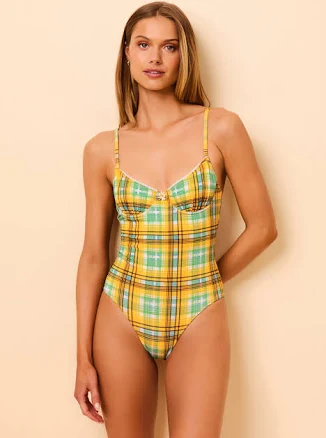
Solid & Striped
Taylor One Piece Seersucker Plaid
- Cotton/cotton-blend seersucker plaid
- We found no PFAS statement from the brand
- Azo dyes and colorfast stability
2 hazards checked on this product. See all of them.
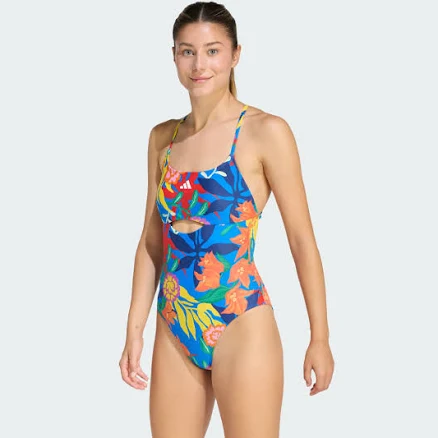
Adidas
Women's Mexicana Florals Tie-Back Swimsuit
- Polyester/nylon swimsuit fabric, likely uncoated or standard finish
- Azo dyes and synthetic colorants
4 hazards checked on this product. See all of them.
More swimwear grades
How we score, every product runs through the same public 0-100 rubric based on materials, coatings, brand disclosure, lab findings, and recalls. See the full methodology → Spotted a mistake? Report an error.