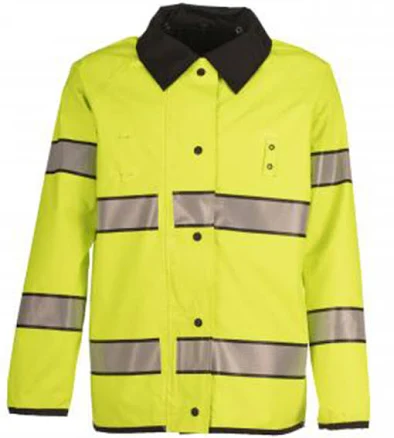
Spiewak VizGuard Short Reversible Duty Rain Jacket
Duty rain jacket with water-resistant coating of undisclosed chemistry.
Spiewak VizGuard is a polyester duty rain jacket with a water-resistant coating. The brand has not stated the coating's chemistry or whether it contains PFAS.
Still want this one anyway? Check the price on Amazon. We’d swap it.
Material
polyester with water-resistant coating
Brand disclosure
Brand is silent on PFAS
Lab data
No public lab test
You may also be interested in
Top-graded picks in the categories readers replace first, every one scored on the same rubric.

- polypropylene filter housing, carbon/sediment cartridge
- We found no PFAS statement from the brand
- Bacterial growth in spent cartridges
3 hazards checked on this product, all on its full breakdown.

Aquasure
Premier Series 75 GPD Under Sink Reverse Osmosis Water Filtration System
- RO membrane, carbon filters, stainless steel housing
- We found no PFAS statement from the brand
- Bacterial and microbial growth in housing and filters
4 hazards checked on this product, all on its full breakdown.

Avocado
Vegan Mattress
- organic cotton, natural latex, coconut coir, recycled steel coils
- The brand calls it PFAS-free, which we have not verified
- Heavy metals
2 hazards checked on this product, all on its full breakdown.
What Spiewak VizGuard Short Duty Rain Jacket is made of, ingredients and materials
The VizGuard is polyester with an applied water-resistant (water-repellent coating) coating. Polyester itself is chemically stable and does not leach known endocrine disruptors or heavy metals under normal wear. The critical unknown is the water-repellent coating finish, many duty-grade rain jackets use PFAS-based durable water repellents (perfluorocarbons) because they outperform non-fluorinated alternatives in durability and breathability. Spiewak has not publicly disclosed whether this coating is PFAS-free, making the actual chemical exposure profile unclear.
What’s concerning
Waterproof / stain-resistant treatment
Water-repellent coating treatments have historically used PFAS.
Category baseline
The starting point for this type of product, before anything specific to this product is counted.
No PFAS disclosure
No public statement from the brand about PFAS in this product.
PFAS
Water-resistant duty jackets frequently use PFAS-based water-repellent coating finishes; Spiewak has not disclosed the chemistry of the VizGuard's coating, so PFAS presence cannot be ruled in or out. This is the dominant chemical concern for this product.
Source, ATSDR ↗Coating degradation and reapplication requirements
Duty rain jackets with conventional water-repellent coating coatings lose water repellency after 20-50 washes depending on coating chemistry. Spiewak does not publish care durability specs; unknown whether recoating services or replacement guidance is available.
What’s reassuring
Azo dyes in polyester and color fastness
No recalls or public testing flagging azo dyes in Spiewak apparel. Polyester dyes are generally stable; risk is present only if dyes are poorly fixed and migrate via perspiration, an uncommon issue in branded duty wear.
Formaldehyde / VOCs
Polyester does not require formaldehyde-based wrinkle-resist or shrink-control resins. No evidence that Spiewak uses formaldehyde finishes on this jacket; polyester DWRs are typically not formaldehyde-based.
Source, ATSDR ↗Antimony in polyester fiber
Antimony trioxide is used as a catalyst in polyester manufacturing but does not migrate into clothing during wear. No industry recalls or evidence of skin contact risk from antimony in finished polyester garments.
How is this PFAS grade calculated?
The brand's record and disclosure
Spiewak is a US-based workwear and duty apparel manufacturer with no public certifications for PFAS-free production or restricted substance lists published online. The company has not issued statements addressing PFAS in its water-resistant coatings, which is notable given that major outdoor brands (Patagonia, Arc'teryx) now actively market PFAS-free alternatives. This silence is not evidence of PFAS use, but it reflects a lack of transparency that prevents informed assessment of this specific product.
How it compares in its category
Duty rain jackets occupy a difficult middle ground, law enforcement and military end-users prioritize durability and water-shedding performance, historically achieved via PFAS coatings. Some competitors now offer coatings using wax-based or silicone-based DWRs that are not linked to PFAS, though these require more frequent reapplication. The VizGuard's positioning suggests conventional durability-first engineering, which statistically correlates with higher PFAS risk in this category, but cannot be confirmed without label or contact with the manufacturer.
If you buy it
Store and wear the jacket normally; polyester coatings do not off-gas formaldehyde or VOCs at body temperature. Wash in cool water with mild detergent and avoid heavy heat (dryer tumble may degrade coating). Before purchase, contact Spiewak directly to request the water-repellent coating specification and whether PFAS is present, as this is the single material detail that determines your actual exposure risk. If you require PFAS-free assurance, seek brands with public certifications or explicit non-fluorinated coating claims.
What is not known about PFAS in this product?
- Basis
- Model estimate, 45% confidence, not a lab result
- Lab test
- None on record for this exact product
- Brand statement
- Spiewak has made none
Formulations change between production runs, so check the current label. How we grade.
More rain jackets grades
How we score, every product runs through the same public 0-100 rubric based on materials, coatings, brand disclosure, lab findings, and recalls. See the full methodology → Spotted a mistake? Report an error.