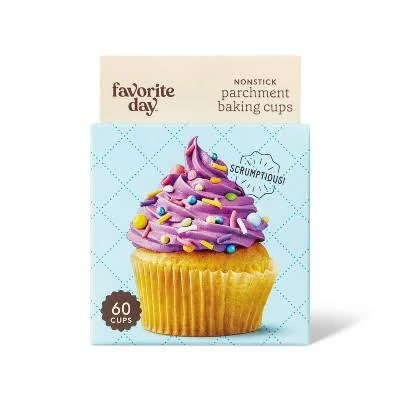
Favorite Day · Parchment Paper & Baking Liners
Parchment Liners 60ct Favorite Day
Parchment paper typically lower concern, but grease-resistant treatment unconfirmed.
Parchment liners use paper with grease-resistant coatings. Target discloses no PFAS information, coating chemistry remains unclear.
The better-graded swap
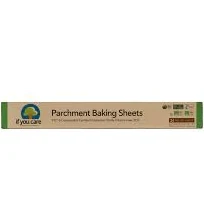
If You Care
Parchment Baking Sheets
90/100 safety
Same rubric that flunked this product. The swap earned Excellent.
Still want this one anyway? Check the price on Amazon. We’d swap it.
Material
silicone-coated paper or cellulose with grease-resistant treatment
Brand disclosure
Brand is silent on PFAS
Lab data
No public lab test
You may also be interested in
Top-graded picks in the categories readers replace first, every one scored on the same rubric.

- polypropylene filter housing, carbon/sediment cartridge
- We found no PFAS statement from the brand
- Bacterial growth in spent cartridges
3 hazards checked on this product, all on its full breakdown.

Aquasure
Premier Series 75 GPD Under Sink Reverse Osmosis Water Filtration System
- RO membrane, carbon filters, stainless steel housing
- We found no PFAS statement from the brand
- Bacterial and microbial growth in housing and filters
4 hazards checked on this product, all on its full breakdown.

Avocado
Vegan Mattress
- organic cotton, natural latex, coconut coir, recycled steel coils
- The brand calls it PFAS-free, which we have not verified
- Heavy metals
2 hazards checked on this product, all on its full breakdown.
What Parchment Liners 60ct Favorite Day is made of, ingredients and materials
Favorite Day parchment liners are cellulose paper treated with a grease-resistant coating, likely silicone-based or wax-derived rather than fluorinated compounds. The paper substrate itself is inert at typical baking temperatures (under 420°F). The coating's primary function is moisture and grease barrier, which means it must remain stable and not migrate into food during normal use. Silicone coatings are generally food-safe when properly formulated, but the specific chemistry of the grease-resistant treatment is not disclosed by Target.
What’s concerning
Waterproof / stain-resistant treatment
Water-repellent coating treatments have historically used PFAS.
Category baseline
The starting point for this type of product, before anything specific to this product is counted.
No PFAS disclosure
No public statement from the brand about PFAS in this product.
PFAS
Target does not disclose whether the water and grease-resistant treatment uses fluorinated compounds, silicone, or wax. If silicone-based, risk is minimal; if fluorinated without PFAS (e.g., older fluorocarbon types), leaching potential exists but is unconfirmed for this product at typical baking temperatures.
Source, ATSDR ↗Coating migration at elevated temperatures
If liners are used above 450°F or directly over flame, the grease-resistant coating could theoretically soften or migrate. Standard oven use (under 425°F) poses minimal risk, but broiler or open-flame use is not recommended by most parchment manufacturers.
What’s reassuring
Cellulose paper degradation over time
Paper substrate itself is food-safe and inert. No documented instances of cellulose breakdown releasing harmful compounds into food at standard baking temperatures. Risk of mold or microbial growth increases only if stored damp or for extended periods.
Allergen or additive undisclosure
No known allergens or restricted substances (e.g., formaldehyde, BPA) are used in parchment paper coatings. However, Favorite Day's lack of detailed ingredient labeling means trace additives in the coating or paper bleaching agents are not publicly disclosed.
Microplastic shedding
Parchment paper is not a plastic product and does not shed microplastics. The silicone or wax coating may shed microscopic particles if abraded extensively, but this is not documented as a health concern at typical use volumes.
How is this PFAS grade calculated?
The brand's record and disclosure
Target's Favorite Day line is a store brand with limited public transparency on chemical formulations or third-party certifications for this specific product. Target has not published explicit statements about PFAS avoidance in parchment products, and no recalls or safety alerts for these liners are on record. The brand does not provide Certificate of Analysis or detailed ingredient sourcing data typical of premium specialty brands, reflecting a cost-driven approach to disclosure rather than established safety issues.
How it compares in its category
Parchment liners are among the lowest-risk food-contact packaging in the cookware and baking category, ranking below non-stick cookware (Teflon-type coating risk) and ceramic bakeware (lead in glazes). Budget store brands like Favorite Day are chemically equivalent to mid-range supermarket alternatives; they lack certifications (compostability, FSC sourcing, PFAS-free) that premium brands offer. The main differentiation is disclosure transparency, not inherent safety, making this product middle-of-road for the category.
If you buy it
Use these liners at temperatures up to the manufacturer's stated limit (typically 420-450°F); do not reuse excessively or expose to direct flame. Store in a cool, dry place to prevent coating degradation or mold growth on the paper. Replace liners after visible wear, discoloration, or exposure to extreme heat. Composting presents lower concern if the coating is silicone-based; however, confirmation of compostability is not available on packaging, so standard waste disposal is the conservative approach.
What is not known about PFAS in this product?
- Basis
- Model estimate, 62% confidence, not a lab result
- Lab test
- None on record for this exact product
- Brand statement
- Favorite Day has made none
Formulations change between production runs, so check the current label. How we grade.
What are the PFAS-free alternatives to Parchment Liners 60ct Favorite Day?
- silicone-coated parchment paper
- The brand calls it PFAS-free, which we have not verified
- Paper degradation and particulate shedding
- unbleached paper with silicone coating
- The brand calls it PFAS-free, which we have not verified
- Silicone coating degradation at high heat
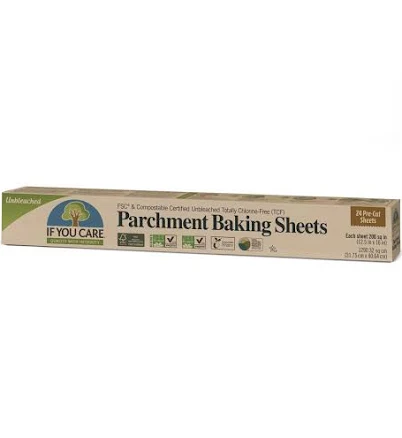
- bleached paper with silicone coating
- The brand calls it PFAS-free, which we have not verified
- Paper degradation and fragmentation
More parchment paper & baking liners grades
How we score, every product runs through the same public 0-100 rubric based on materials, coatings, brand disclosure, lab findings, and recalls. See the full methodology → Spotted a mistake? Report an error.