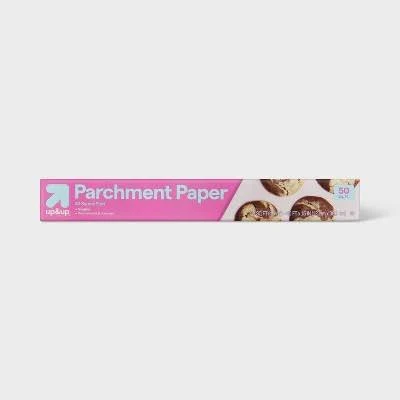
up&up · Parchment Paper & Baking Liners
Parchment Paper Roll 50 sq ft up&up
Parchment likely uses PFAS-free coating, but manufacturer provides no verification.
Standard parchment paper typically coated with silicone or wax, not Teflon-type coating. Target's up&up brand discloses nothing about PFAS or coating materials, limiting confidence in risk assessment.
The better-graded swap
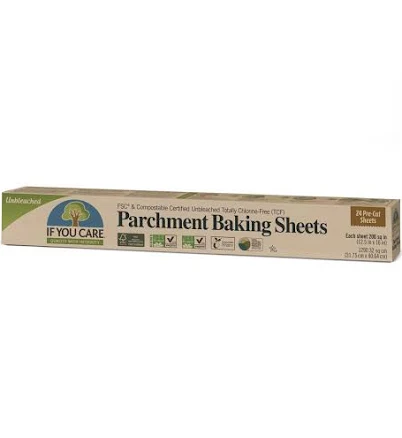
If You Care
If You Care Parchment Baking Sheets
90/100 safety
Same rubric that flunked this product. The swap earned Excellent.
Still want this one anyway? Check the price on Amazon. We’d swap it.
Material
Paper with silicone or wax coating
Brand disclosure
Brand is silent on PFAS
Lab data
No public lab test
You may also be interested in
Top-graded picks in the categories readers replace first, every one scored on the same rubric.

- polypropylene filter housing, carbon/sediment cartridge
- We found no PFAS statement from the brand
- Bacterial growth in spent cartridges
3 hazards checked on this product, all on its full breakdown.

Aquasure
Premier Series 75 GPD Under Sink Reverse Osmosis Water Filtration System
- RO membrane, carbon filters, stainless steel housing
- We found no PFAS statement from the brand
- Bacterial and microbial growth in housing and filters
4 hazards checked on this product, all on its full breakdown.

Avocado
Vegan Mattress
- organic cotton, natural latex, coconut coir, recycled steel coils
- The brand calls it PFAS-free, which we have not verified
- Heavy metals
2 hazards checked on this product, all on its full breakdown.
What Parchment Paper Roll 50 sq ft up&up is made of, ingredients and materials
Up&up parchment paper is a cellulose paper substrate coated with either silicone or wax to create a non-stick, heat-resistant surface suitable for food contact. The coating prevents food from sticking and allows the paper to withstand oven temperatures up to roughly 420-450°F depending on the specific formulation. Unlike plastic-based food wraps, parchment paper does not leach plasticizers like BPA or phthalates because it contains no plastics in its base material.
What’s concerning
Waterproof / stain-resistant treatment
Water-repellent coating treatments have historically used PFAS.
Category baseline
The starting point for this type of product, before anything specific to this product is counted.
No PFAS disclosure
No public statement from the brand about PFAS in this product.
Thermal degradation of silicone or wax coating
Parchment coatings can break down or emit volatile compounds if exposed to temperatures significantly above their rated maximum (typically 420-450°F). Up&up does not specify its exact coating composition or temperature ceiling, making it difficult to assess degradation risk with certainty.
Mineral oil or wax migration at high temperatures
If the coating uses food-grade mineral oil or paraffin wax rather than silicone, heating above manufacturer specifications could theoretically increase migration to food. No reported incidents exist for standard parchment use, but the lack of transparency on up&up's specific coating limits risk assessment.
Coating separation or flaking into food
Aged or degraded parchment may shed coating particles, especially if creased repeatedly or heated excessively. Visual inspection before use (checking for cracks, discoloration, or brittleness) is a practical mitigation step.
What’s reassuring
Bleach or chlorine residues in paper substrate
Parchment paper is typically bleached during manufacture; however, FDA-compliant food-contact paper must meet residue limits. No contamination records exist for up&up parchment, and bleached paper is standard across all commercial parchment brands.
BPA & bisphenols
Parchment paper's cellulose base is not a material linked to BPA, BPS, or phthalate leaching, presenting lower concern than plastic wrap for this hazard class.
Source, FDA ↗How is this PFAS grade calculated?
The brand's record and disclosure
Target's up&up brand does not publicly disclose detailed coating chemistry, FDA compliance statements, or third-party certifications for this parchment product. No recalls or safety controversies specific to this product line are on record. Target's general food-contact products comply with FDA regulations, but the brand remains silent on PFAS-free verification, which is increasingly expected of major retailers given industry awareness of PFAS in food-contact coatings.
How it compares in its category
Parchment paper presents lower concern than plastic wrap or aluminum foil for most home cooking because it avoids plastic chemical migration and aluminum leaching into acidic foods. Branded parchment products from companies like Reynold's and If You Care offer explicit PFAS-free or non-fluorinated certifications, setting a higher transparency standard than up&up provides. For budget-conscious consumers, up&up parchment is functionally equivalent to store-brand parchment from other retailers, with similar lack of transparency.
If you buy it
Use parchment for baking at temperatures below 420°F to avoid potential coating degradation; do not use for high-heat broiling or direct flame contact. Replace rolls every 12-18 months if stored in a cool, dry place, as the coating can become brittle or less effective over time. Do not reuse pieces multiple times; single-use per baking session minimizes any potential leaching from cumulative heat exposure. Standard household storage requires no special precautions.
What is not known about PFAS in this product?
- Basis
- Model estimate, 45% confidence, not a lab result
- Lab test
- None on record for this exact product
- Brand statement
- up&up has made none
Formulations change between production runs, so check the current label. How we grade.
What are the PFAS-free alternatives to Parchment Paper Roll 50 sq ft up&up?
- silicone-coated parchment paper
- The brand calls it PFAS-free, which we have not verified
- Paper degradation and particulate shedding
- unbleached paper with silicone coating
- The brand calls it PFAS-free, which we have not verified
- Silicone coating degradation at high heat
- bleached paper with silicone coating
- The brand calls it PFAS-free, which we have not verified
- Paper degradation and fragmentation
More parchment paper & baking liners grades
How we score, every product runs through the same public 0-100 rubric based on materials, coatings, brand disclosure, lab findings, and recalls. See the full methodology → Spotted a mistake? Report an error.