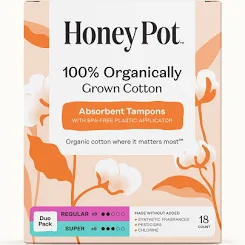
The Honey Pot Duo-Pack Tampons
Lower concern; tampons use bare fibers with no known PFAS treatment.
The Honey Pot tampons contain conventional absorbent fibers without disclosed coatings or water-repellent finishes. No PFAS claims or third-party testing found, but product design poses minimal PFAS exposure risk.
We flunk more products than we pass. This one earned its grade. How we grade
Material
cotton, rayon, organic fibers
Brand disclosure
Brand is silent on PFAS
Lab data
No public lab test
You may also be interested in
Top-graded picks in the categories readers replace first, every one scored on the same rubric.

Aqua Pure
3M Aqua-Pure AP802B Whole House Filter Housing
- polypropylene filter housing, carbon/sediment cartridge
- We found no PFAS statement from the brand
- Bacterial growth in spent cartridges
3 hazards checked on this product. See all of them.

Aquasure
Premier Series 75 GPD Under Sink Reverse Osmosis Water Filtration System
- RO membrane, carbon filters, stainless steel housing
- We found no PFAS statement from the brand
- Bacterial and microbial growth in housing and filters
4 hazards checked on this product. See all of them.

Avocado
Vegan Mattress
- organic cotton, natural latex, coconut coir, recycled steel coils
- The brand calls it PFAS-free, which we have not verified
- Heavy metals
2 hazards checked on this product. See all of them.
What The Honey Pot Duo-Pack Tampons is made of, ingredients and materials
The Honey Pot Duo-Pack uses a blend of cotton and rayon fibers in direct contact with vaginal tissue during use. Rayon (viscose) is a regenerated cellulose fiber with no inherent chemical residue risk if properly manufactured, though rayon production can involve chemical processing. The brand emphasizes organic cotton, which typically means reduced synthetic pesticide residues in the raw fiber, though certification specifics are not publicly detailed for this product line.
What’s concerning
Category baseline
The starting point for this type of product, before anything specific to this product is counted.
No PFAS disclosure
No public statement from the brand about PFAS in this product.
Pesticide residue
Organic cotton reduces synthetic pesticide exposure compared to conventional cotton. The Honey Pot's organic positioning suggests lower risk, though specific pesticide testing or certification details are not publicly disclosed for verification.
Source, EPA ↗Rayon production chemical residues
Rayon is made via viscose or lyocell process using sodium hydroxide and carbon disulfide; residues are typically removed during rinsing and drying. No specific toxicological issues from rayon residue in tampons have been documented, but manufacturing transparency varies by supplier.
What’s reassuring
Base material not linked to PFAS
The main material recorded for this product is not one associated with PFAS.
Dioxin residues from bleaching
Modern tampon manufacturing, including The Honey Pot's estimated process, uses elemental chlorine-free or chlorine-free bleaching. No dioxin contamination has been reported in contemporary tampon products from major brands.
Azo dyes or synthetic colorants
The Honey Pot Duo-Pack is not marketed as dyed or colored. No azo dye contamination has been identified in The Honey Pot's product line or in industry tampon manufacturing.
Formaldehyde / VOCs
Tampons do not typically use formaldehyde-releasing binders or finishes; fibers are mechanically compressed or bonded. No formaldehyde exposure risk is on record for this product category.
Source, ATSDR ↗The full breakdown
The brand's record and disclosure
The Honey Pot brand has built marketing around natural, plant-based period care and has faced no major product recalls or contamination incidents in public record. The brand does not publicly disclose detailed material certifications (such as GOTS or toxicology test reports) on their website or packaging, limiting transparency on processing chemicals. No established controversies regarding heavy metals, dyes, or residual contaminants in this product line have been documented.
How it compares in its category
Organic-positioned tampons like this sit in the mid-to-premium segment; they typically report lower concern for pesticide residues than conventional cotton tampons, though rayon fiber is standard across most brands. Unbleached or minimally-bleached variants reduce dioxin risk (a legacy concern from heavy chlorine bleaching), though modern tampon manufacturing uses elemental chlorine-free or chlorine-free processes industry-wide. The Honey Pot's marketing differentiator is naturalness rather than third-party certification, which is common in this price tier.
If you buy it
Use as directed; tampons are single-use and do not require care beyond proper disposal. Change every 4-8 hours to reduce toxic shock syndrome risk, regardless of brand. Store in a dry place to prevent mold or moisture degradation. Discontinue use if local irritation, allergic reaction, or unusual odor occurs and consult a healthcare provider if symptoms persist.
What we don’t know
- Basis
- Model estimate, 75% confidence, not a lab result
- Lab test
- None on record for this exact product
- Brand statement
- The Honey Pot has made none
Formulations change between production runs, so check the current label. How we grade.
Better-graded alternatives in Tampons
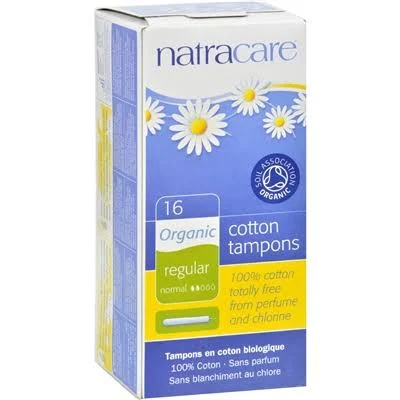
Natracare
100% Organic Cotton Tampons
- 100% organic cotton
- A third party reports verifying it as PFAS-free
- Heavy metals
Natracare
Organic Super Plus Tampons, 3 x 20 ct
- organic cotton, cardboard applicator
- The brand calls it PFAS-free, which we have not verified
- Dioxins from bleaching
Natracare
Organic Cotton Super Plus Tampons
- organic cotton, no added fluorochemicals
- The brand calls it PFAS-free, which we have not verified
- Verified PFAS-free by a third party
More tampons grades
How we score, every product runs through the same public 0-100 rubric based on materials, coatings, brand disclosure, lab findings, and recalls. See the full methodology → Spotted a mistake? Report an error.