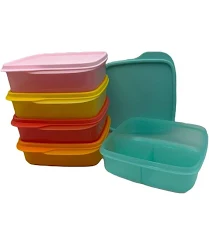
Tupperware lunch it Plus container set 5
Lower concern. Polypropylene food containers rarely contain PFAS.
Tupperware Lunch It Plus uses polypropylene, a plastic with no established PFAS risk in food storage containers. No brand PFAS disclosure available, but material composition suggests lower concern.
We flunk more products than we pass. This one earned its grade. How we grade
Material
polypropylene (PP) plastic containers
Brand disclosure
Brand is silent on PFAS
Lab data
No public lab test
What Tupperware lunch it Plus container set 5 is made of, ingredients and materials
Tupperware Lunch It Plus containers are polypropylene (PP, #5 plastic), a thermoplastic polymer chosen for food storage because it resists moisture, withstands moderate heat, and does not require chemical stabilizers like BPA. PP does not naturally leach endocrine disruptors under normal use. The container set includes lids and seals engineered to minimize air exchange, which supports food preservation rather than introducing chemical risk.
What’s concerning
Category baseline
The starting point for this type of product, before anything specific to this product is counted.
No PFAS disclosure
No public statement from the brand about PFAS in this product.
Migration from degraded polymer
Repeated heating, freezing, and dishwasher cycles can cause PP to become brittle and hazy over years of use. Structural failure of seals or visible cracks should prompt replacement to avoid contact with degraded material, though toxicological risk from PP itself remains low.
Microplastics
Scratching, abrasion, and long-term use can shed small plastic particles, particularly from the seal interface. Hand washing and avoiding scouring will minimize this risk.
Source, EPA ↗Odor absorption and off-flavors
PP containers commonly absorb odors and pigments from foods (especially turmeric, tomato sauce) and can retain flavors. This is a functional limitation, not a chemical hazard, but may degrade user experience and encourage replacement.
What’s reassuring
Base material not linked to PFAS
The main material recorded for this product is not one associated with PFAS.
BPA & bisphenols
Polypropylene food containers do not require BPA or BPS as processing aids or stabilizers. No reports of BPA/BPS contamination in Tupperware PP lunch containers on record.
Source, FDA ↗Phthalates
PP is a rigid, non-plasticized polymer and does not require phthalates for flexibility. No documented phthalate content in this product category.
Source, ATSDR ↗The full breakdown
The brand's record and disclosure
Tupperware has not published comprehensive material safety data sheets or third-party testing summaries for this line. The brand does not explicitly market BPA-free status on this product, though PP formulations do not require BPA as a functional ingredient. No recalls or contamination findings specific to Lunch It Plus containers are on record. Tupperware's parent company has faced litigation over PFAS in other product lines (cookware, non-stick items), but this rigid PP food container does not fall into those categories.
How it compares in its category
PP food containers are among the lower-concern rigid plastics for food storage; they rank below glass and stainless steel but above polycarbonate (which can contain BPA residues) and low-density polyethylene (LDPE). Competitors like Rubbermaid, Sistema, and OXO offer similar PP lunch sets with equivalent material safety profiles and comparable price points. Tupperware's sealed design and durable engineering are typical for the category and do not reduce or amplify chemical risk relative to material choice.
If you buy it
Do not microwave these containers if lids are sealed or if the product labeling does not explicitly authorize microwave use; heat can degrade seals and accelerate any potential migration. Hand wash or use dishwasher on low heat to extend seal life and prevent wear. Replace containers if lids crack, seals fail, or the plastic becomes cloudy or brittle, signs of polymer degradation. Store away from direct sunlight and do not use for hot foods above 160F (70C) unless manufacturer guidance permits.
What we don’t know
- Basis
- Model estimate, 72% confidence, not a lab result
- Lab test
- None on record for this exact product
- Brand statement
- Tupperware has made none
Formulations change between production runs, so check the current label. How we grade.
Better-graded alternatives in Lunch Boxes
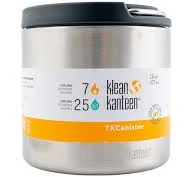
Klean Kanteen
Double Wall Vacuum Insulated Stainless Steel Food Canister Container with Leak Proof Lid
- Stainless steel body, silicone gasket lid seal
- The brand calls it PFAS-free, which we have not verified
- Silicone gasket degradation
3 hazards checked on this product. See all of them.
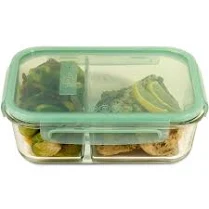
Snapware
Meal Box Glass
- borosilicate glass
- We found no PFAS statement from the brand
- Leaching from glass matrix or lid seals
2 hazards checked on this product. See all of them.
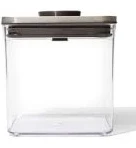
OXO
Steel Pop Big Square Short - 2.8 Qt/2.6 l
- Stainless steel container, no surface treatment
- Lid/gasket polymer leaching
3 hazards checked on this product. See all of them.
More lunch boxes grades
How we score, every product runs through the same public 0-100 rubric based on materials, coatings, brand disclosure, lab findings, and recalls. See the full methodology → Spotted a mistake? Report an error.