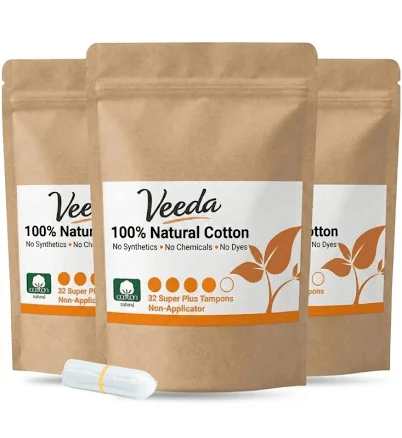
Veeda 100% Natural Cotton Applicator Free Tampons
Lower concern. Material as recorded is not linked to PFAS.
Veeda's tampons are made from 100% cotton with no water-repellent finish on record. The brand has no PFAS statement on record. No applicator is present, which eliminates a potential concern point in tampon design.
We flunk more products than we pass. This one earned its grade. How we grade
Material
100% cotton
Brand disclosure
Brand is silent on PFAS
Lab data
No public lab test
You may also be interested in
Top-graded picks in the categories readers replace first, every one scored on the same rubric.

- polypropylene filter housing, carbon/sediment cartridge
- We found no PFAS statement from the brand
- Bacterial growth in spent cartridges
3 hazards checked on this product, all on its full breakdown.

Aquasure
Premier Series 75 GPD Under Sink Reverse Osmosis Water Filtration System
- RO membrane, carbon filters, stainless steel housing
- We found no PFAS statement from the brand
- Bacterial and microbial growth in housing and filters
4 hazards checked on this product, all on its full breakdown.

Avocado
Vegan Mattress
- organic cotton, natural latex, coconut coir, recycled steel coils
- The brand calls it PFAS-free, which we have not verified
- Heavy metals
2 hazards checked on this product, all on its full breakdown.
What Veeda 100% Natural Cotton Free Tampons is made of, ingredients and materials
Veeda tampons are constructed from 100% cotton fiber with no synthetic materials, bleaching agents, or chemical coatings listed in available product documentation. Cotton is a cellulose-based natural fiber with no established pattern of leaching toxic residues under normal vaginal conditions and a long history of use in menstrual products. The absence of rayon or viscose (common in conventional tampons) eliminates the risk of dioxin residues from the bleaching process that some health advocates have flagged, though regulatory bodies classify current dioxin levels as negligible. The applicator-free design removes potential plastic or cardboard coating concerns entirely.
What’s concerning
Category baseline
The starting point for this type of product, before anything specific to this product is counted.
No PFAS disclosure
No public statement from the brand about PFAS in this product.
Bleaching residues and dioxins
Veeda does not disclose bleaching methods used in cotton processing. Conventional chlorine bleaching of tampons historically has been flagged for trace dioxin residues, though regulatory agencies classify current exposure levels as negligible; unconfirmed whether Veeda uses chlorine-free or oxygen-based bleaching.
Pesticide residue
No documentation of organic certification; if source cotton is conventionally grown, residual pesticides such as organophosphates or synthetic pyrethroids may be present at low levels after processing, though this is not unique to Veeda and regulatory limits apply.
Source, EPA ↗Toxic shock syndrome (TSS) bacterial risk
All tampons, regardless of material, carry a small TSS risk if left in place too long or if vaginal micro-tears occur; material composition does not eliminate this risk, only proper usage protocols do.
What’s reassuring
Base material not linked to PFAS
The main material recorded for this product is not one associated with PFAS.
Synthetic dyes or colorants
Product labeling does not indicate added dyes; unbleached or naturally cream-colored cotton is typical for natural-positioned brands, so synthetic azo dyes are unlikely but not explicitly ruled out in available product information.
Formaldehyde / VOCs
Cotton fiber does not require formaldehyde-based finishes; no evidence of wrinkle-resistance or anti-microbial chemical treatments in Veeda's 100% cotton formulation, making this hazard unlikely.
Source, ATSDR ↗How is this PFAS grade calculated?
The brand's record and disclosure
Veeda does not publicly disclose third-party testing results, certifications (such as GOTS or OEKO-TEX), or detailed chemical composition beyond the '100% cotton' claim. The brand markets itself on natural positioning but provides limited transparency on bleaching methods, dyes, or processing agents used in manufacturing. No recalls or established safety incidents have been documented for Veeda tampons in publicly available sources. The company has taken no formal public stance on PFAS or other emerging contaminants, which is typical for smaller natural brands in this category.
How it compares in its category
Most conventional tampons use rayon or rayon-cotton blends and include synthetic applicators; Veeda's 100% cotton construction and applicator-free design position it in the premium natural segment alongside brands like Seventh Generation and Cora. Compared to those brands, Veeda offers less verifiable third-party certification (Seventh Generation carries certifications; Cora publishes toxicology transparency reports), but the core material choice is equivalent. The applicator-free format appeals to consumers seeking to reduce plastic waste, though it may be less convenient for some users compared to cardboard or plastic applicators.
If you buy it
Store in a dry location away from direct sunlight to prevent moisture absorption and mold growth in the packaging. Replace tampons every 4-8 hours during use to minimize bacterial overgrowth and toxic shock syndrome risk, as with all tampons regardless of material. Since no non-natural additives or coatings are listed, there are no special heating or compatibility restrictions. If you experience irritation, allergic reactions, or unusual symptoms, consider patch testing or consulting a healthcare provider, as individual sensitivity to unbleached or minimally processed cotton can occur in rare cases.
What is not known about PFAS in this product?
- Basis
- Model estimate, 78% confidence, not a lab result
- Lab test
- None on record for this exact product
- Brand statement
- Veeda has made none
Formulations change between production runs, so check the current label. How we grade.
What are the PFAS-free alternatives to Veeda 100% Natural Cotton Applicator Free Tampons?
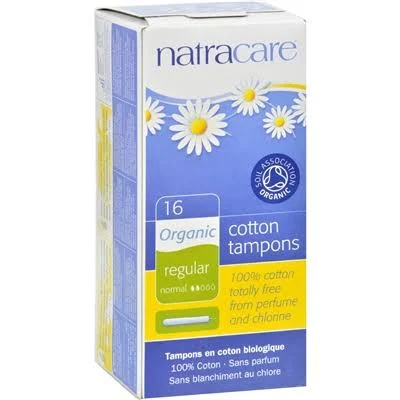
- 100% organic cotton
- A third party reports verifying it as PFAS-free
- Heavy metals
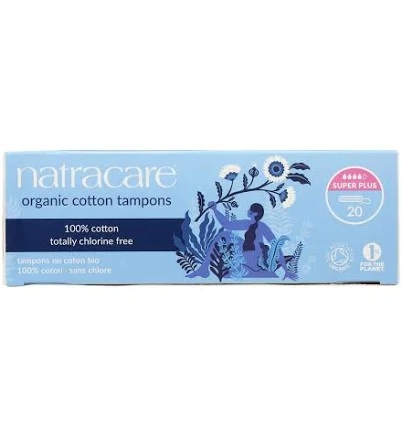
Natracare
Organic Super Plus Tampons, 3 x 20 ct
- organic cotton, cardboard applicator
- The brand calls it PFAS-free, which we have not verified
- Dioxins from bleaching
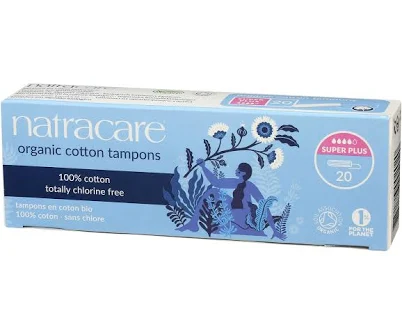
Natracare
Organic Cotton Super Plus Tampons
- organic cotton, no added fluorochemicals
- The brand calls it PFAS-free, which we have not verified
- Verified PFAS-free by a third party
More tampons grades
How we score, every product runs through the same public 0-100 rubric based on materials, coatings, brand disclosure, lab findings, and recalls. See the full methodology → Spotted a mistake? Report an error.