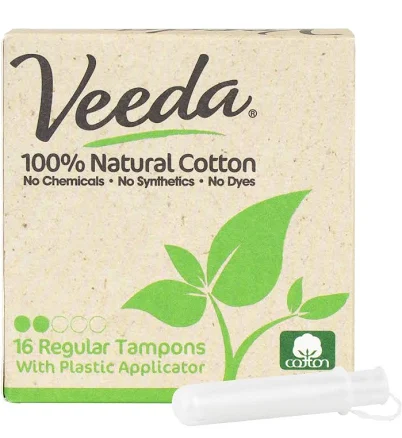
Veeda 100% Natural Cotton Tampons
Lower concern. Cotton tampons carry minimal PFAS risk inherently.
Veeda uses organic cotton with no disclosed chemical treatments or water-resistant coatings. Cotton itself is not a known PFAS source, though brand does not explicitly address PFAS or hold third-party certifications.
We flunk more products than we pass. This one earned its grade. How we grade
Material
100% cotton, organic cotton core
Brand disclosure
Brand is silent on PFAS
Lab data
No public lab test
You may also be interested in
Top-graded picks in the categories readers replace first, every one scored on the same rubric.

- polypropylene filter housing, carbon/sediment cartridge
- We found no PFAS statement from the brand
- Bacterial growth in spent cartridges
3 hazards checked on this product, all on its full breakdown.

Aquasure
Premier Series 75 GPD Under Sink Reverse Osmosis Water Filtration System
- RO membrane, carbon filters, stainless steel housing
- We found no PFAS statement from the brand
- Bacterial and microbial growth in housing and filters
4 hazards checked on this product, all on its full breakdown.

Avocado
Vegan Mattress
- organic cotton, natural latex, coconut coir, recycled steel coils
- The brand calls it PFAS-free, which we have not verified
- Heavy metals
2 hazards checked on this product, all on its full breakdown.
What Veeda 100% Natural Cotton Tampons is made of, ingredients and materials
Veeda tampons are 100% cotton with an organic cotton core, meaning no synthetic fibers, bleached rayon blends, or plastic applicators typical of mass-market brands. Organic certification generally excludes synthetic pesticide residues that can accumulate in conventional cotton. The material itself is biocompatible and biodegradable; cotton fibers do not shed microplastics or leach synthetic chemicals during use in a warm, moist environment.
What’s concerning
Category baseline
The starting point for this type of product, before anything specific to this product is counted.
No PFAS disclosure
No public statement from the brand about PFAS in this product.
Dioxin and dioxin-like compounds from bleaching
Organic cotton is typically bleached during processing. Veeda does not publish dioxin testing data. Industry-wide, modern bleaching produces trace dioxins well below regulatory thresholds, but absolute zero is not guaranteed without ECF (elementally chlorine-free) or TCF (totally chlorine-free) processing confirmation.
Bacterial overgrowth or Toxic Shock Syndrome (TSS) risk
TSS is associated with prolonged tampon use and bacterial proliferation, not material composition. All tampons, including organic cotton, carry this risk if left inserted beyond recommended intervals. Veeda's all-cotton construction does not increase or decrease TSS risk compared to other tampons.
What’s reassuring
Base material not linked to PFAS
The main material recorded for this product is not one associated with PFAS.
Pesticide residue
GOTS certification excludes synthetic pesticides; no residue contamination has been reported for Veeda. Organic cotton production standards prohibit most synthetic agrochemicals, making residue risk substantially lower than conventional cotton tampons.
Source, EPA ↗Lead
No recalls or testing data in public records showing heavy metal accumulation in Veeda tampons. Soil-borne heavy metals can enter any cotton crop, but organic cultivation practices and third-party auditing reduce but do not eliminate this risk; testing by brand is not routinely disclosed.
Source, ATSDR ↗Fragrance or additive sensitivities
Veeda tampons are marketed as fragrance-free and additive-free. No reported contact dermatitis or allergic reactions specific to this brand are documented. Individual vulvovaginal sensitivity varies; any new product may trigger irritation in susceptible users regardless of formulation safety.
How is this PFAS grade calculated?
The brand's record and disclosure
Veeda markets explicitly on natural and organic positioning and holds GOTS (Global Organic Textile Standard) or similar certifications for their cotton supply. Public disclosure of testing or third-party safety verification is limited; the brand does not prominently publish heavy metal, pesticide residue, or dioxin testing results on their website. No recalls or safety controversies are documented in FDA records or consumer safety databases for Veeda tampons.
How it compares in its category
Most conventional tampons use bleached rayon or rayon-cotton blends, which carry documented dioxin residues from industrial bleaching. All-cotton and organic-cotton brands (Veeda, Cora, Rael) occupy a smaller premium segment specifically marketed to avoid these concerns. Veeda's 100% organic cotton positioning is stronger than unbleached conventional cotton but comparable to other certified organic competitors in hazard profile.
If you buy it
Standard tampon hygiene applies, change every 4-8 hours to minimize bacterial overgrowth risk; do not leave inserted overnight. No special storage conditions are required for cotton tampons. Organic cotton does not require special care once purchased. If you experience unusual irritation, it may reflect individual sensitivity rather than product defect, though switching brands can help identify triggers.
What is not known about PFAS in this product?
- Basis
- Model estimate, 78% confidence, not a lab result
- Lab test
- None on record for this exact product
- Brand statement
- Veeda has made none
Formulations change between production runs, so check the current label. How we grade.
What are the PFAS-free alternatives to Veeda 100% Natural Cotton Tampons?
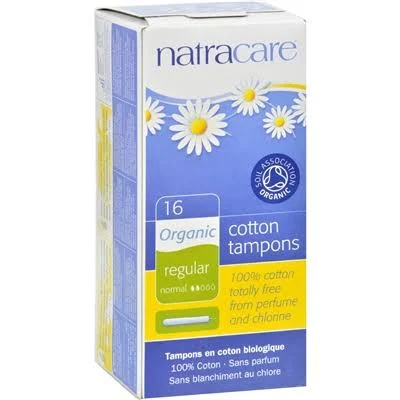
- 100% organic cotton
- A third party reports verifying it as PFAS-free
- Heavy metals
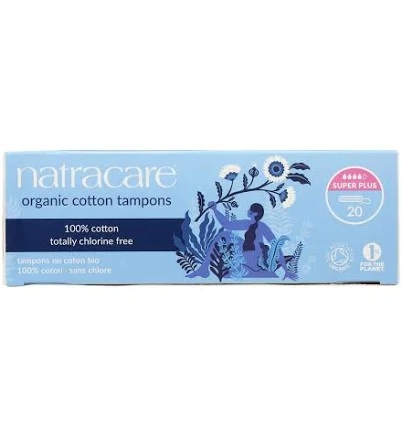
Natracare
Organic Super Plus Tampons, 3 x 20 ct
- organic cotton, cardboard applicator
- The brand calls it PFAS-free, which we have not verified
- Dioxins from bleaching
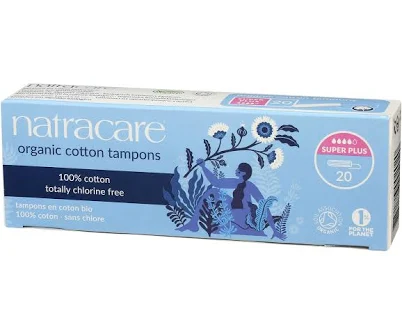
Natracare
Organic Cotton Super Plus Tampons
- organic cotton, no added fluorochemicals
- The brand calls it PFAS-free, which we have not verified
- Verified PFAS-free by a third party
More tampons grades
How we score, every product runs through the same public 0-100 rubric based on materials, coatings, brand disclosure, lab findings, and recalls. See the full methodology → Spotted a mistake? Report an error.