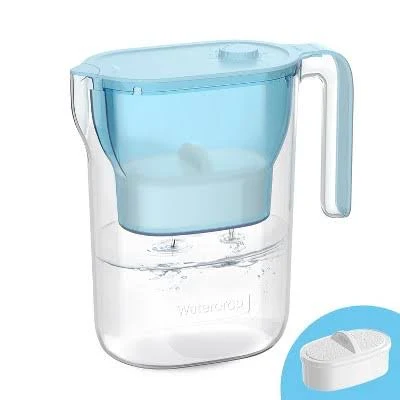
Waterdrop 200-Gallon Long-Life Countertop NSF Certified Water Filter Pitcher
No coating of concern recorded, and no PFAS statement from the brand.
The brand has published no PFAS statement for this product that we could find.
We flunk more products than we pass. This one earned its grade. How we grade
Material
Activated carbon filter, plastic pitcher housing
Lab data
No public lab test
You may also be interested in
Top-graded picks in the categories readers replace first, every one scored on the same rubric.

- polypropylene filter housing, carbon/sediment cartridge
- We found no PFAS statement from the brand
- Bacterial growth in spent cartridges
3 hazards checked on this product, all on its full breakdown.

Aquasure
Premier Series 75 GPD Under Sink Reverse Osmosis Water Filtration System
- RO membrane, carbon filters, stainless steel housing
- We found no PFAS statement from the brand
- Bacterial and microbial growth in housing and filters
4 hazards checked on this product, all on its full breakdown.

Avocado
Vegan Mattress
- organic cotton, natural latex, coconut coir, recycled steel coils
- The brand calls it PFAS-free, which we have not verified
- Heavy metals
2 hazards checked on this product, all on its full breakdown.
What Waterdrop 200-Gallon Filter Pitcher is made of, ingredients and materials
The Waterdrop pitcher housing is plastic (likely polypropylene or similar food-grade thermoplastic) with an activated carbon filter cartridge as the functional component. Activated carbon is inert and does not leach; it works by adsorption, trapping contaminants in its porous structure rather than chemically altering water. The plastic pitcher itself is the only potential contact point for leachables, but food-grade plastics used in NSF-certified pitchers are formulated to minimize migration at room temperature.
What’s concerning
No PFAS disclosure
No public statement from the brand about PFAS in this product.
Bacterial growth in stagnant filtered water
Pitcher filters do not sterilize water; if filtered water sits in the pitcher for several days, bacteria can colonize it. Risk is user-dependent and tied to storage habits and pitcher hygiene, not the product design itself.
Activated carbon filter degradation or dust
Mechanical wear or improper handling of the cartridge can cause granular carbon to shed into the filtered water, leaving black specks. This is a quality-control and user-handling issue, not a chemical hazard.
Inadequate or false contaminant reduction claims
Waterdrop has faced consumer complaints and FTC scrutiny regarding overstatement of filtration performance (e.g., claims to remove 'all' contaminants). NSF certification limits the scope of claims the company can legally make, but independent testing by users sometimes reveals the pitcher does not reduce all advertised contaminants equally; compliance with the certification does not imply universa
What’s reassuring
Base material not linked to PFAS
The main material recorded for this product is not one associated with PFAS.
Plastic housing leachates at room temperature
NSF certification requires testing of food-contact plastics for leaching under normal conditions. No specific recalls or complaints are on record for this Waterdrop model; the housing material is presumed compliant with FDA food-contact limits.
Formaldehyde / VOCs
Food-grade plastics in certified pitchers are formulated to minimize VOC release. No established off-gassing complaints are recorded for this model; any residual off-gas would decline rapidly after initial factory storage.
Source, ATSDR ↗How is this PFAS grade calculated?
The brand's record and disclosure
Waterdrop markets this pitcher with NSF certification, which requires third-party testing for contaminant reduction claims and material safety. The brand has not made explicit PFAS mitigation statements, and no public records document PFAS-related recalls or complaints specific to this model. As a Chinese-origin brand selling primarily online, Waterdrop has less regulatory scrutiny history than legacy Western filter manufacturers, but NSF certification is an enforceable standard independent of brand disclosure posture.
How it compares in its category
Pitcher filters like this occupy the low-cost, accessible end of home water treatment. They rely entirely on activated carbon and do not use ion exchange (which can fail and release resins) or reverse osmosis (which requires housing integrity). Compared to drop-in pitcher filters without certification, NSF status is a material advantage; compared to under-sink carbon or whole-house systems, pitchers offer less filtration depth and require manual use discipline.
If you buy it
Replace cartridges on the 200-gallon schedule or every 2-3 months if you have hard water or high sediment; exhausted carbon stops adsorbing and can allow some contaminants to pass through. Store the pitcher in a cool, dark cabinet and do not leave filtered water sitting longer than 2-3 days, as standing water can harbor bacterial growth if the pitcher is not kept clean. Rinse the pitcher housing and lid weekly during use. Do not expose the plastic housing to extreme heat or place it in direct sunlight, which can degrade plastic over time.
What is not known about PFAS in this product?
- Basis
- Model estimate, 72% confidence, not a lab result
- Lab test
- None on record for this exact product
- Brand statement
- Waterdrop has made a specific claim
Formulations change between production runs, so check the current label. How we grade.
What are the PFAS-free alternatives to Waterdrop 200-Gallon Long-Life Countertop NSF Certified Water Filter Pitcher?
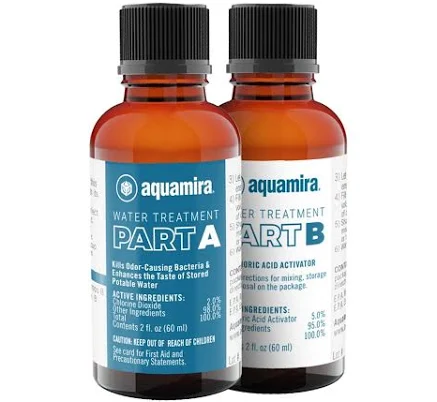
- glass bottles, sodium dichloroisocyanurate treatment chemical
- We found no PFAS statement from the brand
- Chemical overdose or misuse
5 hazards checked on this product, all on its full breakdown.
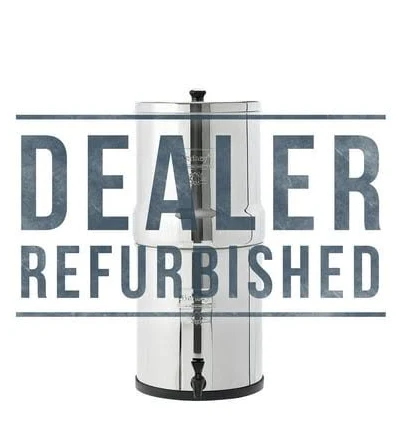
- Stainless steel housing and spigot
- We found no PFAS statement from the brand
- Bacterial growth and biofilm if filters not replaced
5 hazards checked on this product, all on its full breakdown.
- Borosilicate glass pitcher, replaceable activated-carbon filter cartridge
- Bacterial growth in filter cartridge if unmaintained
5 hazards checked on this product, all on its full breakdown.
More water filters grades
How we score, every product runs through the same public 0-100 rubric based on materials, coatings, brand disclosure, lab findings, and recalls. See the full methodology → Spotted a mistake? Report an error.