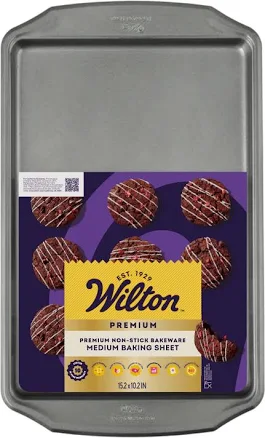
Wilton Bake It Better Non-Stick Cookie Sheet, Is It Non-Toxic?
Don't buy until Wilton clarifies the coating type.
Wilton doesn't say what makes the nonstick coating on this steel cookie sheet, and most nonstick cookware uses Teflon-type coating-based Teflon-family coating linked to PFAS. Without brand transparency, you're left guessing.
The better-graded swap
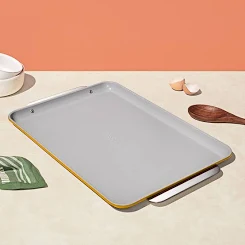
Caraway
Caraway Nonstick Ceramic Large Baking Sheet
90/100 safety
Same rubric that flunked this product. The swap earned Excellent.
Still want this one anyway? Check the price on Amazon. We’d swap it.
Material
Steel sheet with non-stick coating (type unspecified)
Brand disclosure
Brand is silent on PFAS
Lab data
No public lab test
You may also be interested in
Top-graded picks in the categories readers replace first, every one scored on the same rubric.

- polypropylene filter housing, carbon/sediment cartridge
- We found no PFAS statement from the brand
- Bacterial growth in spent cartridges
3 hazards checked on this product, all on its full breakdown.

Aquasure
Premier Series 75 GPD Under Sink Reverse Osmosis Water Filtration System
- RO membrane, carbon filters, stainless steel housing
- We found no PFAS statement from the brand
- Bacterial and microbial growth in housing and filters
4 hazards checked on this product, all on its full breakdown.

Avocado
Vegan Mattress
- organic cotton, natural latex, coconut coir, recycled steel coils
- The brand calls it PFAS-free, which we have not verified
- Heavy metals
2 hazards checked on this product, all on its full breakdown.
Is Wilton Bake It Better Cookie Sheet non-toxic? What it is made of
This product is a steel sheet with a proprietary non-stick coating. Wilton has not publicly specified whether the coating is Teflon-type coating-based (traditional Teflon), ceramic, silicone, or another chemistry. The steel substrate itself is inert and food-safe, but the coating's composition determines potential hazards. Without transparency on the non-stick formula, users cannot assess whether PFAS compounds are present or what fume risks exist at various cooking temperatures.
What’s concerning
Category baseline
The starting point for this type of product, before anything specific to this product is counted.
No PFAS disclosure
No public statement from the brand about PFAS in this product.
Non-stick, chemistry undisclosed
Marketed as non-stick without stating the coating chemistry.
Teflon-type coating fume risk (thermal decomposition)
If the coating is Teflon-type coating-based, exposure to temperatures above 500-600 degrees F may cause decomposition and release of fumes that can trigger polymer fume fever in humans and harm pet birds. Wilton has not disclosed the coating type, so this risk cannot be ruled out or quantified for this specific product.
Non-stick coating degradation and leaching
Repeated use, high-heat washing, and mechanical damage (scratches from metal utensils) can compromise the coating integrity over time, potentially releasing coating particles or base chemicals into food. No specific testing data is available for Wilton's proprietary formula.
Lack of transparency and consumer recourse
Wilton's silence on non-stick chemistry is itself a hazard to informed choice. Consumers cannot verify whether the coating is PFAS-free or Teflon-type coating-based without direct inquiry, and the company's non-disclosure limits ability to assess long-term safety profiles or respond to future disclosures.
What’s reassuring
Aluminum leaching (if substrate is aluminum or aluminum-rich steel)
The product is stated as steel, so direct aluminum leaching is unlikely. However, if the steel alloy contains significant aluminum content (unlikely in standard food-grade steel), acidic or salty foods could promote minor leaching; standard stainless steel does not pose this hazard.
Lead
Modern non-stick cookware sold in the US is regulated to exclude lead and cadmium from surface coatings. No recalls or reports of heavy metal contamination in Wilton non-stick bakeware have been documented in public safety databases.
Source, ATSDR ↗How is this PFAS grade calculated?
The brand's record and disclosure
Wilton is a long-established baking brand owned by Wesco Industries. The company has not issued public statements regarding PFAS content, PFAS-free certification, or non-stick coating chemistry for its cookware lines. No major safety recalls specific to non-stick coating degradation or fume release have been documented in public databases for Wilton bakeware. The silence on material composition is a transparency gap rather than evidence of a known safety violation, but it limits informed purchase decisions.
How it compares in its category
Most non-stick bakeware on the market uses either Teflon-type coating (which can release fumes above 500-600 degrees F) or ceramic/silicone alternatives marketed as PFAS-free. Wilton's lack of disclosure places this product in a middle ground, it may be conventional Teflon-type coating, but without confirmation, buyers cannot choose based on known risk tolerance. Competitors like GreenPan and Our Place explicitly market PFAS-free coatings, while traditional Calphalon and T-fal acknowledge Teflon-type coating and its safety profile openly.
If you buy it
Keep oven temperatures at or below 500 degrees F to minimize any potential fume release from an unconfirmed coating. Hand-wash rather than use high-heat dishwasher cycles, which can degrade non-stick surfaces and increase leaching. Inspect the coating yearly for scratches, peeling, or discoloration; discard if the surface shows significant wear. Contact Wilton directly for specific coating composition; if they cannot or will not provide it, consider this a red flag for future purchases.
What is not known about PFAS in this product?
- Basis
- Model estimate, 35% confidence, not a lab result
- Lab test
- None on record for this exact product
- Brand statement
- Wilton has made none
Formulations change between production runs, so check the current label. How we grade.
What are the PFAS-free alternatives to Wilton Bake It Better Non-Stick Cookie Sheet?
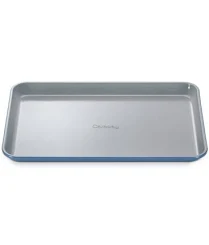
- ceramic nonstick coating
- A third party reports verifying it as PFAS-free
- Ceramic coating degradation over time
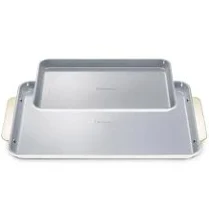
- ceramic nonstick coating
- A third party reports verifying it as PFAS-free
- Coating degradation and durability
2 hazards checked on this product, all on its full breakdown.
- ceramic nonstick coating
- The brand calls it PFAS-free, which we have not verified
- Ceramic coating degradation and particle shedding
3 hazards checked on this product, all on its full breakdown.
More bakeware grades
How we score, every product runs through the same public 0-100 rubric based on materials, coatings, brand disclosure, lab findings, and recalls. See the full methodology → Spotted a mistake? Report an error.