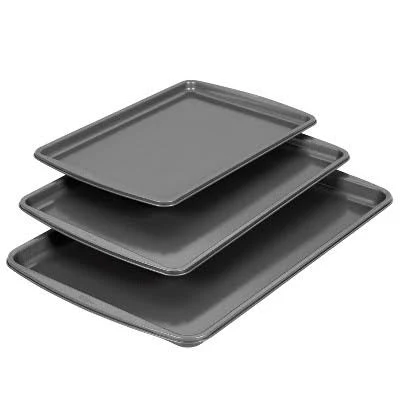
Wilton Ultra Bake Pro 3pc Cookie Sheet Set, Is It Non-Toxic?
Avoid unless Wilton reveals the coating chemistry.
This Wilton cookie sheet set has a non-stick coating but the company hasn't revealed its chemical makeup or whether it contains PFAS. Without transparency or testing, you can't rule out risk.
The better-graded swap
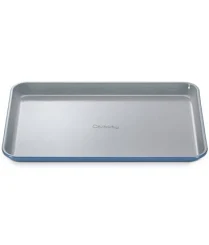
Caraway
Caraway Nonstick Ceramic Medium Baking Sheet
100/100 safety
Same rubric that flunked this product. The swap earned Excellent.
Still want this one anyway? Check the price on Amazon. We’d swap it.
Material
Steel with non-stick coating (type unspecified)
Brand disclosure
Brand is silent on PFAS
Lab data
No public lab test
You may also be interested in
Top-graded picks in the categories readers replace first, every one scored on the same rubric.

- polypropylene filter housing, carbon/sediment cartridge
- We found no PFAS statement from the brand
- Bacterial growth in spent cartridges
3 hazards checked on this product, all on its full breakdown.

Aquasure
Premier Series 75 GPD Under Sink Reverse Osmosis Water Filtration System
- RO membrane, carbon filters, stainless steel housing
- We found no PFAS statement from the brand
- Bacterial and microbial growth in housing and filters
4 hazards checked on this product, all on its full breakdown.

Avocado
Vegan Mattress
- organic cotton, natural latex, coconut coir, recycled steel coils
- The brand calls it PFAS-free, which we have not verified
- Heavy metals
2 hazards checked on this product, all on its full breakdown.
Is Wilton Ultra Bake Pro 3pc Cookie Sheet Set non-toxic? What it is made of
These are steel cookie sheets with a proprietary non-stick coating that Wilton does not publicly specify as Teflon-type coating-free or PFAS-free. The steel substrate is durable, but the non-stick layer, critical to performance and safety, remains a black box. Without chemistry disclosure, you cannot assess whether the coating uses traditional Teflon-type coating (which releases fumes above 500°F) or newer PFAS alternatives, many of which carry their own fluorine-based concerns.
What’s concerning
Category baseline
The starting point for this type of product, before anything specific to this product is counted.
No PFAS disclosure
No public statement from the brand about PFAS in this product.
Non-stick, chemistry undisclosed
Marketed as non-stick without stating the coating chemistry.
Teflon-type coating fume risk (thermal decomposition)
Coating chemistry unconfirmed. If traditional Teflon-type coating, temperatures above 500°F release toxic fumes; typical home oven use stays below this, but broiler or convection settings and thermal runaway can exceed it. No user warning found on Wilton packaging.
Coating degradation and leaching
Non-stick coatings degrade over time, especially with dishwasher use or metal utensils. Wilton does not disclose what leaches (base polymers, binders, residual monomers) once coating fails. Steel underneath is inert, but degraded non-stick particles may migrate to food.
Lead
Wilton markets this as 'Ultra Bake Pro' implying performance and durability but makes no PFAS, fluorine, or coating-safety claims. Silent marketing on this hazard class in a product where it is material to safety is a transparency failure.
Source, ATSDR ↗What’s reassuring
Lead
These are steel sheets with non-stick polymer coatings, not glazed ceramics. Lead and cadmium concerns apply to ceramic or enameled cookware; they are not relevant to this product material class.
Source, ATSDR ↗Aluminum leaching
Product is steel, not aluminum. Aluminum leaching hazard does not apply.
How is this PFAS grade calculated?
The brand's record and disclosure
Wilton has not published material safety data sheets, coating composition details, or fluorine-free certifications for this product line. The brand maintains silence on PFAS, which is notable given that major competitors (GreenPan, Our Place, OXO) now market PFOA-free or Teflon-type coating-free bakeware explicitly. This lack of transparency in a category where coating chemistry directly affects fume safety is a red flag for consumer due diligence.
How it compares in its category
Most mid-market bakeware still uses conventional Teflon-type coating, but a growing segment (ceramic, silicone-coated, or bare steel alternatives) offers disclosure. Wilton's silence puts it in the older, less communicative tier. Bare steel or ceramic-coated sheet pans from competing brands provide equivalent or superior performance without the fluorine question, though they require slightly more oil or parchment.
If you buy it
If purchased despite this assessment, avoid heating above 350°F (kitchen ovens routinely exceed this; verify your oven behavior). Hand wash only; dishwasher use accelerates coating wear. Inspect for scratches, peeling, or discoloration every 6, 12 months. Once coating degrades, stop using it; leaching of underlying steel or coating fragments is not quantified but represents an unknown additional hazard. Replace with a brand offering PFAS transparency.
What is not known about PFAS in this product?
- Basis
- Model estimate, 35% confidence, not a lab result
- Lab test
- None on record for this exact product
- Brand statement
- Wilton has made none
Formulations change between production runs, so check the current label. How we grade.
What are the PFAS-free alternatives to Wilton Ultra Bake Pro 3pc Cookie Sheet Set?
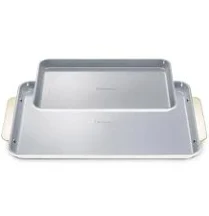
- ceramic nonstick coating
- A third party reports verifying it as PFAS-free
- Ceramic coating degradation over time
- ceramic nonstick coating
- A third party reports verifying it as PFAS-free
- Coating degradation and durability
2 hazards checked on this product, all on its full breakdown.
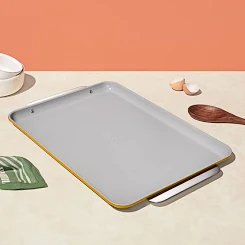
- ceramic nonstick coating
- The brand calls it PFAS-free, which we have not verified
- Ceramic coating degradation and particle shedding
3 hazards checked on this product, all on its full breakdown.
More bakeware grades
How we score, every product runs through the same public 0-100 rubric based on materials, coatings, brand disclosure, lab findings, and recalls. See the full methodology → Spotted a mistake? Report an error.