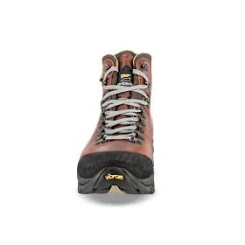
Zamberlan Men's Vioz Lux GTX RR
Skip until Zamberlan discloses waterproof treatment chemistry.
This hiking boot uses Gore-Tex for waterproofing, which historically contained Teflon-type coating but Zamberlan provides no public disclosure on their water-repellent coating finish or current treatment methods. No lab data or certifications available.
Still want this one anyway? Check the price on Amazon. We’d swap it.
Material
Leather upper, Gore-Tex membrane lining
Brand disclosure
Brand is silent on PFAS
Lab data
No public lab test
What Zamberlan Men's Vioz Lux GTX RR is made of, ingredients and materials
The Vioz Lux GTX RR combines leather upper with a Gore-Tex membrane lining and rubber sole. Leather itself is a finished animal hide, typically treated with chromium salts or vegetable tannins during manufacture; the hazard profile depends on tanning method and post-tanning chemical finishes applied by Zamberlan. Gore-Tex is a microporous Teflon-type coating (polytetrafluoroethylene) film bonded to a fabric backing, engineered to repel water while allowing vapor to pass. The waterproofing function, whether in the Gore-Tex laminate, the leather finish, or both, almost certainly involves PFAS "forever chemicals" (PFAS), a known concern outlined in your PFAS grading.
What’s concerning
Waterproof / stain-resistant treatment
Water-repellent coating treatments have historically used PFAS.
Category baseline
The starting point for this type of product, before anything specific to this product is counted.
No PFAS disclosure
No public statement from the brand about PFAS in this product.
Formaldehyde / VOCs
Leather upper may contain formaldehyde-releasing resins used in top-coating, dyeing, or finishing. Zamberlan does not disclose tanning or finishing chemistry. Formaldehyde off-gassing is typically low in cured leather boots, but is not ruled out without supplier transparency.
Source, ATSDR ↗Azo dyes in leather
The dark or finished color of the leather upper may result from azo dyes, which can cleave into aromatic amines under specific conditions (moisture, heat, microbial action). No brand statement on restricted azo dyes or Leather Working Group certification is on record.
Heavy metals
Chrome or other metal salts used in tanning, or residual heavy metals from dyes or pigments, may be present. No third-party testing or disclosure of metal content limits by Zamberlan is publicly available. Skin contact during wear is the route of concern, but is limited by the barrier of leather itself.
Source, FDA ↗Gore-Tex membrane adhesion failure over time
Gore-Tex laminates bonded to fabric can separate or peel at seams and edges after years of flex and moisture cycling. This is a known failure mode in this product category and is not a toxicity hazard but a functional and potential re-purchase trigger. No Zamberlan-specific data, but inherent to the lamination design.
Antimony in polyester webbing or backing
If the Gore-Tex laminate or internal fabric components include polyester, antimony oxide catalysts may be present at low levels. No brand disclosure or testing is on record. Skin contact risk is minimal given the sealed nature of the boot interior.
The full breakdown
The brand's record and disclosure
Zamberlan is an Italian mountaineering boot manufacturer with a long heritage but no publicly available detailed disclosure of tanning chemistry, fluorochemical treatments, or third-party certifications (e.g., Leather Working Group, bluesign) for the Vioz line. The brand has not published a response to PFAS reduction commitments that are increasingly standard among outdoor footwear companies. Silence on waterproof treatment chemistry is the defining issue for this product, as Gore-Tex and comparable membranes require fluorochemical water-repellent coating (water-repellent coating) finishes to function.
How it compares in its category
Men's leather hiking boots with Gore-Tex are a mature category. Most competitors (Salomon, Merrell, Scarpa, La Sportiva) do not disclose PFAS alternatives in their standard Gore-Tex models either, though some offer PFAS-free synthetic membrane options or publish commitment timelines. Zamberlan's silence is typical for traditional European boot makers but increasingly out of step with brands responding to PFAS scrutiny. The Vioz Lux GTX RR is competitively specified and well-regarded for durability; the differentiation is not material safety but rather fit, weight, and mountaineering performance.
If you buy it
Leather boots require routine cleaning and conditioning with products formulated for leather; use boot-specific cleaners and avoid aggressive detergents that can degrade tanning finishes or accelerate wear of the Gore-Tex bond. Store in a cool, dry place away from direct heat or sunlight; never machine wash or dry in a dryer. Inspect the Gore-Tex seams and edges annually; if sealing tape peels or the membrane separates, the boot loses its waterproof function and cannot be reliably repaired at home. Replace boots when treads wear smooth (typically 500, 1000 km of use) or when seams fail, not before, to reduce waste.
What we don’t know
- Basis
- Model estimate, 35% confidence, not a lab result
- Lab test
- None on record for this exact product
- Brand statement
- Zamberlan has made none
Formulations change between production runs, so check the current label. How we grade.
Better-graded alternatives in Waterproof Boots
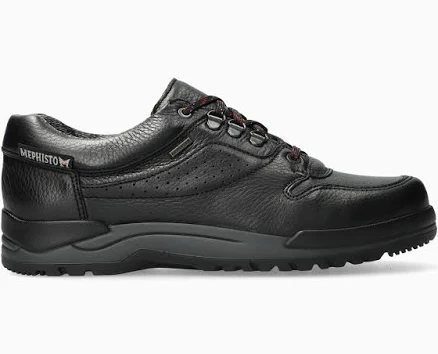
Mephisto
Men Mephisto Curt Mt SNEAKER
- leather, textile, rubber sole
- We found no PFAS statement from the brand
- Volatile organic compounds (VOC) off-gassing from adhesives
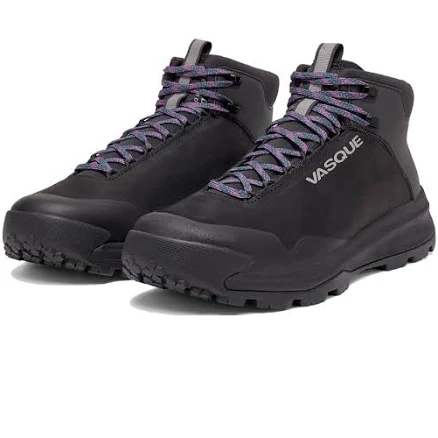
Vasque
Hiking shoes Vasque Women's Horizon Mid
- Leather/nubuck upper, synthetic/rubber sole, no coating disclosed
- We found no PFAS statement from the brand
- Azo dyes (leather/textile coloring)
4 hazards checked on this product. See all of them.
More waterproof boots grades
How we score, every product runs through the same public 0-100 rubric based on materials, coatings, brand disclosure, lab findings, and recalls. See the full methodology → Spotted a mistake? Report an error.