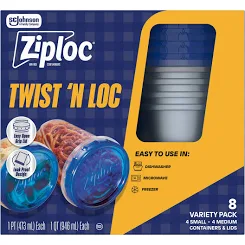
Ziploc Twist 'n Loc Food Storage Containers for School Lunch and Meal Prep
Lower concern. Standard PP food containers rarely treated with PFAS.
Ziploc Twist 'n Loc containers are polypropylene plastic with no known PFAS coatings or treatments. Brand makes no PFAS claims; category and material carry lower typical risk.
We flunk more products than we pass. This one earned its grade. How we grade
Material
polypropylene (PP) plastic, snap-lock lid
Brand disclosure
Brand is silent on PFAS
Lab data
No public lab test
What Ziploc Twist 'n Loc Food Storage is made of, ingredients and materials
Ziploc Twist 'n Loc containers are polypropylene (PP), a thermoplastic polymer coded as #5 recyclable plastic. PP does not inherently contain BPA or phthalates and has a higher melting point (around 130°C/266°F) than many food plastics, making it more stable during normal refrigeration and light reheating. The snap-lock polypropylene lid uses the same base resin. No surface coatings, glazes, or ceramic treatments are involved, eliminating lead, cadmium, or ceramic-specific leaching pathways.
What’s concerning
Category baseline
The starting point for this type of product, before anything specific to this product is counted.
No PFAS disclosure
No public statement from the brand about PFAS in this product.
Microplastics
Repeated heating above 60-70°C, UV exposure, or mechanical stress (cracking, scratching) can cause PP to shed microparticles over years of use. Food contact is low-risk if container remains intact; replacement after visible cracking or cloudiness recommended.
Source, EPA ↗Leaching of trace monomers or oligomers from aged or stressed plastic
Very low levels of unreacted polypropylene oligomers may migrate into food under prolonged heat or acidic/fatty food contact; risk is minimal at typical refrigeration temperatures and short meal-storage windows (hours to days).
Seal degradation and loss of food freshness or contamination risk
Snap-lock lids and seals on plastic food containers can wear, crack, or fail to seal properly after 1-2 years of repeated opening and dishwasher cycles, reducing freshness and allowing bacterial or mold growth if not inspected regularly.
What’s reassuring
Base material not linked to PFAS
The main material recorded for this product is not one associated with PFAS.
BPA & bisphenols
Polypropylene does not use bisphenol curing chemistry. No BPA or BPS is inherent to or reported in PP food containers or this product.
Source, FDA ↗Phthalates
PP is inherently rigid and does not require phthalate plasticizers for flexibility. No phthalate use is on record for Ziploc rigid food containers.
Source, ATSDR ↗The full breakdown
The brand's record and disclosure
Ziploc (owned by S.C. Johnson) maintains FDA compliance for food contact plastics and does not publicly disclose PFAS use in standard food-storage containers; the company has faced no established recalls or safety violations specific to Twist 'n Loc products. The brand does not publish material safety data sheets for consumer products but operates under standard FDA Food Contact Substance regulations. No independent testing has flagged BPA, phthalates, or heavy metals in this product line on public record.
How it compares in its category
Polypropylene rigid food containers like this are mid-range in the plastic storage market, safer than older polycarbonate or vinyl alternatives (which may contain BPA or phthalates), equivalent to other PP-based brands (Rubbermaid, Sistema), and less durable long-term than glass or stainless steel but more practical for school lunch use. No material advantage over competitor PP containers in terms of chemical hazard profile, though build quality and seal design vary by brand.
If you buy it
Do not microwave these containers unless the lid is explicitly labeled microwave-safe; even PP can leach trace compounds if heated above its stability window, particularly if the container is old or damaged. Inspect seals monthly for cracks or cloudiness, which signal material degradation and warrant replacement. Hand-wash or use the top rack of a dishwasher (temperatures under 60°C are safer). Store in a cool, dark place; prolonged UV or heat exposure can degrade the polymer and reduce seal integrity over 1, 2 years of daily use.
What we don’t know
- Basis
- Model estimate, 75% confidence, not a lab result
- Lab test
- None on record for this exact product
- Brand statement
- Ziploc has made none
Formulations change between production runs, so check the current label. How we grade.
Better-graded alternatives in Lunch Boxes
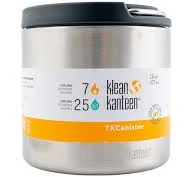
Klean Kanteen
Double Wall Vacuum Insulated Stainless Steel Food Canister Container with Leak Proof Lid
- Stainless steel body, silicone gasket lid seal
- The brand calls it PFAS-free, which we have not verified
- Silicone gasket degradation
3 hazards checked on this product. See all of them.
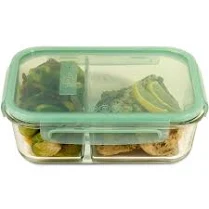
Snapware
Meal Box Glass
- borosilicate glass
- We found no PFAS statement from the brand
- Leaching from glass matrix or lid seals
2 hazards checked on this product. See all of them.
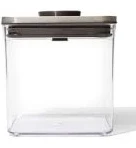
OXO
Steel Pop Big Square Short - 2.8 Qt/2.6 l
- Stainless steel container, no surface treatment
- Lid/gasket polymer leaching
3 hazards checked on this product. See all of them.
More lunch boxes grades
How we score, every product runs through the same public 0-100 rubric based on materials, coatings, brand disclosure, lab findings, and recalls. See the full methodology → Spotted a mistake? Report an error.