Aquasure · Under-Sink RO Systems
Premier Series 100 GPD Under Sink Reverse Osmosis System with Pressure Pump (AS-PR100E)
Low PFAS risk typical for RO systems, no special concerns identified.
Reverse osmosis systems use carbon and membrane filters, which are lower concern materials. Aquasure makes no PFAS claims but no red flags in standard RO design.
We flunk more products than we pass. This one earned its grade. How we grade
Material
Plastic housing, RO membrane, carbon filter media
Brand disclosure
Brand is silent on PFAS
Lab data
No public lab test
You may also be interested in
Top-graded picks in the categories readers replace first, every one scored on the same rubric.

- polypropylene filter housing, carbon/sediment cartridge
- We found no PFAS statement from the brand
- Bacterial growth in spent cartridges
3 hazards checked on this product, all on its full breakdown.

Avocado
Vegan Mattress
- organic cotton, natural latex, coconut coir, recycled steel coils
- The brand calls it PFAS-free, which we have not verified
- Heavy metals
2 hazards checked on this product, all on its full breakdown.

- polyurethane foam
- We found no PFAS statement from the brand
- Volatile Organic Compound (VOC) Off-Gassing
4 hazards checked on this product, all on its full breakdown.
What Premier Series 100 GPD Pump (AS-PR100E) is made of, ingredients and materials
The AS-PR100E housing is plastic (material type not specified in public documentation, likely ABS or polysulfone common to undersink RO units). Treated water contacts only the RO membrane and carbon media, not the outer housing directly. The membrane itself is a synthetic polymer barrier that does not leach into water under normal operating pressure (100 GPD systems run 50-100 psi). Carbon filters are inert once saturated and do not shed particles into permeate when properly installed.
What’s concerning
Category baseline
The starting point for this type of product, before anything specific to this product is counted.
No PFAS disclosure
No public statement from the brand about PFAS in this product.
Bacterial biofilm in storage tank
RO systems include a pressurized tank where treated water sits; if filters are not replaced on schedule or system is not flushed weekly, opportunistic bacteria (Legionella, Pseudomonas) can colonize the tank interior. This is a maintenance failure risk, not a manufacturing defect.
Carbon filter media degradation and particle shedding
Granular activated carbon can fragment if pressure spikes or if the system is not properly depressurized during maintenance; worn or poorly seated filter housings may allow fine carbon particles to bypass into drinking water. Inspect cartridge seals and housing condition at each filter change.
Membrane rupture and unfiltered water bypass
If the RO membrane cracks or detaches due to age, freeze damage, or manufacturing defect, treated water may contain unfiltered contaminants including bacteria and minerals. No way to detect this visually; reliance on replacement schedule and performance monitoring is essential.
What’s reassuring
Base material not linked to PFAS
The main material recorded for this product is not one associated with PFAS.
Leachables from plastic tubing and fittings
Undersink RO tubing is typically polyethylene or polyamide rated for potable water; no documented leaching of BPA, phthalates, or other endocrine disruptors has been reported for this product or standard RO tubing materials under normal operating conditions.
Heavy metals
Activated carbon sourcing and QA testing by Aquasure are not disclosed publicly. No recalls or contamination incidents linked to this brand's filter media have been documented, but third-party verification of media purity is not available.
Source, FDA ↗How is this PFAS grade calculated?
The brand's record and disclosure
Aquasure is a private-label water treatment brand with no major product recalls or documented contamination incidents on record for this model line. The brand publishes no independent third-party testing or NSF certification in public materials for this specific unit. PFAS stance is undisclosed, but the low-risk PFAS profile reflects the RO membrane's barrier function rather than brand commitment. No formaldehyde, BPA, or heavy metal warnings appear in available safety documentation.
How it compares in its category
Undersink RO systems as a category present lower leaching risk than point-of-use pitcher filters or faucet aerators because treated water is physically separated from external housing. The 100 GPD capacity and pressure pump are mid-range for residential use; no performance or durability data distinguishes this model as higher or lower risk than similarly priced competitors. Certification status (NSF, WQA) is not claimed, which is typical for budget-tier RO units but differs from premium models with third-party validation.
If you buy it
Replace carbon pre-filters every 6-12 months and RO membrane every 2-3 years per manufacturer guidance; failure to do so increases bacterial biofilm growth inside the tank and reduces water quality. Do not apply heat to any plastic housing or tubing; RO systems operate at room temperature. Store the unit where ambient temperature stays 40-85F; freezing ruptures the membrane. Inspect all tubing connections and quick-couplings annually for cracks or mineral buildup that may harbor microorganisms.
What is not known about PFAS in this product?
- Basis
- Model estimate, 72% confidence, not a lab result
- Lab test
- None on record for this exact product
- Brand statement
- Aquasure has made none
Formulations change between production runs, so check the current label. How we grade.
What are the PFAS-free alternatives to Premier Series 100 GPD Under Sink Reverse Osmosis System with Pressure Pump (AS-PR100E)?

Aquasure
Premier Series 75 GPD Under Sink Reverse Osmosis Water Filtration System
- RO membrane, carbon filters, stainless steel housing
- We found no PFAS statement from the brand
- Bacterial and microbial growth in housing and filters
4 hazards checked on this product, all on its full breakdown.
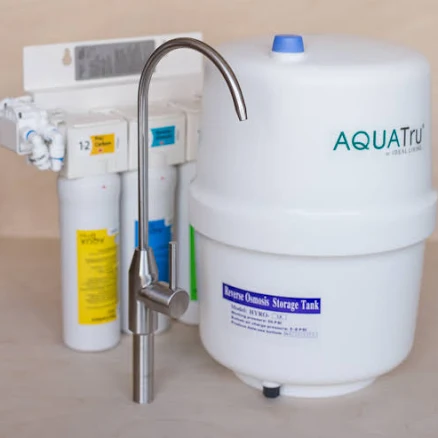
- Multi-stage filter cartridges (activated carbon, ion exchange resins)
- The brand calls it PFAS-free, which we have not verified
- Bacterial growth in filter cartridges
3 hazards checked on this product, all on its full breakdown.
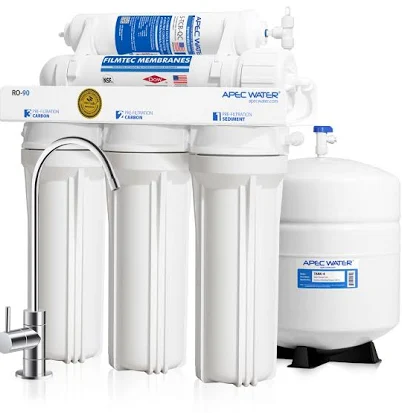
- Carbon/RO membrane filters, plastic housing
- We found no PFAS statement from the brand
- Bacterial growth in stagnant filter cartridges
2 hazards checked on this product, all on its full breakdown.
More under-sink ro systems grades
How we score, every product runs through the same public 0-100 rubric based on materials, coatings, brand disclosure, lab findings, and recalls. See the full methodology → Spotted a mistake? Report an error.