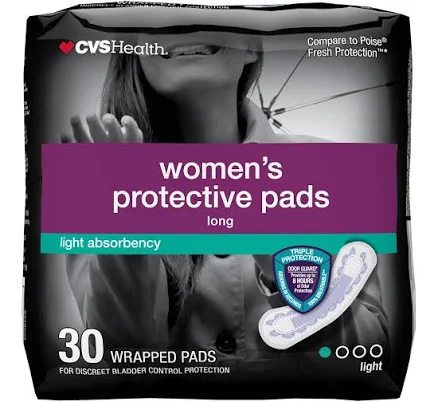
CVS Health · Incontinence Pads & Protection
CVS Women's Protective Pads Moderate Absorbency
Lower PFAS concern with standard absorbent materials present.
Period pads typically use cellulose and cotton without intentional PFAS coatings. No disclosure or testing exists, but standard materials carry lower risk than water-resistant products.
We flunk more products than we pass. This one earned its grade. How we grade
Material
cellulose, cotton, polypropylene core (typical for pads)
Brand disclosure
Brand is silent on PFAS
Lab data
No public lab test
You may also be interested in
Top-graded picks in the categories readers replace first, every one scored on the same rubric.

- polypropylene filter housing, carbon/sediment cartridge
- We found no PFAS statement from the brand
- Bacterial growth in spent cartridges
3 hazards checked on this product, all on its full breakdown.

Aquasure
Premier Series 75 GPD Under Sink Reverse Osmosis Water Filtration System
- RO membrane, carbon filters, stainless steel housing
- We found no PFAS statement from the brand
- Bacterial and microbial growth in housing and filters
4 hazards checked on this product, all on its full breakdown.

Avocado
Vegan Mattress
- organic cotton, natural latex, coconut coir, recycled steel coils
- The brand calls it PFAS-free, which we have not verified
- Heavy metals
2 hazards checked on this product, all on its full breakdown.
What CVS Women's Protective Pads Absorbency is made of, ingredients and materials
CVS Women's Protective Pads use cellulose, cotton, and polypropylene as the structural core - a conventional formulation for disposable menstrual pads. Cellulose is highly absorbent and biodegradable; cotton is a natural fiber that carries minimal chemical risk when unbleached or chlorine-free. Polypropylene (PP) is a thermoplastic polymer that does not leach plasticizers like BPA or phthalates under normal room-temperature storage and use. The combination is one of the industry standard materials for moderate-absorbency pads.
What’s concerning
Category baseline
The starting point for this type of product, before anything specific to this product is counted.
No PFAS disclosure
No public statement from the brand about PFAS in this product.
Chlorine bleach residue
Cellulose and cotton fibers in commercial pads are often bleached with chlorine or chlorine dioxide to whiten and sterilize; residual chlorine or chlorinated organics (organochlorines) may be present at trace levels. CVS does not disclose bleaching method on packaging, so TCF (totally chlorine-free) status is unconfirmed.
Polypropylene core degradation and microplastic shedding
Polypropylene does not biodegrade and may fragment into microplastics if pad integrity breaks down during storage or wear. Risk is low under normal use but increases if pads are crushed, stored in heat, or used beyond expiration.
Allergens or skin irritants from fragrance or perfume
CVS Women's Protective Pads may include fragrance masking agents; fragrance compounds can trigger contact dermatitis or vulvular irritation in sensitive individuals. Unscented or hypoallergenic variants may present lower concern for those with known sensitivities.
What’s reassuring
Base material not linked to PFAS
The main material recorded for this product is not one associated with PFAS.
Formaldehyde / VOCs
No evidence of formaldehyde-releasing resins in standard cellulose-cotton pad construction. Sizing or starch binders may be present but are not typically formaldehyde-based in this product category.
Source, ATSDR ↗Heavy metals
Pads contain minimal pigmentation; any dyes used are typically azo-based colorants approved for skin contact. No known recalls for heavy metal contamination in CVS or BetterCare pads.
Source, FDA ↗How is this PFAS grade calculated?
The brand's record and disclosure
CVS Health / BetterCare does not publish detailed material safety disclosures or ingredient transparency reports for period-care products on record. The brand has not announced specific PFAS testing or PFAS-free certification; their silence on PFAS is typical for mass-market private-label period products. No major product recalls or safety controversies have been associated with this specific pad line. CVS has not pursued third-party certifications (e.g., Cradle to Cradle, EU Ecolabel) for menstrual products.
How it compares in its category
BetterCare pads sit in the conventional, mass-market segment alongside Kotex, Stayfree, and store-brand alternatives; all use similar cellulose-PP-cotton blends. Premium alternatives (Cora, Rael, Seventh Generation) often emphasize organic cotton and transparent ingredient lists, though chemical safety profiles are comparable. Budget pads in this category rarely differ meaningfully in hazard profile; differences are mainly absorbency, comfort, and packaging. CVS's moderate-absorbency tier addresses standard flow needs.
If you buy it
Store pads in a cool, dry place away from direct heat or humidity to prevent moisture-triggered mold growth in packaging. Replace pads every 4-8 hours depending on flow; extended wear increases bacterial overgrowth risk and toxic shock syndrome (TSS) risk, not product chemistry risk. Do not flush pads; discard in trash to avoid septic system damage. If you experience unusual irritation or allergic reaction, discontinue and consider hypoallergenic or organic alternatives, but routine use carries no identified chemical exposure concern.
What is not known about PFAS in this product?
- Basis
- Model estimate, 70% confidence, not a lab result
- Lab test
- None on record for this exact product
- Brand statement
- CVS Health has made none
Formulations change between production runs, so check the current label. How we grade.
More incontinence pads & protection grades
How we score, every product runs through the same public 0-100 rubric based on materials, coatings, brand disclosure, lab findings, and recalls. See the full methodology → Spotted a mistake? Report an error.