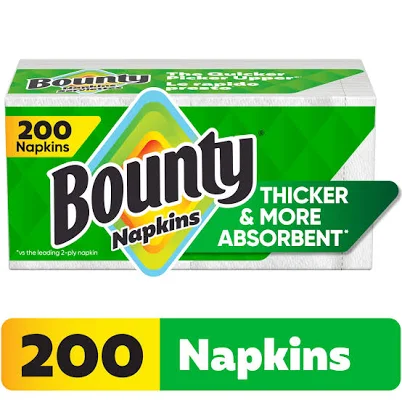
Bounty · Paper Napkins & Paper Towels
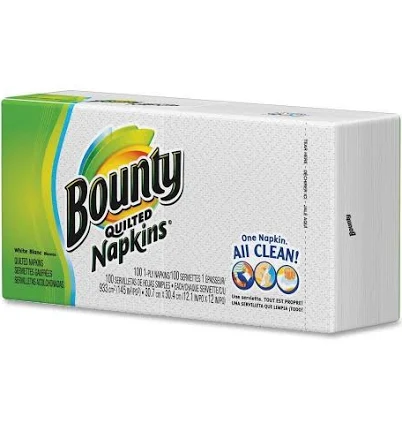
Bounty Quilted Napkins
Higher PFAS concern from grease-resistant coating. Bounty discloses nothing.
Bounty Quilted Napkins are coated for water and grease resistance, a common PFAS application in food-contact paper. Bounty makes no PFAS disclosure.
The better-graded swap
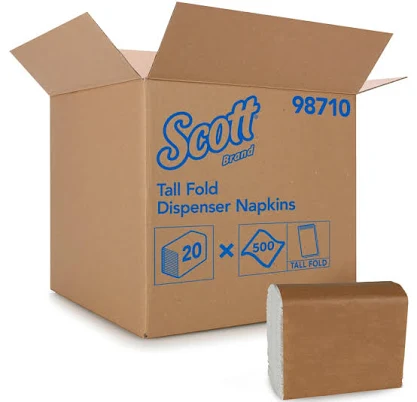
Scott
Scott Tall-Fold Dispenser Napkins 1-Ply 7 x
70/100 safety
Same rubric that flunked this product. The swap earned Good.
Still want this one anyway? Check the price on Amazon. We’d swap it.
Material
Cellulose (wood pulp) with grease-resistant treatment
Brand disclosure
Brand is silent on PFAS
Lab data
No public lab test
You may also be interested in
Top-graded picks in the categories readers replace first, every one scored on the same rubric.

- polypropylene filter housing, carbon/sediment cartridge
- We found no PFAS statement from the brand
- Bacterial growth in spent cartridges
3 hazards checked on this product, all on its full breakdown.

Aquasure
Premier Series 75 GPD Under Sink Reverse Osmosis Water Filtration System
- RO membrane, carbon filters, stainless steel housing
- We found no PFAS statement from the brand
- Bacterial and microbial growth in housing and filters
4 hazards checked on this product, all on its full breakdown.

Avocado
Vegan Mattress
- organic cotton, natural latex, coconut coir, recycled steel coils
- The brand calls it PFAS-free, which we have not verified
- Heavy metals
2 hazards checked on this product, all on its full breakdown.
What Bounty Quilted Napkins is made of, ingredients and materials
Bounty Quilted Napkins are cellulose (wood pulp) with a grease-resistant coating applied to enhance absorbency and prevent oil bleed-through. The grease-resistant treatment is the chemical flashpoint, these coatings historically rely on fluorinated compounds (PFAS or similar) to achieve water and oil repellency. Beyond the coating, wood pulp itself is low-hazard, but the finish determines safety profile. Bounty has not publicly disclosed the specific chemistry of its grease treatment.
What’s concerning
Category baseline
The starting point for this type of product, before anything specific to this product is counted.
No PFAS disclosure
No public statement from the brand about PFAS in this product.
Waterproof / stain-resistant treatment
Water-repellent coating treatments have historically used PFAS.
Grease-resistant coating composition (fluorinated or non-fluorinated unknown)
Bounty does not disclose whether its grease treatment uses PFAS, PFOA, or non-fluorinated alternatives. Industry standard suggests fluorinated chemistry likely; minor food contact migration possible over time, though napkin exposure is typically brief and not a primary dietary vector.
Coating degradation and microparticle release
Repeated wetting and mechanical stress (crumpling, folding) can degrade grease-resistant coatings over shelf time or use. Shed microparticles of coating polymer are not established as hazardous, but ingestion risk increases if coating is visibly flaking. This is a product quality rather than toxicity issue.
What’s reassuring
Formaldehyde / VOCs
No public record of formaldehyde use in Bounty napkin coatings. Paper napkins are not typically treated with formaldehyde resins (those are more common in fabric and laminated products). Residual formaldehyde from pulping is negligible in finished napkins.
Source, ATSDR ↗Chlorine bleach and dioxin residues from pulp processing
Bounty napkins are bleached; however, modern ECF (elemental chlorine-free) or TCF (totally chlorine-free) processing has largely eliminated dioxin contamination in finished tissue. No recall or testing suggests dioxin concern in this product line.
Ink or dye migration from printed quilted pattern
Bounty napkins feature printed quilted patterns. Food-contact paper inks are regulated (FDA compliance). No public reports of ink leaching or migration hazards; risk is low if napkins are used as designed (not in prolonged contact with hot or oily food).
How is this PFAS grade calculated?
The brand's record and disclosure
Procter & Gamble (Bounty's parent) has not published detailed ingredient disclosures or PFAS commitments for paper napkin/towel products, despite industry peers beginning voluntary transparency. Bounty has no known recalls or safety violations specific to this product line. The silence on grease-resistant chemistry is notable, competitors like Seventh Generation and some store brands have moved to PFAS-free alternatives or disclosed their choices. P&G's lack of public stance suggests either proprietary reluctance or continued reliance on fluorinated treatments.
How it compares in its category
Standard commercial napkins (Bounty, Viva, store brands) all use grease-resistant coatings; the question is formulation. Paper napkin safety is largely unregulated in the US; there is no mandated disclosure. Some brands (Seventh Generation, Who Gives A Crap) explicitly tout PFAS-free coatings and publish specs. Bounty's silence puts it in the middle of the pack on transparency. Single-ply uncoated napkins have no hazard of this kind on record but sacrifice functionality; they represent a lower concern alternative if grease resistance is not essential.
If you buy it
Use Bounty napkins as intended, food contact, spills, hand-wiping. Do not heat them deliberately or use them to line hot surfaces; while cellulose is heat-stable, the coating may off-gas at extreme temperatures (rare in normal use). Replace rolls if visible degradation occurs (ink fading, texture loss). If you are pregnant, nursing, or have young children and want to minimize PFAS intake, consider switching to explicitly PFAS-free alternatives or uncoated options; the migrant risk from napkins is low but cumulative across all products.
What is not known about PFAS in this product?
- Basis
- Model estimate, 45% confidence, not a lab result
- Lab test
- None on record for this exact product
- Brand statement
- Bounty has made none
Formulations change between production runs, so check the current label. How we grade.
What are the PFAS-free alternatives to Bounty Quilted Napkins?
- 100% recycled paper
- Trace metals and contaminants from recycled feedstock
2 hazards checked on this product, all on its full breakdown.
- Virgin wood pulp, 1-ply, no waterproofing layer
- We found no PFAS statement from the brand
- Starting grade for this product type
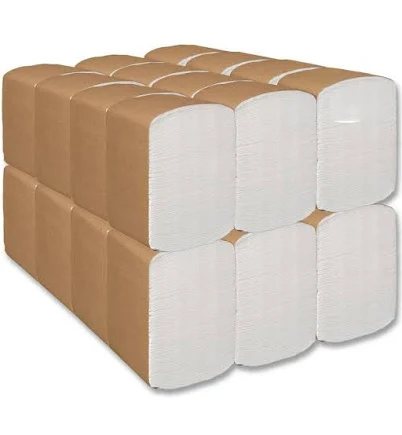
- Virgin wood pulp, 1-ply paper
- We found no PFAS statement from the brand
- Bleach residues and chlorinated byproducts
2 hazards checked on this product, all on its full breakdown.
More paper napkins & paper towels grades
How we score, every product runs through the same public 0-100 rubric based on materials, coatings, brand disclosure, lab findings, and recalls. See the full methodology → Spotted a mistake? Report an error.