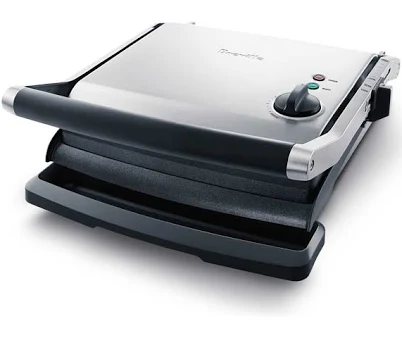
Breville Panini Grill BGR200XL
Skip until Breville discloses non-stick coating chemistry, risk profile unclear.
The Breville BGR200XL features non-stick cooking plates, but Breville won't disclose the coating material or whether Teflon-type coating and PFAS are used. This silence is standard from most cookware brands. Without lab testing or a manufacturer statement, risk cannot be confidently assessed.
Still want this one anyway? Check the price on Amazon. We’d swap it.
Material
Non-stick coated cooking plates, composition unspecified by Breville
Lab data
No public lab test
You may also be interested in
Top-graded picks in the categories readers replace first, every one scored on the same rubric.

- polypropylene filter housing, carbon/sediment cartridge
- We found no PFAS statement from the brand
- Bacterial growth in spent cartridges
3 hazards checked on this product, all on its full breakdown.

Aquasure
Premier Series 75 GPD Under Sink Reverse Osmosis Water Filtration System
- RO membrane, carbon filters, stainless steel housing
- We found no PFAS statement from the brand
- Bacterial and microbial growth in housing and filters
4 hazards checked on this product, all on its full breakdown.

Avocado
Vegan Mattress
- organic cotton, natural latex, coconut coir, recycled steel coils
- The brand calls it PFAS-free, which we have not verified
- Heavy metals
2 hazards checked on this product, all on its full breakdown.
What Breville Panini Grill BGR200XL is made of, ingredients and materials
The BGR200XL features non-stick coated cooking plates, but Breville does not publicly specify whether the coating is Teflon-type coating-based (traditional Teflon), ceramic, or a proprietary formulation. The aluminum base is standard for this appliance class. Without coating composition disclosure, you cannot independently verify whether heating above 500°F risks polymer fume release or whether the coating contains legacy or emerging PFAS "forever chemicals".
What’s concerning
Category baseline
The starting point for this type of product, before anything specific to this product is counted.
No PFAS disclosure
No public statement from the brand about PFAS in this product.
Non-stick, chemistry undisclosed
Marketed as non-stick without stating the coating chemistry.
Teflon-type coating polymer fume inhalation
If the coating is Teflon-type coating-based and heated above ~500°F, thermal decomposition can release fluorinated gases. Breville's silence on coating type makes risk assessment impossible; however, normal panini use (375-450°F) is unlikely to trigger fume release.
Non-stick coating degradation and microparticle shedding
Repeated heating cycles, metal utensil use, and dishwasher exposure can cause polymer coating to flake or shed microscopic particles into food. Visual inspection for peeling or bare spots is the only consumer-level check.
Thermal injury and burn hazard
The hot plates reach 450-500°F; standard panini press burns are operator error, not product defect. The BGR200XL does include safety shut-off and cool-touch handles, reducing but not eliminating contact burn risk during use.
Undisclosed coating additives or processing residues
Breville provides no ingredient list for the non-stick layer. Coatings may contain proprietary binders, release agents, or trace metals applied during manufacture; without third-party testing or brand transparency, residual contaminant levels cannot be assessed.
What’s reassuring
Aluminum leaching from base
The aluminum body is sealed by the non-stick coating under normal use. Leaching is not a documented issue for Breville panini presses, though acidic or salty foods left in prolonged contact with damaged coating areas could theoretically promote localized corrosion.
How is this PFAS grade calculated?
The brand's record and disclosure
Breville has not published material safety data sheets or coating chemistry details for the BGR200XL despite multiple product iterations. The brand does not advertise PFAS-free certification or Teflon-type coating-alternative coatings on this model. No significant safety recalls specific to this panini press are on record with the CPSC, but the lack of proactive disclosure is a red flag for consumer transparency in the small-appliance industry.
How it compares in its category
Most panini presses in this price and performance tier use similar non-stick coatings with equivalent disclosure gaps. Cast-iron alternatives avoid polymer coatings entirely but require seasoning and weigh more. Ceramic-coated griddle presses are marketed as Teflon-type coating-free but are less common and often command a price premium. The BGR200XL is mid-range for durability but does not stand out for transparency relative to competitors like Cuisinart or De'Longhi models.
If you buy it
Keep the cooking surface below 500°F to minimize any polymer degradation risk; most panini recipes require 375-450°F, well within the typical range for this use. Avoid preheating empty for extended periods. Replace the unit if the non-stick coating shows visible peeling, flaking, or discoloration. Hand-wash plates only; dishwasher exposure accelerates coating wear. Contact Breville directly to request coating composition; consumer pressure for disclosure can drive industry change.
What is not known about PFAS in this product?
- Basis
- Model estimate, 35% confidence, not a lab result
- Lab test
- None on record for this exact product
- Brand statement
- Breville has made a specific claim
Formulations change between production runs, so check the current label. How we grade.
What are the PFAS-free alternatives to Breville Panini Grill BGR200XL?
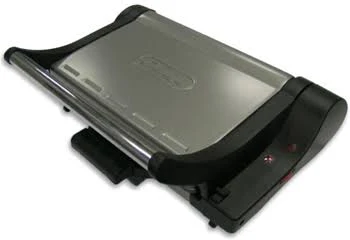
- stainless steel cooking plates
- We found no PFAS statement from the brand
- Thermal burn hazard (housing and handles)
3 hazards checked on this product, all on its full breakdown.
Find an alternative on AmazonMore panini presses grades
How we score, every product runs through the same public 0-100 rubric based on materials, coatings, brand disclosure, lab findings, and recalls. See the full methodology → Spotted a mistake? Report an error.