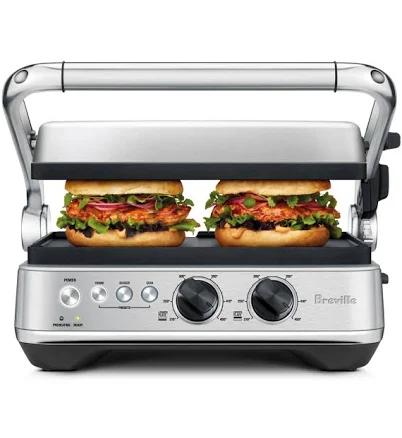
Breville the Sear and Press Grill
Nonstick coating chemistry is not stated. PFAS concern cannot be assessed.
The Sear and Press Grill has a nonstick-coated cooking surface, but Breville has not disclosed the coating chemistry. The brand has no PFAS statement on record. Without coating details, PFAS concern for this product cannot be determined.
Still want this one anyway? Check the price on Amazon. We’d swap it.
Material
Nonstick-coated cooking surface (unspecified polymer)
Lab data
No public lab test
You may also be interested in
Top-graded picks in the categories readers replace first, every one scored on the same rubric.

- polypropylene filter housing, carbon/sediment cartridge
- We found no PFAS statement from the brand
- Bacterial growth in spent cartridges
3 hazards checked on this product, all on its full breakdown.

Aquasure
Premier Series 75 GPD Under Sink Reverse Osmosis Water Filtration System
- RO membrane, carbon filters, stainless steel housing
- We found no PFAS statement from the brand
- Bacterial and microbial growth in housing and filters
4 hazards checked on this product, all on its full breakdown.

Avocado
Vegan Mattress
- organic cotton, natural latex, coconut coir, recycled steel coils
- The brand calls it PFAS-free, which we have not verified
- Heavy metals
2 hazards checked on this product, all on its full breakdown.
What Breville the Sear and Press Grill is made of, ingredients and materials
The Sear and Press Grill features a nonstick-coated cooking surface, but Breville does not publicly specify whether the coating is Teflon-type coating-based (traditional Teflon), ceramic, or another polymer. The cooking plates contact food directly at temperatures that can exceed 400°F during use. Without material transparency, users cannot assess whether the nonstick layer may release fumes if overheated or whether it will degrade into food over repeated use and cleaning cycles.
What’s concerning
Category baseline
The starting point for this type of product, before anything specific to this product is counted.
No PFAS disclosure
No public statement from the brand about PFAS in this product.
Non-stick, chemistry undisclosed
Marketed as non-stick without stating the coating chemistry.
Teflon-type coating fume inhalation (thermal degradation)
If the nonstick coating is Teflon-type coating-based, overheating above ~500°F can release fluorine-containing gas precursors. Breville does not specify a maximum safe temperature, making accidental overheating a realistic concern.
Coating degradation and microparticle transfer to food
Nonstick coatings on electric panini presses experience mechanical and thermal wear over time. Consumer reports indicate visible flaking and peeling on some electric cookware; ingestion of coating fragments is not formally studied but is a documented concern in the cookware category.
Bacterial growth in crevices or heating elements if cleaning is inadequate
Electric griddles accumulate grease and food debris in seams and around heating elements. Breville does not provide detailed cleaning or disassembly guidance, which increases risk of bacterial harborage if maintenance is missed.
What’s reassuring
Aluminum or metal substrate leaching (if applicable)
Breville does not disclose the substrate material beneath the nonstick layer. If aluminum is used, a compromised or thin nonstick coating could allow direct food contact with bare aluminum, which may leach small amounts at acidic pH; this is not documented for this specific model.
Lead
No recalls or test reports have been published for lead or cadmium in this product. Breville products are generally manufactured to US/EU consumer safety standards, but the company does not publish heavy metal assay data for cookware.
Source, ATSDR ↗How is this PFAS grade calculated?
The brand's record and disclosure
Breville has not issued public statements about PFAS content or nonstick polymer composition in this product line. The company does not appear to have pursued third-party certification (e.g., GREENGUARD) for cookware safety or made commitments to phasing out PFAS in kitchen products. This silence is notable in a market where competitors increasingly disclose nonstick chemistry.
How it compares in its category
Panini presses and electric griddles typically use either Teflon-type coating, Teflon-type coating alternatives, or ceramic nonstick coatings. Breville's lack of disclosure places this product behind competitors who explicitly market Teflon-type coating-free or ceramic surfaces. High-end brands in the category often provide coating composition and temperature limits; budget alternatives may offer the same opacity.
If you buy it
Keep the grill below 500°F (Breville does not publish an explicit ceiling, which is itself a red flag). Use silicone or wood utensils only; metal tools will accelerate coating wear. Inspect the cooking surface regularly for flaking, discoloration, or wear; replace the unit if the nonstick layer shows visible damage. Hand-wash the plates gently and avoid abrasive scrubbers; dishwasher cycles may hasten coating breakdown.
What is not known about PFAS in this product?
- Basis
- Model estimate, 35% confidence, not a lab result
- Lab test
- None on record for this exact product
- Brand statement
- Breville has made a specific claim
Formulations change between production runs, so check the current label. How we grade.
What are the PFAS-free alternatives to Breville the Sear and Press Grill?
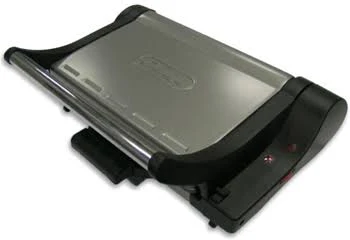
- stainless steel cooking plates
- We found no PFAS statement from the brand
- Thermal burn hazard (housing and handles)
3 hazards checked on this product, all on its full breakdown.
Find an alternative on AmazonMore panini presses grades
How we score, every product runs through the same public 0-100 rubric based on materials, coatings, brand disclosure, lab findings, and recalls. See the full methodology → Spotted a mistake? Report an error.