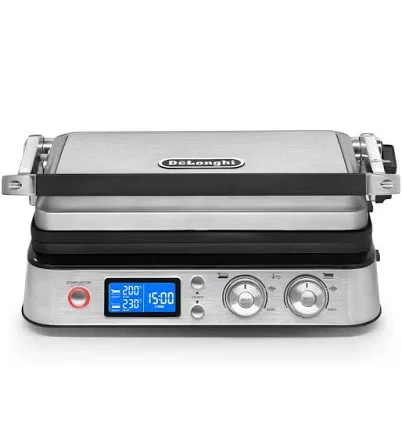
DeLonghi Livenza All Day Grill
Don't buy until DeLonghi reveals the nonstick coating material.
The Livenza grill uses an undisclosed nonstick coating. DeLonghi makes no statements about PFAS, leaving the safety profile impossible to evaluate.
Still want this one anyway? Check the price on Amazon. We’d swap it.
Material
Non-stick coated cooking surface (composition unspecified)
Brand disclosure
Brand is silent on PFAS
Lab data
No public lab test
You may also be interested in
Top-graded picks in the categories readers replace first, every one scored on the same rubric.

- polypropylene filter housing, carbon/sediment cartridge
- We found no PFAS statement from the brand
- Bacterial growth in spent cartridges
3 hazards checked on this product, all on its full breakdown.

Aquasure
Premier Series 75 GPD Under Sink Reverse Osmosis Water Filtration System
- RO membrane, carbon filters, stainless steel housing
- We found no PFAS statement from the brand
- Bacterial and microbial growth in housing and filters
4 hazards checked on this product, all on its full breakdown.

Avocado
Vegan Mattress
- organic cotton, natural latex, coconut coir, recycled steel coils
- The brand calls it PFAS-free, which we have not verified
- Heavy metals
2 hazards checked on this product, all on its full breakdown.
What DeLonghi Livenza All Day Grill is made of, ingredients and materials
The Livenza All Day Grill features a non-stick coated cooking surface over an aluminum base, but DeLonghi has not publicly specified whether the coating is Teflon-type coating (Teflon-type), ceramic, or proprietary polymer. This matters because Teflon-type coating coatings release harmful fumes above 500F if damaged or overheated, while aluminum substrates can leach into acidic foods if the non-stick layer degrades. Without coating composition disclosure, you cannot verify safety certifications or expect manufacturer guidance on safe temperature limits specific to the coating type.
What’s concerning
Category baseline
The starting point for this type of product, before anything specific to this product is counted.
No PFAS disclosure
No public statement from the brand about PFAS in this product.
Non-stick, chemistry undisclosed
Marketed as non-stick without stating the coating chemistry.
Teflon-type coating fume inhalation (if Teflon-type coating)
If the non-stick coating is Teflon-type coating-based, overheating above 500F or cooking with damaged coating can release fluorinated polymer fumes associated with polymer fume fever and respiratory irritation. DeLonghi's silence on coating type means users cannot confirm whether this risk applies or what temperature threshold triggers safety concerns.
Aluminum leaching
The aluminum substrate can leach into acidic foods (tomatoes, vinegar, lemon) if the non-stick protective layer is scratched or degraded. Chronic aluminum exposure is not conclusively linked to disease in healthy individuals, but vulnerable populations (kidney disease, elderly) may accumulate bioavailable aluminum from repeated cooking contact.
Coating degradation and particle shedding
Non-stick coatings on budget and mid-range panini presses typically degrade within 2-5 years with normal use. Once flaking or peeling begins, micro-particles may shed into food, and the exposed aluminum or substrate becomes reactive. No spare-plate availability mentioned for this model limits practical remediation.
What’s reassuring
Burn hazard and design safety
No specific design defects or burn incidents are documented for the Livenza All Day Grill. Standard panini-press burn risk from hot cooking surfaces and hinged lids applies, managed by use of handles and keeping hands clear during operation.
Electrical or thermal runaway
No recalled thermal-control failures or electrical safety issues are on public record for this model. Standard appliance-use precautions (dry hands, avoiding water contact, inspection of power cord) apply.
How is this PFAS grade calculated?
The brand's record and disclosure
DeLonghi has not published detailed material safety information or non-stick coating specifications for this product in available sources. The brand maintains no published position on PFAS avoidance or ceramic/Teflon-type coating alternatives. No significant recalls or documented coating-related health incidents specific to this model are on public record, but silence on material composition is a transparency gap common in the small-appliance sector and limits independent safety verification.
How it compares in its category
Most panini presses and griddles in this segment use either Teflon-type coating non-stick or ceramic coatings; DeLonghi's refusal to specify puts this product below competitors like Cuisinart or Breville that advertise Teflon-type coating-free or ceramic alternatives. Aluminum-base construction is standard and acceptable if the non-stick layer is intact, but the absence of disclosed durability data or replacement-surface availability suggests higher risk of coating degradation over typical product lifespan compared to brands offering spare plates.
If you buy it
Use only plastic or silicone utensils to avoid scratching the non-stick surface; never exceed medium-high heat and verify your model's maximum safe temperature before use. Inspect the cooking surface regularly for peeling, flaking, or discoloration, and discontinue use immediately if damage is visible. Clean with non-abrasive methods and avoid dishwasher washing to extend coating life. Ensure kitchen ventilation during use in case Teflon-type coating fumes are released from overheating or damage.
What is not known about PFAS in this product?
- Basis
- Model estimate, 35% confidence, not a lab result
- Lab test
- None on record for this exact product
- Brand statement
- Delonghi has made none
Formulations change between production runs, so check the current label. How we grade.
What are the PFAS-free alternatives to DeLonghi Livenza All Day Grill?
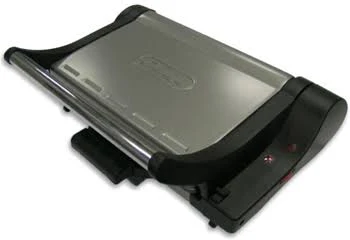
- stainless steel cooking plates
- We found no PFAS statement from the brand
- Thermal burn hazard (housing and handles)
3 hazards checked on this product, all on its full breakdown.
Find an alternative on AmazonMore panini presses grades
How we score, every product runs through the same public 0-100 rubric based on materials, coatings, brand disclosure, lab findings, and recalls. See the full methodology → Spotted a mistake? Report an error.